
As international art educators, we often frame “global citizenship” and “cultural context” as core curricular goals, but translating those terms from curriculum documents into daily studio practice is an ongoing challenge. As an International Baccalaureate visual arts educator working in Wuxi, China, from Mumbai, India; teaching International General Certificate of Secondary Education (IGCSE) and International Baccalaureate Diploma Program (IBDP) visual arts to a majority local Chinese student body, this is the tension I navigate every semester: how do we teach universal artistic principles and meet formal assessment objectives without disconnecting students from the place they live and grow?
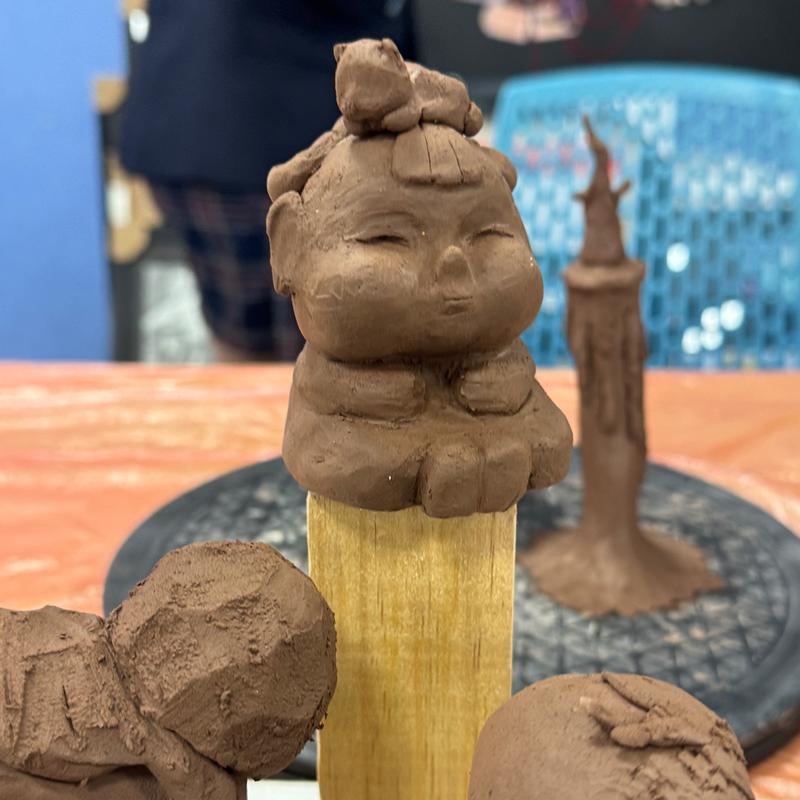
This semester, I found one answer in clay. I organized a two-day hands-on clay sculpture workshop led by Wuxi-based artist Mr. Xu Chengyi, whose work — including pieces like Hope and The Melodious Sound of Departure – An Impression of Ah Bing — draws directly from Wuxi’s centuries-old Huishan clay figure tradition and local music folklore.
Bringing a local practitioner into the classroom was never just about teaching clay relief or sculpting technique. It was about grounding students’ artistic journeys in the city around them and demonstrating that art does not only exist in textbooks or galleries in distant cities; it also lives in local stories, traditions, and the community right outside the school gates. Contextual awareness or situating one’s artwork is not just an assessment objective; it is the backbone of meaningful making.
Over the two days, students translated ideas from their visual journals into three-dimensional form; they experimented with texture, form, and narrative. They built material-handling skills aligned with IGCSE AO2 and IBDP explore and experiment criteria, while practicing core Approaches to Learning (ATL) skills — critical thinking, creative transfer, and collaboration — as they adapted traditional Huishan techniques to their own personal ideas.
The most meaningful shift, however, was reflective when students actually began recognizing how art carries stories of place and identity, and how their own cultural backgrounds shape both, that which they create and how they create it.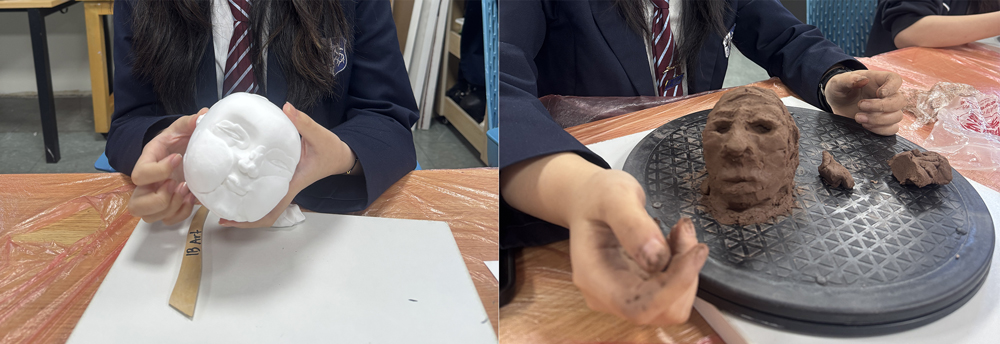
Students translate ideas from their visual journal into three-dimensional form, building material-handling skills aligned with IB Visual Arts assessment objectives. (Photo source: Ketaki Yadav)
Key takeaways for educators:
Working in China has given me the opportunity to design learning experiences that do not just teach art technique, but help students see themselves as creators — rooted in place, and connected to a wider world. The most powerful creative education does not come from a curriculum guide. It comes from building bridges: between cultures, between traditions, and between the classroom and the world right outside the door.
Ketaki Paralikar-Yadav is head of visual arts at Wuxi United International School, China, where she leads IGCSE and IBDP visual arts programs. Born in Mumbai, India, her practice and teaching explore cross-cultural identity, place-based learning, and inquiry-based creative pedagogy.