
Let me start by saying I am not a football coach, an expert, or even particularly knowledgeable about the game. I am simply a football mum. I avoid beer showers in stadiums whenever I can, spend countless weekends at youth tournaments that seem to last forever, and secretly wish my son had fallen in love with a gentler sport like swimming. I always end a tournament with the same words to him: If nobody got injured, that's a victory in itself. Needless to say, he does not always seem to agree.
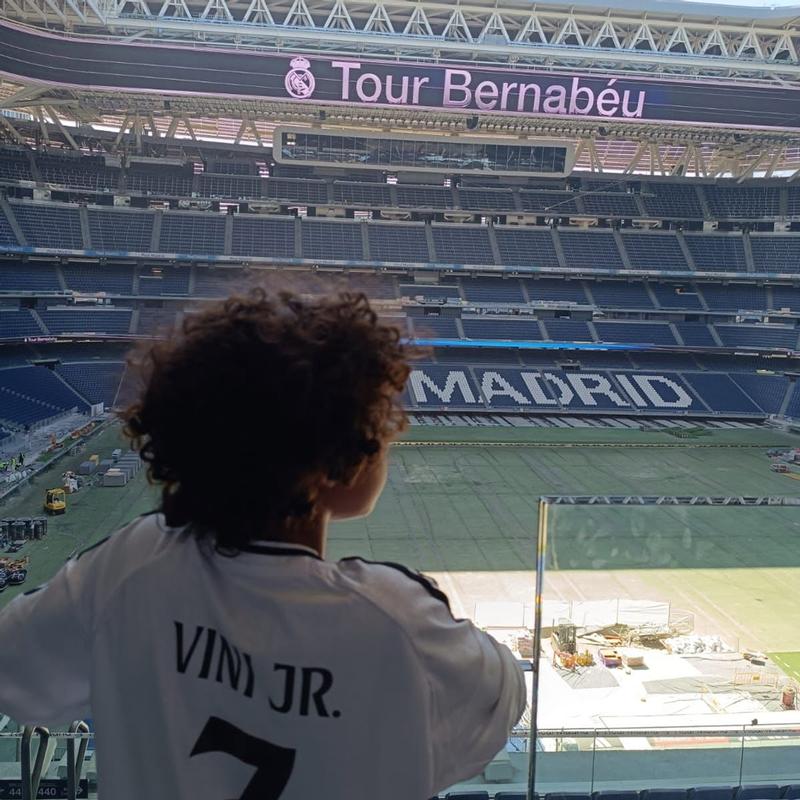
My nine-year-old son, who is half German and half Colombian, lives and breathes football. He has been playing for five years and now plays for a local club in Dresden, our (current) hometown. This summer, we watched the FIFA World Cup together. Every match sparked another conversation, and before long we had become our own two-person commentary team. We debated refereeing decisions, challenged each other's opinions, and somewhere along the way, I finally began spotting the offside moments my son had been patiently trying to explain to me for months.
Apart from deepening my own knowledge of football, the World Cup became a gateway to the wider world, led by my son’s curiosity. We looked up countries on the map, learned their capital cities, explored flags and cultures, and even played a few rounds of Name, City, Country, Football. My son suddenly wanted to know where Cape Verde is, which languages are spoken in Ghana, and why some players represent countries different from where they were born. We also started watching documentaries on Pelé, Franz Beckenbauer, and unsung football heroes. It struck me how naturally learning happened. Nobody had assigned homework. There was no assessment. Curiosity did all the work.
I soon realized that watching the World Cup was more than entertainment for my son. It created opportunities to explore geography, identity, culture, and values. It showed me how educators can build on children's existing passions, turning moments of excitement into meaningful international learning and a stronger sense of global citizenship.
These are some of the lessons we took home:
Lesson 1: Stay Humble
During the group stage on 15 June 2026, Cape Verde played Spain. When I got home from work, my husband couldn't wait to tell me what had happened. Spain, considered one of the best teams in the world heading into the World Cup, had been pushed to the limit by a team many had overlooked. Even their star players were brought on as substitutes, but Cape Verde's veteran goalkeeper, Vozinha, left Spain frustrated save after save.
The lesson was simple: never underestimate your opponent. My son and I discussed this as a classic case of learning not to judge a book by its cover – and, in Vozinha's case, perhaps not to be fooled by age either.
As educators, we have a powerful opportunity to further conversations like these. We can challenge stereotypes, clichés, and unconscious biases, encouraging students to look beyond first impressions and consider different perspectives. Curriculum links, advisory lessons, and Personal, Social, Health and Economic programs can all create spaces for students to question assumptions – about age, nationality, ability, language, or background – and to get to know one another beyond the labels we so easily attach. Learning to embrace another perspective is at the heart of international-mindedness. In international schools in particular, where so many cultures and identities meet in one community, learning to see beyond the façade is not simply an academic skill; it is an essential part of learning to live and work alongside others.
Lesson 2: Persevere
One match that stayed with us was Argentina against Egypt. We watched, open-mouthed, as Argentina fought their way back when an Egyptian victory had seemed almost certain. That same resilience surfaced again in the semi-final between England and Argentina.
Those two games have stayed with us. We even put up posters from them on the wall in my son's room. Whenever the words I just can't do it come out of his mouth, we think back to what we witnessed during these games. They remind us about the difference between something being difficult and something being undoable.
As educators, we can make that distinction tangible for our students too. A first draft covered in corrections, a math problem solved after several attempts, or hesitant sentences spoken in a new language all make perseverance visible. By asking students to reflect on what they changed and what eventually helped them move forward, we can shift attention from a finished product to the learning behind it.
In an international school a new student may be learning a new language, adapting to a different curriculum, making friends and navigating unfamiliar cultural expectations all at once. What appears to be struggle may be extraordinary perseverance. Helping students recognize their own progress, and giving them permission not to get everything right immediately, turns resilience from a word on a poster into something they actually experience.
Lesson 3: Stay Calm. Think Before You React
One of my son's football heroes is Kylian Mbappé. During the match against Paraguay, he was repeatedly provoked, both during the game and after the final whistle. He could have reacted, but he didn't.
My son couldn't understand it. "Why didn't he fight back?" he asked. In his view, Mbappé should have pushed back or given as good as he got.
Admittedly, I understood my son's point. When someone deliberately provokes me, I have to make a conscious effort to simply let it go. Watching Mbappé stay calm made it easier to explain. He chose not to react. Not because he was weak, but because he knew his teammates were counting on him.
This is particularly relevant when students from different cultural backgrounds learn alongside one another. Communication styles, humor, and ideas of what is “rude” or “respectful” can vary considerably between cultures. Helping students pause, consider different perspectives and think before reacting is, therefore, an important part of intercultural learning. At my current school, primary teachers offer yoga sessions; at a previous school, a colleague ran mindfulness sessions. This support is equally important for older students, particularly during demanding periods such as Diploma Programme examinations, when practical strategies for managing stress and wellbeing are essential.
Lesson 4: Work as a Team / Value Teamwork
This one may seem obvious, but it is probably the most important lesson of all: football constantly reminds us that talent alone is rarely enough. Success depends on trusting others, communicating well, and working towards a shared goal — skills that schools can develop through pair and group work, collaborative projects, and peer assessment. Students learn to listen to others, share responsibility, give constructive feedback, and contribute to a collective outcome.
During the World Cup, the Curaçao team embodied that spirit. They greeted airport staff upon arrival, broke into dance whenever the opportunity arose, and celebrated with members of their delegation and their royal family, proudly sharing a glimpse of their culture. They appreciated what it meant simply to be there.
The same spirit showed itself in very different ways throughout the tournament. Somewhere along the way, I became a Haaland fan, something I certainly didn't see coming. What won me over wasn't just his football. There was a cheekiness, a sense of fun, and an ease about this gentle giant. He seemed genuinely happy to be with his teammates, and they looked as though they clearly enjoyed playing together. There was no sense of megalomania or unnecessary pathos. Just a group of players who seemed to be saying, we love football, we're enjoying ourselves, and while we're here, let's put our country on the map. And they did a great job.
One moment, in particular, stayed with me. After England had knocked Norway out of the tournament, Haaland warmly embraced his former Borussia Dortmund teammate Jude Bellingham. It was a simple gesture, but one that spoke of friendship and sportsmanship. Even his now-famous "Ro" celebrations felt playful rather than self-important.
The World Cup final offered one last reminder. As Spain celebrated and my son tearfully commiserated about Messi's loss, I pointed out that although Ferran Torres scored the winning goal, he couldn't have done it without Nico Williams' brilliant header across goal. Football, like life, is rarely a solo effort.
Whether any of my remarks or these conversations will make a lasting difference, only the next football season will tell. I just hope that, every now and then, my son remembers and carries with him some of the lessons we learned together while watching the World Cup.
As I start preparing for my new classes, I am also taking one final lesson back to school: start with what students care about. I want to carry this lesson into my classroom by finding out more about my students’ interests and using them to build stronger connections between their lives and the curriculum.
Conny Brock has been an educator for 17 years, teaching Middle Years Programme/Diploma Programme (DP) Language and Literature and Language B in international schools in the United Kingdom, the United States of America, South America, and, since 2023, Germany. She is the Head of Languages at Dresden International School and inspires her students to not only learn languages but to love them as gateways to new perspectives and cultures. She is also a DP examiner and DP German B consultant.