As part of our article series on the global shift from Service as Action to Community Engagement in International Baccalaureate (IB) schools, we focus here on explaining the second of the four new community engagement learning objectives: Foster dialogue and build relationships with others (IBO.org).
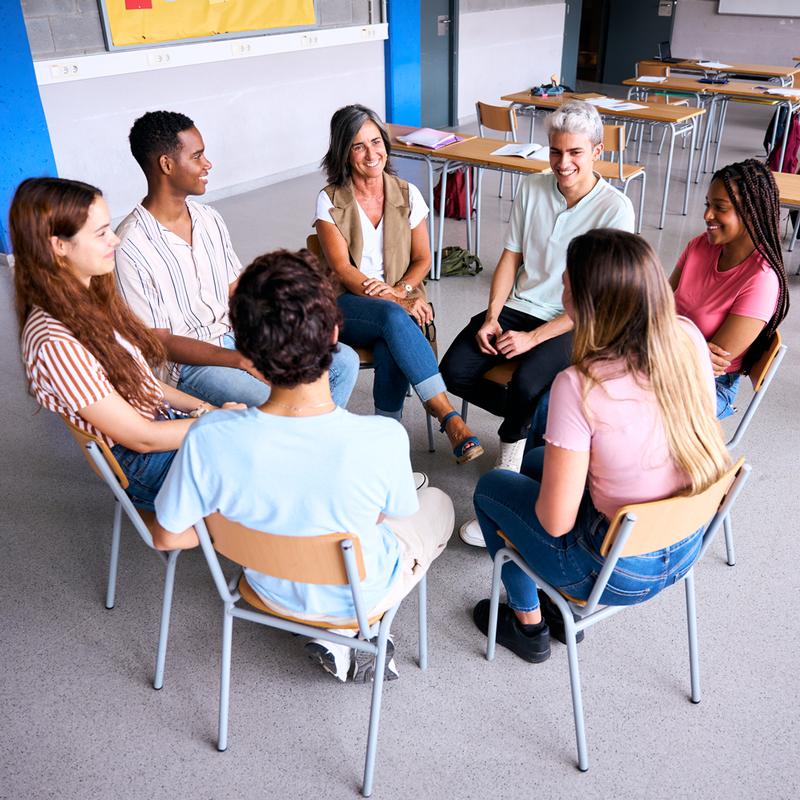
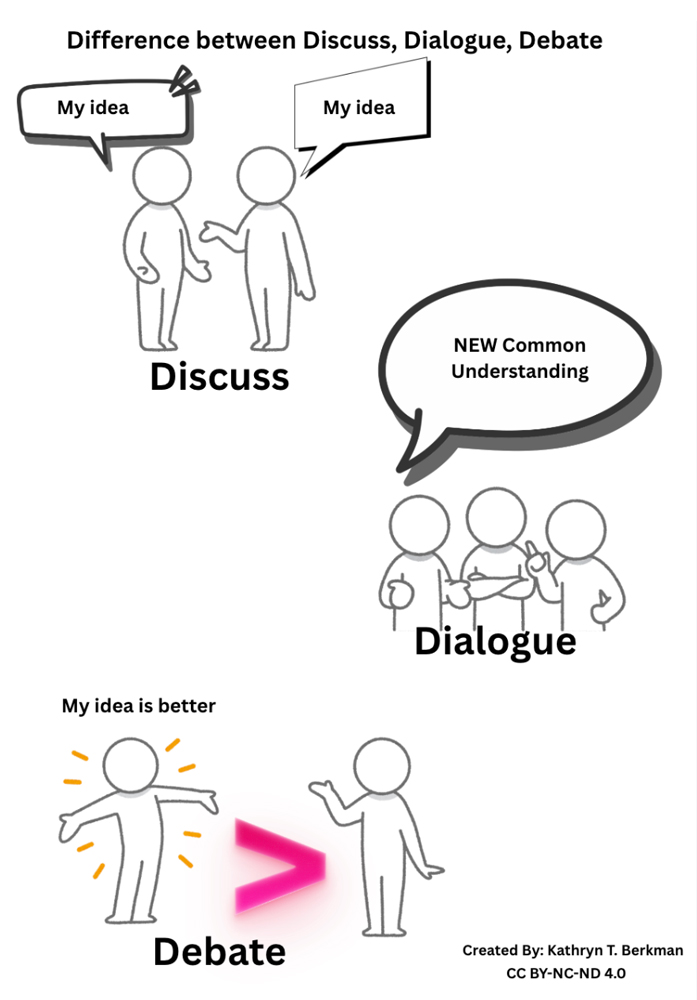
Dialogue is a conversation between two or more people, to generate new knowledge and foster new understandings. While debate is about winning, dialogue is about understanding. Dialogue should not come from an "I am right” and “you are wrong" mentality. When engaging in dialogue, participants seek to identify one or more common interests so that all parties involved are working for a common purpose.
Dialogue is an essential component of community engagement because it encourages people from diverse viewpoints and walks of life to share ideas, build consensus, and make mutually beneficial decisions. It is rooted in deep listening and the ability to truly grasp what another person or group is saying. Empathy is intertwined with dialogue; if we cannot walk in another’s shoes, we cannot hear them clearly.
When writing this article, we were inspired by a speech from the Dalai Lama entitled Peace Through Dialogue - Addressing Conflicts Without Violence, in which he stresses the importance of dialogue as a tool for peace. He says,
“The reality today is that we are all interdependent and have to co-exist on this planet. Therefore, the only sensible and intelligent way of resolving differences and clashes of interests, whether between individuals or nations, is through dialogue.”
The Dalai Lama also goes on to say that the building blocks of dialogue are great will, determination, compassion, respect for others’ rights, and respect for others’ interests. Without a desire to hold space (listening without judgment or the urge to fix) for someone else, real dialogue cannot occur.
Thoughts on Dialogue From Experts: Moving Beyond the Helicopter Approach
We interviewed several experts in the field to hear their thoughts on the meaning of dialogue. We heard stories of peacebuilding and connection, but also some caveats about the limits of dialogue when power is imbalanced. We would like to share some of our most important takeaways below.
The first person we spoke with was Heidi Oxley-Whitnell, the Creativity Activity Service (CAS) coordinator at UWC Thailand and the founder of CAS ConnectEd. Heidi emphasized that open dialogue between schools and community partners is essential for building strong, lasting partnerships. She explained that teachers and students can sometimes take a “helicopter approach” when working with community partners, making assumptions about a community before truly understanding it. Too often, we arrive believing we know what is best, rather than first asking people what they actually need. As Heidi put it,
“We go in, stir things up, and then leave. But before stepping in, we need to come together, have honest conversations, and listen carefully to our partners’ perspectives. Once everyone is aligned, we can create a meaningful plan.”
Ongoing dialogue ensures that all involved are working toward a shared purpose and mutual understanding.
We also spoke with Dror Rubin. He is the senior facilitator and chief field coordinator of Constituencies for Peace – Religious Leaders Initiative, and has won awards for his peacebuilding work. Dror spoke with us about what he feels is the essence of dialogue. He said,
“In dialogue, the purpose is growth, the purpose is relationships, that sense of developing a third or another narrative, not to adopt the other side's narrative or to stay in your own, but to develop a third narrative in a way that holds aspects from both - mine that I came from and the other side.”
Dror also told us that the purpose of dialogue is not about winning, as compared to discussion, where we sometimes tend to say, “Who was better?” or “Who was more convincing?” In dialogue, the idea is not to show off your knowledge, but rather to open your heart to hear others’ ideas. Everyone can find a place in a dialogue; it is not based on your wisdom or skill.
While reciprocity is the goal, Maha El-Taji, a retired researcher and university lecturer and the last person we interviewed, offered an important perspective on the structural realities of dialogue. After leading deep listening workshops between Israelis and Palestinians for 20 years, she had a significant change of heart. She now argues that true dialogue is not possible unless structural inequalities are first addressed and removed. When we asked her how we could handle situations where students and teachers have more socioeconomic and linguistic power than the community partners they are working with, Maha advised:
“Make the students aware of power imbalances, make them aware of their privilege and how it can be used to better the world. They have the capacity to get it. To get the subtleties and complexities and to be critical thinkers.”
Without acknowledging power imbalances, dialogue can unintentionally minimize harm or assume a "false equivalence" between groups. Thus, we must make students aware of their privileges. They must be critical thinkers who understand that conversation alone cannot replace justice.
Practicing and Preparing for More Authentic Dialogue - Ideas for Educators
To help students navigate these complexities and build the self-awareness Maha describes, educators can start with structured classroom practices to help them develop their dialogue skills. Students should be taught what dialogue is and what it looks like, sounds like, and feels like. Below is a graphic Kathryn created to show the difference between discussing, debating, and dialoging.
The National Constitution Center has excellent resources on fostering dialogue, such as this Constitutional Conversations and Civil Dialogue Toolkit. The toolkit includes information and lesson ideas on topics such as:
"Don't speak twice until everybody has spoken once. That is a great rule for every group you're involved in because everybody thinks they've been treated fairly."
The Association for Middle Level Education (AMLE) has also created a civil discourse curriculum in partnership with the Reagan Foundation. This resource was created to be a “non-partisan curriculum that helps middle school students build the skills of civil discourse—listening to understand, disagreeing respectfully, and engaging in constructive dialogue.” You can access the free curriculum here. The course covers topics such as active listening, nonverbal communication, clear and concise expression, and respectful discourse. The course stresses that, when engaging in dialogue, it’s not about avoiding disagreement or controversial topics, but about “learning how to approach it with respect, thoughtfulness, and an open mind.”
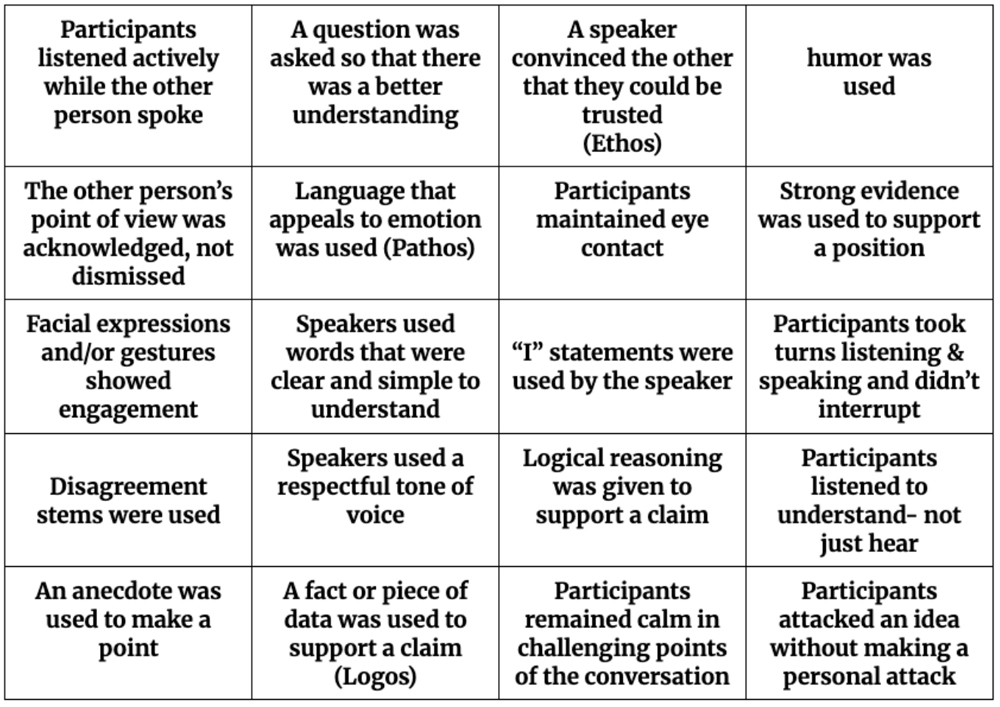
An example of a useful tool from the civil discourse curriculum is this conversation card, which asks students to reflect on their own and their classmates’ participation in a dialogue. It can help students become more aware of what they say and do during conversations with others, moving them from passive listeners to intentional participants in the pursuit of mutual understanding.
The Transformative Power of Dialogue
Through dialogue, the themes for this article emerged as we spoke with several different people in the field to hear their thoughts and insights. If we had not researched or engaged in these conversations, we would not have been able to include so many perspectives that we had not thought about ourselves. There is power in listening, in slowing down, and taking the time to hear someone else and consider their viewpoint. Without engaging first in dialogue, community engagement activities may cause negative unintended consequences. Indeed, from local communities to the world stage, global leaders trying to bring peace have one strategy in common: dialogue.
However, dialogue requires more than just listening; it requires an open heart and space for others to share without fear. In his book, Living Buddha, Living Christ, Zen Master Thich Nhat Hanh says, “In true dialogue, both sides are willing to change. We have to appreciate that truth can be received from outside of—not only within—our own group. If we do not believe that, entering into dialogue would be a waste of time.” As schools begin to transition towards community engagement and the new learning outcomes, educators need to model authentic dialogue for the common interest with their students, while also acknowledging its limitations. It is our collective task to show students how we can communicate thoughtfully and intentionally to create a more peaceful world for animals, people, and the environment.
Questions for Further Reflection
Kathryn T. Berkman currently works at Munich International School. She began her journey as a teacher after graduating from the University of San Francisco, focusing on social justice and multiple intelligences in math education. She has had the opportunity to teach middle schoolers across three countries over the last 13 years. Kathryn is keen to engage in opening the Solutionary lens and framework for educators in different contexts.
LinkedIn: Kathryn T Berkman
Meredith Robinson is the Middle Years Programme community engagement coordinator and English Language Acquisition teacher at KIS Bangkok. Her career overseas has taken her to multiple countries where she has worked across primary and secondary school in roles often involving service learning and action, sustainability, and Diversity, Equity, Inclusion, and Belonging (DEIJB).
LinkedIn: Meredith Robinson
Megan Vosk teaches the Middle Years Programme, Individuals and Societies, and English Language Acquisition at Vientiane International School. She is also the community engagement coordinator there. Additionally, Megan is a member of the Association for Middle-Level Education (AMLE) Board of Trustees.
LinkedIn: Megan Vosk