

I went to high school and university in the 1980s. I remember the Sony Walkman as the breakthrough technology of the time, strapped to the waists of teens alongside cassette tapes filled with their favorite songs. I remember how we used old, prerecorded cassettes to dub over, taping over the open tab on the edge of the cassette, with our own songs to save a few bucks rather than buy new blank cassette tapes. As a student, I was the kid who played all sports, eventually focusing on basketball and playing at the university level. For me, being physically active was a way of survival. It was hard, time-consuming, physically and mentally draining at times, and involved frequent failure and learning, all while increasing my capacities and potential to flourish. Sports gave me purpose, an identity, and a pathway toward the success I have achieved today. It was how I survived and thrived.
Centuries ago, humans needed physical strength for survival. We walked long distances, carried heavy loads, and worked the land. Then the Industrial Revolution and technology arrived. Cars reduced walking. Elevators reduced climbing. Machines reduced manual labor. Physical effort became less necessary, but it did not become less important. In fact, because daily life demanded less movement, deliberate exercise became more valuable. The same thing is happening with thinking in schools today and the advancement of artificial intelligence (AI).
As I remember from school, we had to memorize information, perform calculations, draft documents, and search through books. Some may remember the old card catalog systems in the library just to find a book. Thinking was woven into everyday life, even if I did not see it that way at the time. I recall calculators becoming a standard learning tool for students. This faced harsh criticism and protest from math teachers who believed technology would replace thinking. Going back even further, Socrates believed that the introduction of the pen and writing down one's thoughts for the purpose of keeping a record would have a negative impact on cognitive development and memory. “The written word is the enemy of memory” (Krakauer).
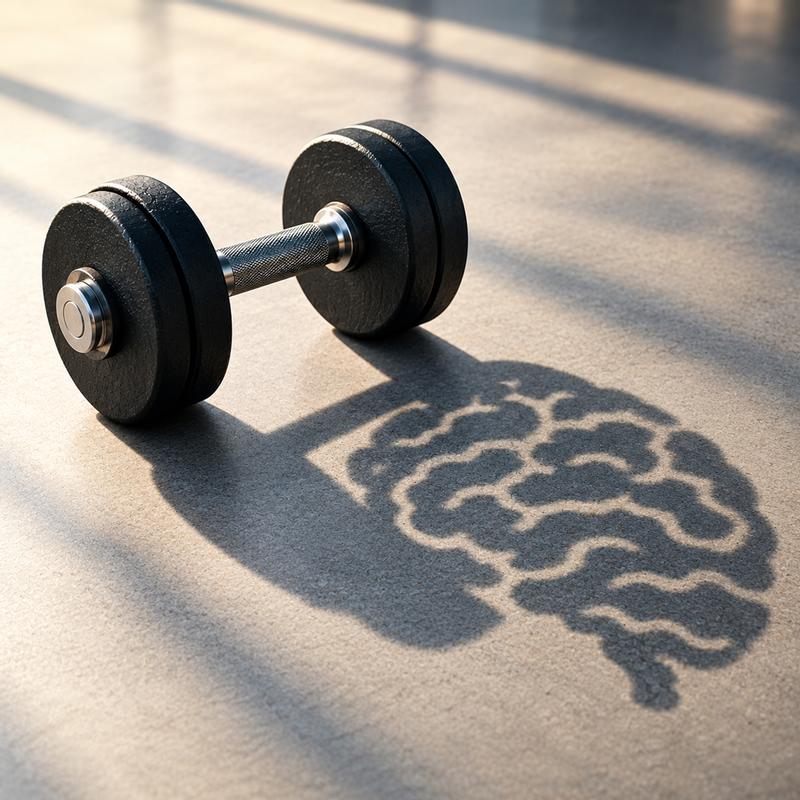
Today, AI can summarize articles, generate reports, solve equations, and answer questions in seconds. Just as machines reduced the need for physical labor, AI reduces the need for certain kinds of cognitive labor. However, there is a critical lesson worth reflecting on from how we physically maintain and improve our health. When people stopped moving, they did not become healthier. They needed intentional exercise to maintain strength. Likewise, when AI takes over routine thinking, humans need intentional intellectual exercise to maintain wisdom, judgment, creativity, and curiosity, just as millions go to the gym today to maintain and improve their physical health and strength.
In the gym, physical exercise develops capacities that machines cannot give us: strength, endurance, flexibility, and coordination. Cognitive exercise develops similar capacities, such as critical thinking, creativity, ethical reasoning, empathy, and intellectual resilience. AI can assist with these abilities, but it cannot build them for us any more than a forklift can build our muscles.
Individuals who never exercise gradually lose physical fitness. Similarly, a person who always accepts AI-generated answers may gradually lose the ability to analyze deeply, exercise patience with complex problems, and exercise independent judgment. It’s a form of cognitive atrophy. The danger is not that AI thinks for us. The danger is that we stop thinking with it.
Elite athletes use sophisticated equipment, nutrition plans, and technology. Yet they still train relentlessly in challenging conditions, rebounding from injuries and learning from failure. The tools they use amplify their capabilities rather than replace them. The most successful learners in the AI era will do the same, using AI to expand their perspectives, challenge assumptions, and generate alternatives while accelerating routine tasks. But they will still engage in the hard work of questioning, reflecting, deciding, and creating. Just as athletes use sophisticated equipment with specific intention, AI ought to be used in the classroom with the same degree of intention to maximize learning potential and performance.
As many schools and teachers still struggle to find the balance between AI and human-centered learning, we need to remind ourselves that the practice should not be to resist technology, just as we do not reject bicycles or elevators. Instead, it is to find and maintain balance.
In 2025, I participated in an international teacher exchange consortium program that allowed me to visit an international school in Japan for one week. The purpose was to engage in observations and conversations with faculty and students about effective and ethical AI integration in their school. I learned a great deal about their experiences, both good and bad, their processes and protocols, and their vision for the future. However, what I did not expect was the missing link that brought it all together for me.
I was invited to participate in a traditional Japanese tea ceremony. This longstanding tradition, deeply rooted in Japanese culture, was integrated into the school’s extended curricular program, with the intention of building a tea house on campus. It was a clear testament to the school’s mission of inspiring minds and nurturing compassion, in which both characteristics were highly evident during the ceremony. The connection between longstanding traditions and future aspirations became clear to me. There were three key takeaways from the tea ceremony that are natural extensions of core principles of AI integration:
Process Over Product: The tea ceremony is not about the tea, but about the process: gestures, pacing, and attention to detail.
How we come to know with AI is becoming increasingly more valuable and relevant than the final product.
Human Intention: It's been said that tea without intention is just a drink.
Humans provide the intention that drives AI. Then, and only then, can AI do the work. AI without intention is communication without meaning.
Awareness of Context: The tea master adjusts movements based on the season, guest, and space.
Likewise, thoughtful AI users must adapt to context, audience, and purpose.
In the industrial age, intentional physical exercise became important because daily life required less physical effort. In the information and AI age, thinking needs to be more intentional because daily life requires less cognitive effort. The challenge for educators is not teaching students to compete with AI but helping them develop the intellectual fitness to use AI ethically and effectively, keeping humans at the center of learning. This is how we can continue to inspire minds and lives to flourish so that students are best prepared to transform our globe.
Reference
Krakauer, Jon. “On Writing, Memory and Forgetting: Socrates and Hemingway Take on Zeigarnik.” Scientific American, Scientific American, 2012, https://www.scientificamerican.com/blog/literally-psyched/on-writing-memory-and-forgetting-socrates-and-hemingway-take-on-zeigarnik/.
Derrick des Vignes is a middle years program educator at Ridley College in St. Catherines, Ontario. Over the past three decades, Derrick has made significant contributions to six international schools as a teacher and administrator.