Fast approaching cliché status, the notion that our current students will take up jobs that have not been invented yet echoes around education conferences the world over. The standard response is that we as educators must nurture highly adaptable, flexible workers who are ready to slot into whatever role this unpredictable future may throw at them.
I, however, think we’re missing a step; we do not want our students to dynamically adapt to ever-changing demands of newly invented jobs; instead, we want them to be the inventors of these industries and professions. However, as our sector naturally (and rightly) shifts towards macro-level systems thinking so as to solve the problems of tomorrow, in order to raise these creators we must hold on dearly to the most human element of all: the nature of self, its realization and, ultimately, its worth.
The recent Organisation for Economic Co-operation and Development (OECD) PISA results have prompted renewed discussion about the role of technology in education and the factors that shape student learning. Although these results offer valuable insights, interpreting them requires care. Findings can be viewed from different perspectives, particularly when it comes to artificial intelligence (AI) in education. For example, some have highlighted findings suggesting that students who rely on AI for specific science homework score roughly 20 points lower than non-users, while others point to research showing that learners explicitly taught AI literacy in the classroom achieve higher scores in the subject. Both findings can inform the debate, but neither tells the whole story. Education is nuanced, inherently human, and often messy. Neither teachers nor students operate according to algorithms, so perhaps we should look beyond broad conclusions about technology and reform to consider what the results reveal about students' actual learning needs. For instance, fewer than half of OECD students are secure in checking the credibility of sources. PISA offers important evidence to inform our thinking, but it cannot, on its own, determine the way forward for education.
The International Baccalaureate has begun to embrace this profound complexity through taking a giant leap forward with the Systems Transformation Pathway. This moves away from traditional, siloed subject-based learning and instead requires students to undertake projects centering around vast human systems such as food, biodiversity, energy, and mass migration, to see how they interact. Its transdisciplinary approach inspires actionable solutions to problems facing the young people we teach in their later lives.
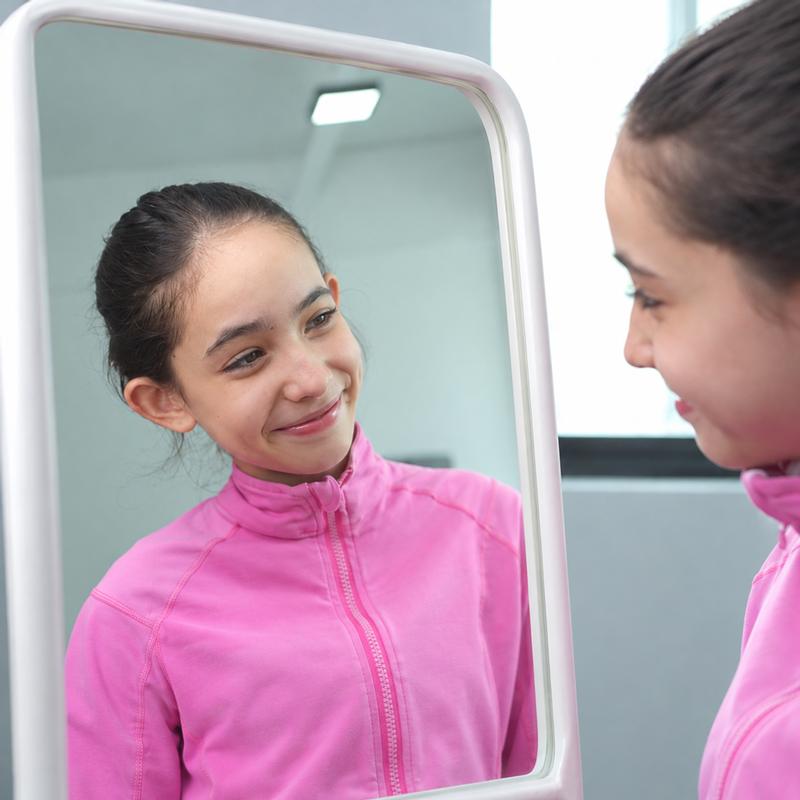
At Aiglon College, we are entwining future-ready provision within our curricula; however, our motivations are guided by one central question: does this offering equally amplify a student’s sense of self? If a student understands the complexities of global supply chains but is not aware of the related competencies they possess to improve them, do we risk raising cogs that fit neatly into the machine? Systems thinking must of course be further integrated into our sector but it arguably fails if students lose sight of the true depth within themselves.
Aiglon has always maintained a historic and unrelenting commitment to self-realization. Our founder, John Corlette, believed that Spirit is central to character education. Influenced by both Western and Eastern philosophies, Corlette’s mission was to invite students to simply ask “Who am I?” From the school’s inception, he wanted to create a school in which students pushed past the mind’s constant reactivity towards the silent authenticity within everyone. For 77 years, morning meditations have given the swirling snow in one’s mind the chance to settle. Students must reflect, discuss, and express who they are, their values, morals, abilities, and shortcomings as part of our assessment and reporting process. We endeavor to foster the endless quest for self-realization so that our students go out into the world knowing who they are and how to make positive change. As the sands of our sector shift, however, the foundations of self-realization must shift with them.
Knowing oneself is no longer a purely spiritual exercise; it is the primary ingredient of what it is to be human in an AI-dominated future. Firstly, with artificial general intelligence on the horizon, we, as schools, must place a greater emphasis on metacognition and its potential to empower students to dynamically and responsively modify behaviors in real-time. An immediate priority within our setting is to amplify student voice through regular surveys, voice labs, and in-house feedback apps so that students take control of their intellectual growth through recognizing how they interact with their world. We embrace this as a turbulent time for human learners given that large language models are perceivably racing behind our students with an overtake in their sights. As a result, metacognitive and spiritual reflection are no longer perceived by our parents as an added bonus of an Aiglon education but instead as a cornerstone of any child’s future success.
This profound quest for self-awareness is also contextualized through our Spirit Curriculum, which fully intertwines with traditional subjects. Whether it's through design thinking, empathy, active listening, or environmental boundary awareness, our students delve deeper and deeper into their sense of self. However, we deliberately pitch this self-realization against real-world challenges. Students are vibe coding apps to provide a bucket list of ways to develop as an Aiglonian and (literally) sending satellites into space to research physics questions. Our students authentically experience the myriad ways in which they, as nuanced humans, interface with advanced technologies on a daily basis.
Ethically, the stakes for this kind of grounded, self-awareness have never been higher. A top researcher who recently resigned from a well-known AI company cautioned that their industry is recklessly racing towards self-improved superintelligence and therefore potentially gambling with human lives. In a worst-case scenario these systems could revolutionize entire fields overnight, hack anything no matter how robust and, eventually, exclude humans entirely. That being said, these complex global systems will remain intertwined with humans and we must fight to never become passive observers.
Our students must therefore enter the world of work confident in their skill sets, values, and moral judgment, with a strong sense of self. Our curriculum aims to support this development by pairing deep, systemic knowledge with profound self-discovery. By helping students find themselves within the systems, we aim to prepare them not simply to adapt to an unknown future but to help shape it.
Jack George is Assistant Head at Aiglon College, Switzerland, where he oversees academic and pastoral provision for the middle school (Grades 8-10). His mission in education is to ensure that the systems we build bend and flex to embrace all learners so as to allow all students leave secondary school with substantial depth in the understanding of themselves as humans and their place in the world. Jack regularly delivers lectures and conference talks on the foundations and frontiers of assessment, schools’ alignment with future competency frameworks and experiential curriculum design. He believes in the transformative power of character education and multilingualism to nurture future custodians of tomorrow.
X: @jcgedu
LinkedIn: https://www.linkedin.com/in/jack-george-372262273/