

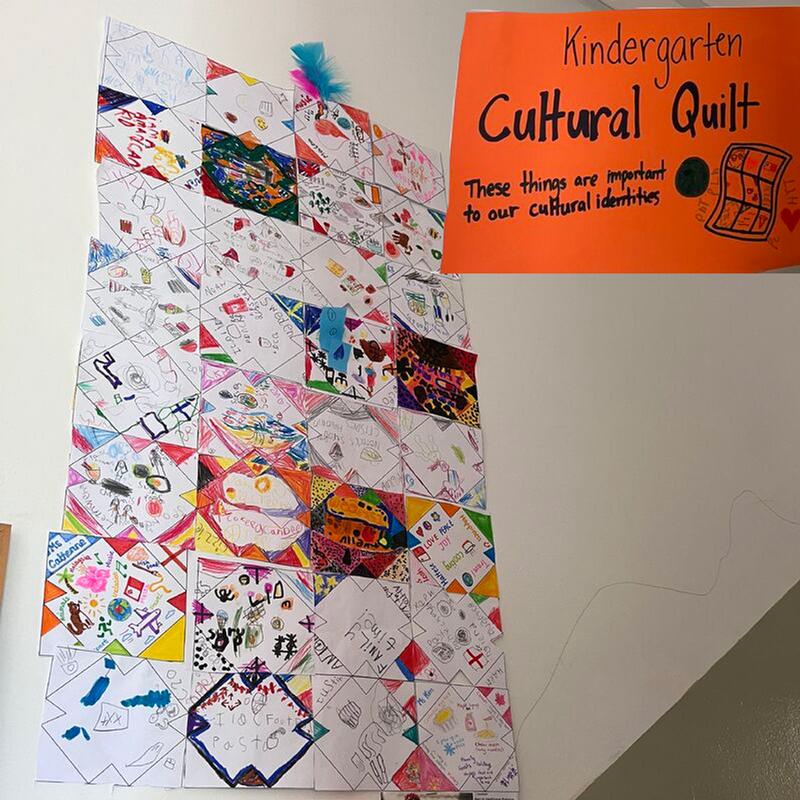
Over seven years, our international school has explored diversity, inclusion, and wellbeing through whole-school initiatives focused on race and culture, gender equality, and LGBTQ+ inclusion. This work has brought positive change as well as challenges within the community, shaping both the school’s approach and my own understanding of how to sustain meaningful progress.
Three years ago, fellow Diversity, Equity, Inclusion, Justice (DEIJ) leader, Michael Neumann, and I published an article on how our international school was attempting to take a responsive approach to teaching subjects revolving around Diversity, Inclusion, and Wellbeing (DIW). At Verdala International School (VIS), we strove to not only ensure themes of diversity, equity, inclusion, and belonging were part of our school curriculum, but to take a proactive approach to exploring essential themes across all of elementary. From its early beginnings, our elementary school carved out a block of time every Friday to focus on exploring vital topics in the classroom, aptly named “Friday Focus.” Five years later, it evolved to a school-wide dedicated period for all classes and grades to explicitly explore topics that encompassed our community, ranging from accessibility to LGBTQ+ inclusion. Later renamed “Impact Hour” by staff and students, our DIW program aimed to explicitly recognize, explore, and celebrate peoples, groups, and topics sometimes overlooked in our wider society.
When writing our first article, I was the Black, Indigenous, and People of Colour (BIPOC) champion for elementary. My goal was to guide teachers on how to introduce and teach students about race and culture during lessons carved out into all class timetables. As we navigated the difficulty of teaching students about other cultures and their own cultural identities, one common challenge that emerged was ensuring students were not inadvertently categorizing groups of people based on how they looked or perceived stereotypes, but instead, acknowledged and celebrated similarities and differences. As years passed and I went from champion to DIW coordinator, this complex fine line continued not only with race and culture, but all essential themes explored throughout the school. Further exploration and discussion about how to respect a diverse community within our international school proved tricky due to cultural backgrounds, personal beliefs, and general lack of knowledge on certain topics and themes. I was no longer focusing on just BIPOC exploration for elementary-aged students, but expected to coordinate every grade’s learning, appeal for champions to introduce topics, and train all staff to confidently cultivate essential themes to their students.
Over the years, Impact Hour continually changed, adapting to suit current affairs of the world, logistics within a school-wide schedule, and often pushback felt across the wider community.
Intertwining Within the Curriculum
When our school first began our DIW program, the topics were connected to a specific theme, such as gender equality and respect or gender equality and empathy, with the intention being students would explore the topics through a specific lens, thereby intertwining the exploration with the International Primary Curriculum personal learning goals being taught in elementary at the time. The hope was these connections would help deepen understanding through a focused aim.
A challenge that arose surrounding the themes connected to the topics was that the random personal goals did not travel across the whole school, especially once middle school became International Baccalaureate (IB) Middle Years Programme authorized. The upper grades, who at times found exploring the intricacies and nuances of particular topics challenging, did not find the connecting theme relevant, leaving them often overlooked in the exploration itself. Additionally, without the connection to personal goals being taught in elementary, secondary exploration of the essential themes became repetitive and surface level without a relevant lens in which to study these topics.
Once our school became an IB Continuum World School, the shift from connecting to an International Primary Curriculum personal goal to an IB learner profile naturally made sense. Continuing to connect the topics to themes allowed the exploration to remain relevant by building on concepts the students were already engaging with in their classes.
This past year, the aim was to push champions to introduce their topics through the lens of one IB learner profile, such as Community and Risk-Taker or Accessibility and Inquirer—and hopefully allow students to focus their explorations with specific purpose. While we began the year with this intention, the lenses often continued to be overlooked or forgotten. This was most felt in middle and high school, where students usually only had one session a month to explore a topic as opposed to elementary’s four sessions. With only one session to introduce and flesh out an essential theme, the focus was put on learning the context of the topic rather than given time to view it through a learner profile lens. Ultimately, the idea of connecting to the IB learner profiles needed more time to develop and grow within the wider school community and the guidance around exploring with greater purpose needed to be further refined.
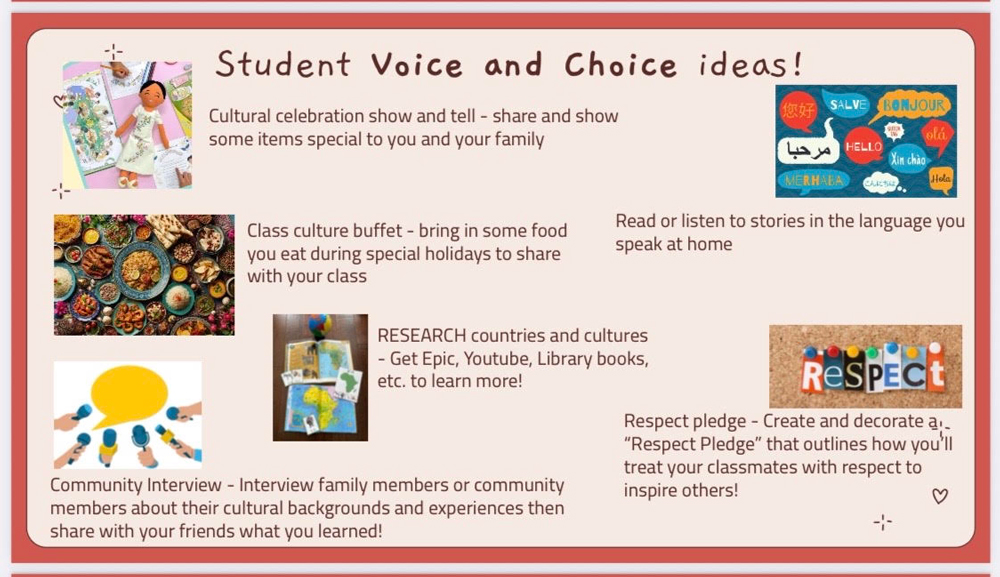
Verdala's Impact Hour was highlighted by student voice and choice, allowing students to inquire about essential themes in meaningful ways. (Photo source: VIS)
Student Voice and Choice
Throughout its evolution, Impact Hour’s core feature rested on “student voice and choice” to make these themes relevant. Students needed to be in charge of how they explored and celebrated the theme in order for their learning to be impactful and meaningful. This was an easy enough idea in theory but proved challenging in application. For elementary students, particularly the early years and lower elementary grades, this was often done through controlled or guided inquiry. The chosen monthly theme was introduced by the “champion” and students were then given suggestions of activities to further explore the topic. I would often hear of whole classes reading story books on the given theme, creating signs or posters to promote a chosen action, or having class discussions with the teacher. The idea of student voice and choice became a little more complicated for middle school and high school students who had been exploring and learning about these topics for the past seven years. These students didn’t want a repeat of activities every month. They wanted new activities, new collaborations.
One way we attempted to find a happy medium was to approach student councils. The elected student representatives had surprisingly insightful ideas of promoting themes surrounding groups of people and identities beyond Impact Hour. Suggestions for cross-grade discussion groups, cultural movie and song events, and TikTok style clips to teach each other about topics were popular ideas.
Another approach we took to ensuring secondary students had agency over their exploration was to match upper grade classes with younger elementary classes. For students who had already learned about these themes for the past five years, they now had the opportunity to consolidate what they had learned or knew about a topic and figure out how to convey their knowledge and understanding to much younger students. 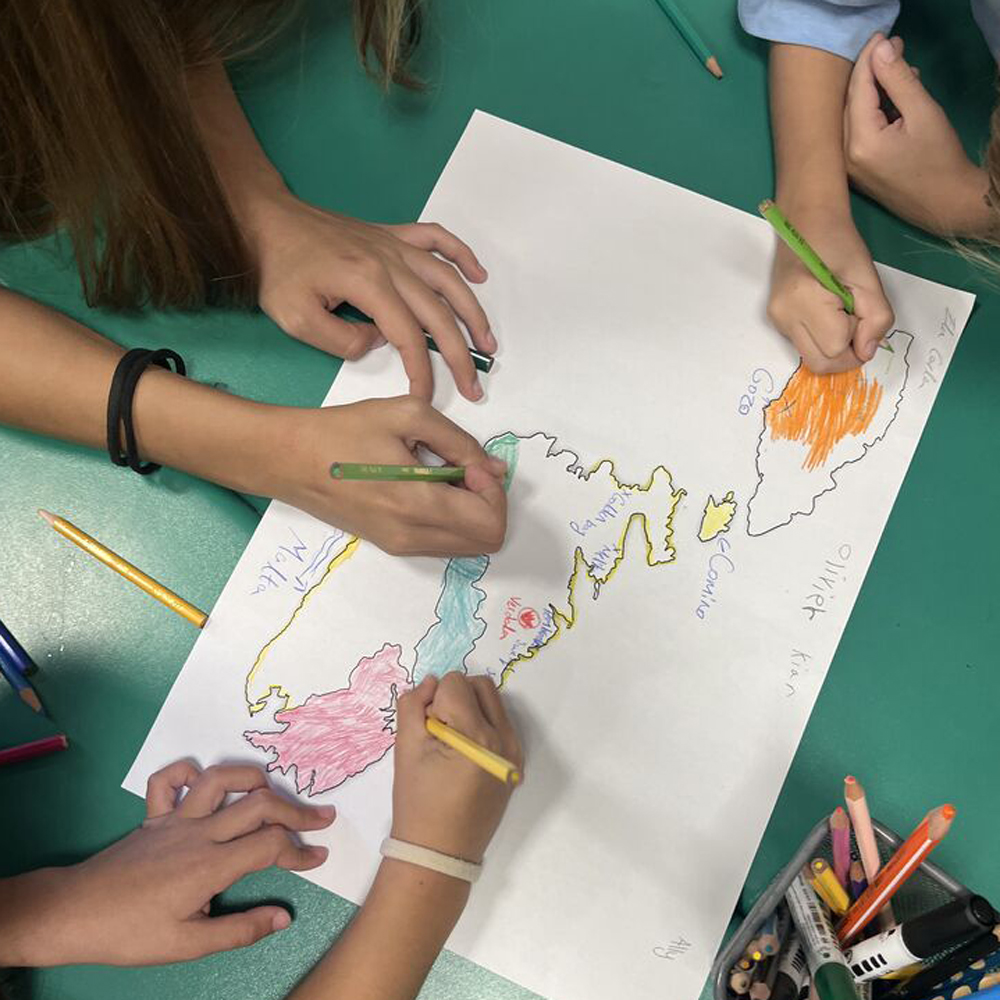
Cross grade exploration of our host country. Secondary students collaborated with Elementary students to collectively learn about Malta. (Photo source: Kimberly Wong)
This past year, cross-grade collaborations and teachings were incredibly successful. Elementary students were excited to explore themes with wise but more relatable people than their homeroom teacher while secondary students enjoyed the shift from student to teacher after having developed their own thoughts, opinions, and knowledge of these topics. However, the attempt to develop student council ideas and involvement with the DIW program did not have sufficient time to expand. Between secondary’s decreased Impact Hour sessions and the difficulty of coordinating student council ideas with all homeroom staff, there once again was not enough time to establish more student representation for DIW within the school.
Community Buy-In
One of the biggest challenges DEIJ topics in education face is ensuring these essential themes are being taught and explored in a way that aligns with how families wish their children to learn about these topics. Within our school community, families often had questions about the themes of race, gender, and in particular, LGBTQ+ inclusion. In the wider global context, these specific themes are extremely complex, nuanced, and controversial among some adults, so how could we ensure that families understood and agreed with how we were teaching these topics to their children?
In order to get families on board with any DIW theme, we needed to ensure they understood how we would be exploring them. As the DIW coordinator, I held information sessions each term to showcase the essential themes for that term and how teachers and champions would be introducing the topics in all three sections of the school. We broke down the logistics of Impact Hour, the resources provided by us and the champions, and how student voice and choice worked. Throughout the year, there was always an invitation to families to become champions for topics they felt particular passion for or were interested in exploring with the students. Themes such as community, health and wellbeing, and earth month were topics that many families were enthusiastic to be part of the learning without them feeling “controversial” or “heavy.” For many families, the fear of the unknown was where pushback stemmed from: how would we tackle the complexity of race, how would we explain different types of families, how would we answer questions about gender identity? By holding regular information sessions to explain how DIW was explored in our school, how students guided their own learning, and how families were invited and encouraged to participate, we helped families become less wary and more supportive of Impact Hour.
Staff Support
In addition to families, some staff were hesitant to teach certain topics to their classes, either stemming from their own personal beliefs on certain topics or hesitancy about teaching a subject they knew little about. Additionally, contrary to student’s guided or free inquiry of these essential themes, there were teachers who preferred a guided design for teaching teenagers about topics considered controversial. It became difficult to follow student voice and choice when some teachers preferred a structured step-by-step way of exploring themes to a class of boisterous learners. Notably, most secondary staff are schooled in specialized subject areas and do not have the confidence or time to learn how to introduce and explore topics unrelated to their specialty.
To help some staff feel more confident with these themes, we held regular training sessions for the whole school to help staff learn and understand how other teachers were introducing the topics. One way that worked well was inviting past champions to hold mini-workshops on how they explained, explored, and introduced the theme they championed for their section of the school, providing their peers with the resources they had for their own classes and advice on how they might proceed when faced with more complex questions from the students.
While some staff left these workshops or whole-school training sessions with more resources and confidence i n teaching these essential themes, some continued to feel frustrated with the dedicated Impact Hour time that meant instructing beyond their specialized subject. With more time to prepare, a dedicated space to find multiple resources, activities, and ideas for further exploration, and purposeful training without added pressure, more teachers might have felt more positive about Impact Hour.
What’s Next?
While the evolution of our DIW program has brought me both immense joy and, at times, challenges, it has provided me a platform to explore my own connection to the importance of diversity, inclusion, and belonging for all. With bittersweet feelings, our Impact Hour program will not be continuing at Verdala International School this year. Perhaps the broader conversations around DEIJ across the world have prompted me to write this follow-up article in the first place. The decision to focus on embedding our essential themes in the curriculum rather than exploring them explicitly reflects an evolving approach to DEIJ work in education. Through the experience of developing a schoolwide initiative like Impact Hour, I have come to recognize that some approaches to making the topics relevant and fresh for students, such as involving student councils, encouraging families to become champions, and providing space for cross-grade teaching, need time to evolve and become part of the wider school culture. Someday in the future, I would like to think that a religion, a person’s love, or how someone sees themselves differently from you will not be seen as “alternative” and will, in fact, simply be part of life. Inclusivity for all will be the norm. Perhaps embedding DEIJ themes into school curricula will help make this a reality. Perhaps there needs to be another step between explicitly teaching these themes and embedding them in teaching standards. As our approach to teaching these essential themes grows and evolves, hopefully empathy, respect, and thoughtfulness for all will continue to reflect the original purpose of our Impact Hour program.
Kimberly Wong Grade 1 Primary Years Programme teacher and DIW lead at Verdala International School.