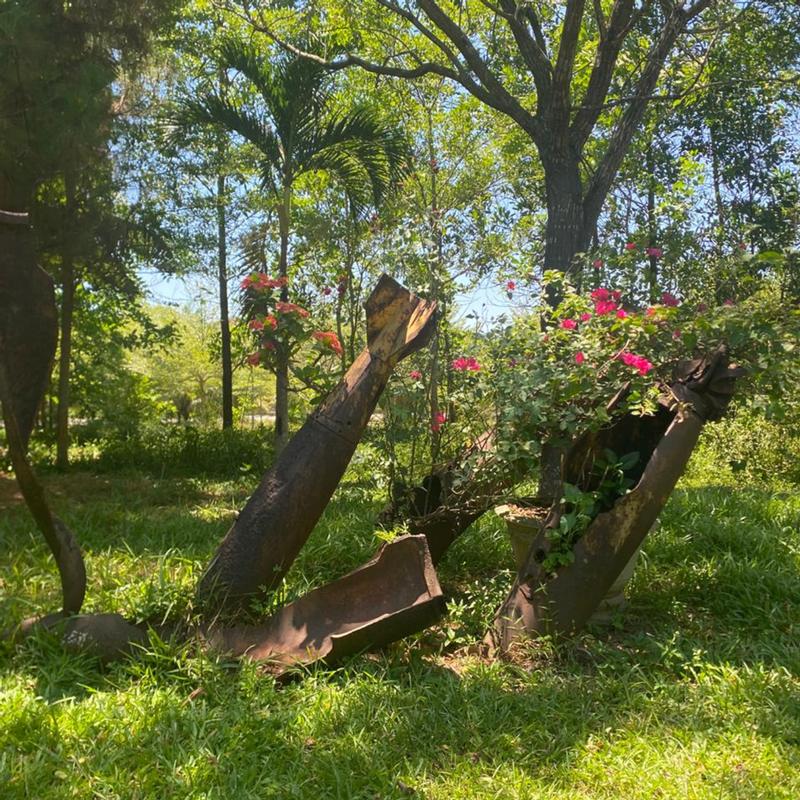
I’m lost. Or perhaps just trying to make sense of an unreadable map: overworked, scarred, and only partly drawn. Returning to work after the steady pulse of holiday life, I find myself back in the throngs of pedagogical navigation, continuing to question the value we place on where knowledge comes from. Whose knowledge do we give young people to navigate the world? What do we value as knowledge, and what might it mean to renegotiate epistemic privilege? How do we move through these murky, centuries-old landscapes without getting stuck in the inevitable quagmires? And how do we learn to dig our way out?
Global Citizenship Education (GCE) offers one place to begin. UNESCO frames it not as an additional subject but as an educational approach that can be embedded across formal and informal education. It seeks to develop learners’ knowledge and critical understanding of global issues and interconnectedness, alongside empathy, solidarity, respect for difference, and the capacity to participate and act (UNESCO, 2015). This is where the map might begin: with an understanding that the world is interconnected, that different perspectives and cultures matter, and that we can work collectively towards a more just world. But critical approaches to GCE ask us to look beneath the surface. Who defined the problem? Who produced the knowledge about it? Whose perspective is presented as universal? Who is positioned as the person who needs to be helped, educated or developed? And what historical structures produced the inequalities we are now asking young people to solve? These questions have taken me down some interesting wormholes.
Who Draws the Map?
Theory of Knowledge, as a fundamental part of the International Baccalaureate (IB), takes young people along the compelling path of asking: Why do we know what we know? But how do we help them explore that question without also confronting, at least in part, the histories of power that have shaped what has been allowed to count as knowledge? I have recently spent time unpicking Vanessa Andreotti’s work on decoloniality and diversality in global citizenship education. Drawing on Grosfoguel (2007), Andreotti reminds us that postcolonial and world-systems approaches often ask related questions from different vantage points. World-systems approaches tend to examine the political and economic structures that shape global inequalities, while postcolonial approaches attend more closely to culture, identity, and knowledge. Both challenge Eurocentric understandings of development and knowledge, and Grosfoguel argues for bringing these dimensions into conversation.
This matters in education because colonial power does not only exist in institutions and economic structures. It can also shape what we recognize as knowledge, whose knowledge we value, and the assumptions through which we understand the world. Andreotti’s analysis brings questions of epistemic privilege, coloniality, and the politics of knowledge production directly into GCE (Andreotti, 2011). Following these lines has led me back to Boaventura de Sousa Santos and his idea of abyssal lines: ways of thinking shaped by colonial histories that divide what is recognized as legitimate and intelligible knowledge from what is rendered absent, dismissed, or made invisible (Santos, 2007). The line is not simply between Western and non-Western knowledge. Rather, it describes a hierarchy through which particular forms of knowledge have historically been privileged as rational, universal, and authoritative, while other ways of knowing and being have been positioned as peripheral, particular, traditional, or less legitimate. This distinction matters because the problem is not that there is one coherent category of “Western knowledge” on one side and a collection of alternative knowledges on the other. The problem is the power to decide what counts as knowledge in the first place: whose accounts are treated as authoritative, whose experiences are made visible, and whose are rendered less credible.
Indigenous, African, Asian, and other knowledge systems have, in different contexts, been marginalized, excluded, or interpreted through frameworks in which Western knowledge becomes the universal measure against which others are judged. The line, then, isn't literally on a map. It is a line of power. Santos also uses the concept of epistemicide to describe the destruction or wasting of knowledge. Knowledge can disappear through exclusion, dismissal, or displacement; through being overwritten, never taught, treated as inferior, or translated into forms that become legible only within another knowledge system (Santos, 2007). Knowledge can be lost without anyone announcing that they are destroying it. And this is where the map becomes interesting. Maps don't simply tell us where things are. They tell us what has been deemed important enough to name, measure, center, and record. They make some things visible while pushing others towards the margins. So perhaps the question is not only whose knowledge do we teach? Perhaps it is: Who gets to draw the map? Who gets to redraw it? And who is given the tools to imagine a different map altogether?
Drawing Differently
My own map has not formed in a straight line. I find myself navigating the IB as a Year 13 parent while also looking at education from the other side of the classroom. My current role as a senior leader, leading enrichment, means I no longer have the weight of exam classes, but I am teaching art in primary and Year 7. With that comes an opportunity for early knowledge interventions: introducing a diversity of artists and ideas before the hierarchy of what counts as “good” or “important” art has fully settled.
After 26 years teaching art across state and independent schools in London, and now in Vietnam, alongside my experiences working in Kakuma Refugee Camp in north-west Kenya, I have become increasingly interested in what happens when we change the artists we place in front of young people. In my own classrooms, when I ask 7-, 10- or 15-year-olds what they know about art, the answers can be remarkably consistent: Picasso, Van Gogh, Leonardo da Vinci, the Renaissance. They recognize these names and images as art. Yet when we look at artists and traditions from the region in which they are actually living, the response can be very different. Vietnamese, African, wider Asian, and other non-European art can sometimes be described as craft, rather than art. This feels significant. These children have not consciously decided that European art is more important. They have simply learned a map. When their first response to something unfamiliar is, “That’s not real art,” we encounter, in miniature, a knowledge hierarchy. Not because the child is prejudiced, and not because Picasso or Van Gogh should not be taught, but because the map they have been given has already taught them what art looks like.
As an art teacher, I can begin to redraw that map early. Not by removing artists but by adding to the landscape: European modernism alongside Asian perspectives; historical artists alongside artists working now; women artists across different eras and cultures. Introducing artists such as Jadé Fadojutimi creates another point of reference. Her work does not need to replace Kandinsky or German Abstract Expressionism. It simply complicates the story of what painting can be, who gets to make it, and whose visual language we consider worthy of attention. It also opens the storytelling of art beyond individual artists and movements: towards the geopolitical forces that shape the art world, and the ways in which art responds to and influences the world around it. Most recently, my Year 7s, only fresh on the campus, debated the question, “What is art?” There was no single answer to arrive at. Instead, there was drawing on wider knowledge, making connections, questioning assumptions and, importantly, creating space for dialogue and disagreement. Perhaps this is what a small shift in the map can look like. The questions we ask may be as important as the answers we provide. Who gets to decide what counts as knowledge? Who gets to decide what counts as truth? Who gets positioned as modern, developed, or advanced? Who gets positioned as behind, traditional, or in need of being taught? The lines seem to lead everywhere: into curriculum, colonialism, knowledge, identity, privilege, representation, and, increasingly, artificial intelligence. And perhaps that is the point. The map is not fixed.
What Happens When History is Lived?
Following these lines has also made me think about the relationship between knowledge and experience. A recent workshop I co-developed and led for staff, Creating a Culture of Empathy in the Classroom, explored some of the landmark moments that have shaped the world we have inherited: the fall of the Berlin Wall, Tiananmen Square, the end of apartheid, and the conflicts and political shifts that continue to shape our understanding of the present.
We teach these moments as history. But what happens when history is also something you have lived? How do we help young people move towards the human experience within historical knowledge without collapsing empathy into identification or assuming that proximity automatically produces understanding? These questions have been sitting with me partly because of my daughter, who is currently immersed in essays, research, and historical sources as part of her IB. She is a keen historian, approaching the past through detailed research, competing accounts, political context, and evidence. My own knowledge is different. Some of what I know comes from having been there: from being an observer, a witness, absorbing the atmosphere of a moment, the conversations around me, the news coverage that felt both abstract and immediate, without necessarily possessing the wider historical vocabulary to understand it. She is currently researching an aspect of The Troubles in Northern Ireland: the Gibraltar shootings of March 1988, the subsequent Milltown Cemetery attack, and the Corporals’ killings. Listening to her walk me through her research and interpretations catapulted me back to 1988 and into my school days on the Falls Road. Some of what she was carefully piecing together from historical sources was connected, for me, to things I had witnessed and experienced as a teenager. Her researched account and my increasingly fragmented memory sat beside one another, neither entirely sufficient on its own. It made me question where each form of knowledge sits when they encounter one another. Which do we privilege? What might one reveal that the other cannot? And can the encounter between them produce a deeper, more complicated understanding than either can offer alone? Perhaps the most important learning happened not through either account, but through the conversation between them. We talked. We listened. We questioned. We disagreed at times. My daughter’s research did not make my memories more historically accurate, and my memories did not make her research more authoritative. But together they exposed the possibilities and limitations of each. Experience can offer something that cannot be acquired simply through research. Research can provide context, challenge memory and expose the limits of what we think we know. There is value in that encounter. It has also made me reflect on the education we have tried to give her. We have deliberately taken her to places where history can be encountered rather than simply studied: memorials, museums, and sites where traces of the past remain present. Now, as an increasingly independent young person, she is choosing to visit some of these places herself.
There is something significant in that movement: from being taken somewhere to choosing to go there; from experiential learning provided by others to developing the curiosity and agency to seek out different forms of knowledge for herself. For me, the experience has also unsettled my own relationship with the past. I grew up in Belfast during The Troubles. As a teenager, I experienced the conflict from within a particular cultural and social context, but I did not have the historical or political vocabulary to understand all that was happening around me. I knew its symptoms: division, fear, hostility, the language of us and them, and the dehumanizing narratives through which an enemy is constructed. I absorbed aspects of this through the culture in which I was growing up and have only subsequently developed the distance and knowledge to question and understand it differently.
Those questions did not remain in Belfast. Over time, they have drawn me towards education, peacebuilding, and my work in East Africa, eventually bringing me to Kakuma Refugee Camp. But I would not claim that experiencing conflict in Northern Ireland gave me any particular authority to understand conflict elsewhere. If anything, it has made me more conscious of the limits of what I know. What it gave me was a sensitivity to the human consequences of division, and a curiosity about how people living with very different histories make sense of their own experiences. Kakuma has complicated that understanding further. Working alongside people whose histories, languages, cultures, and experiences are very different from my own has reminded me that lived experience does not automatically translate across contexts. There is a danger in assuming that because I recognize something as familiar – displacement, division, marginalization, conflict – I therefore understand it. I don't. Listening, learning, and allowing other people to define their own experiences has to come first. Perhaps this is another dimension of an ecology of knowledges. My experience in Belfast is one form of knowing; my daughter’s historical research is another; the experiences and knowledge of people I have encountered in Kakuma are others. None provides the complete picture. And none should become a lens through which all the others are interpreted. The value lies partly in what happens when they meet, and in the humility required to recognize what each cannot tell us.
The Margins
We inherit maps of knowledge. Those maps are shaped by histories of power. Education can reproduce those maps, but it can also give young people the tools to question, extend, and redraw them. We are not powerless. Nor are we always as overruled by exam boards, curriculum requirements, or institutional structures as we sometimes imagine. Within many educational settings there is space and flexibility, if we choose to use it. Small shifts can matter.
Yet I sometimes wonder whether we have become more accustomed to managing outcomes than examining causes, or even the early symptoms. Perhaps this is where the fatigue sets in. We know many of the issues. We know the map has been brutalized and scarred: the carcass and forensic evidence of some of the uglier sides of the human condition. And yet, as educators, it can be easy to approach each new issue with fervor, only to become meerkats, popping up and down in response to the latest concern rather than holding our line. Are we afraid of being too “woke?” Of offending? Of exposing our own lack of knowledge and uncertainty? Or is it simply time? Don't rock the boat. There is a curriculum to be covered. And so we shrink back and survive another year, delivering the deliverables, like Mallett’s Mallet, ducking out of the way of the inflatable, or indeed invisible, hammer. Perhaps this is part of the difficulty: questioning what we have inherited can feel destabilizing. So what if, as educators, we choose a different kind of responsibility? Not to have all the answers, but to challenge our own knowledge and examine its roots, its biases, and the assumptions we have inherited about what is worth knowing.
Perhaps the margins are the best place to begin. Not to discard the map, but to look more carefully at its edges. What has been left out? Who has been left out? Why? And where might it fit? The question is not always what we need to change. Sometimes it is what we might add: slowly, deliberately, allowing it to seep in and alter the landscape. I keep thinking about Michael Landy's Weeds. After Break Down, his extraordinary act of systematically destroying everything he owned, he turned his attention to the painstakingly detailed etching of ordinary urban weeds. They were the things growing in the cracks: overlooked, adaptable, persistent. They didn't need to overthrow the landscape. They found a way through it (British Museum, 2026). Perhaps knowledge can work like this too. Like weeds and flowers, nature always seems to find a way through the cracks in the concrete. Perhaps the work is not always about replacing what is already there, but about making space for something that has been overlooked to take root. In doing so, we might shift the status quo: from being told what to know towards having the opportunity to become tellers of what we know, what we have experienced, and what we might yet discover. Maybe the task is not to redraw the whole map at once. Maybe it is to notice what is already growing at its edges.
So What is Our Role as Educators?
Andreotti’s work asks what decoloniality and diversality might look like in global citizenship education practice (Andreotti, 2011). It is a question that has stayed with me because it moves the conversation from theory into the messy, everyday reality of education. What might this actually look like in a classroom, in a curriculum, in the questions we ask and the knowledge we choose to place in front of young people?
Perhaps our role is not to redraw the map for them, or to replace one fixed version of knowledge with another. It is to create the conditions in which they can encounter different ways of knowing; to widen what they see, hear, and experience; to ask better questions; to model our own uncertainty; and to make space for knowledge that may sit at the edges of the map we inherited. Andreotti’s questions have stayed with me, particularly the challenge of avoiding the creation of “new abyssal lines” in the work against abyssal lines (Andreotti, 2011). It is a useful warning. There is no simple tick-box exercise here. No new list of voices to add and declare the work done. Decoloniality cannot simply become another curriculum package, another prescribed set of perspectives, or another fixed version of what we now consider to be the “right” knowledge. We cannot replace one hierarchy with another and call it progress. Perhaps our role is more uncomfortable than that. It is to help young people hold complexity, ambiguity, conflict, uncertainty, and difference without rushing to resolve them. To question our own assumptions alongside theirs. To recognize that we, too, are positioned within the maps we have inherited. To create space between what is given and what might be possible. Maybe it is to teach young people how to look for the gaps, notice the voices that are missing, question the authority of the lines already drawn, and understand that knowledge is not simply something to be received but something to be encountered, questioned, and connected.
This does not mean that everything becomes equally valid, or that evidence, expertise, and disciplinary knowledge no longer matter. It means becoming more attentive to the partiality of knowledge, including our own, and to what might become possible when different knowledges encounter one another without one automatically being positioned as the universal measure of the other. Like the weeds pushing through the cracks, perhaps we don't need to do it all at once. We just need to make enough space for something different to take root.
The work may be less about redrawing the entire map than about noticing what is already growing at its edges, making space for it, and allowing it to alter the landscape. Perhaps this is what decoloniality and diversality might begin to look like in practice: not deciding which knowledge wins, but creating the conditions in which different ways of knowing can meet, question, challenge, and change one another. And perhaps our role as educators is not to hand young people a new map. It is to give them the confidence, curiosity, and critical tools to recognize that maps are made, that lines have histories, that margins are never neutral, and that they too can become participants in making and remaking the worlds they inherit.
References
Andreotti, V. de O. (2011) ‘(Towards) decoloniality and diversality in global citizenship education’, Globalisation, Societies and Education, 9(3–4), pp. 381–397. doi: 10.1080/14767724.2011.605323.
British Museum (2026) ‘Michael Landy: Nourishment’. Available at: British Museum Collection, Series: Nourishment (Accessed: 31 August 2026).
Bryan, A. and Bracken, M. (2011) Learning to Read the World: Teaching and Learning about Global Citizenship and International Development in Post-Primary Schools. Dublin: Identikit / Irish Aid.
Grosfoguel, R. (2007) ‘The epistemic decolonial turn: Beyond political-economy paradigms’, Cultural Studies, 21(2–3), pp. 211–223. doi: 10.1080/09502380601162514.
Santos, B. de S. (2007) ‘Beyond abyssal thinking: From global lines to ecologies of knowledges’, Review, 30(1), pp. 45–89.
UNESCO (2015) Global Citizenship Education: Topics and Learning Objectives. Paris: UNESCO.
Sue Mulholland is Deputy Head at the British International School HCMC, Vietnam and Chair of the Board of Gua Africa United Kingdom (UK). With more than 25 years’ experience across UK maintained, independent, and international education, she has worked across educational leadership, enrichment, experiential learning, and social impact. Sue has spent more than a decade working in humanitarian and refugee education, including sustained engagement in Kakuma Refugee Camp, Kenya. Her work explores how education can widen young people’s experiences, challenge assumptions, and create space for different perspectives, knowledge, and ways of understanding the world.
https://www.linkedin.com/in/sue-mulholland-0b1583284/