

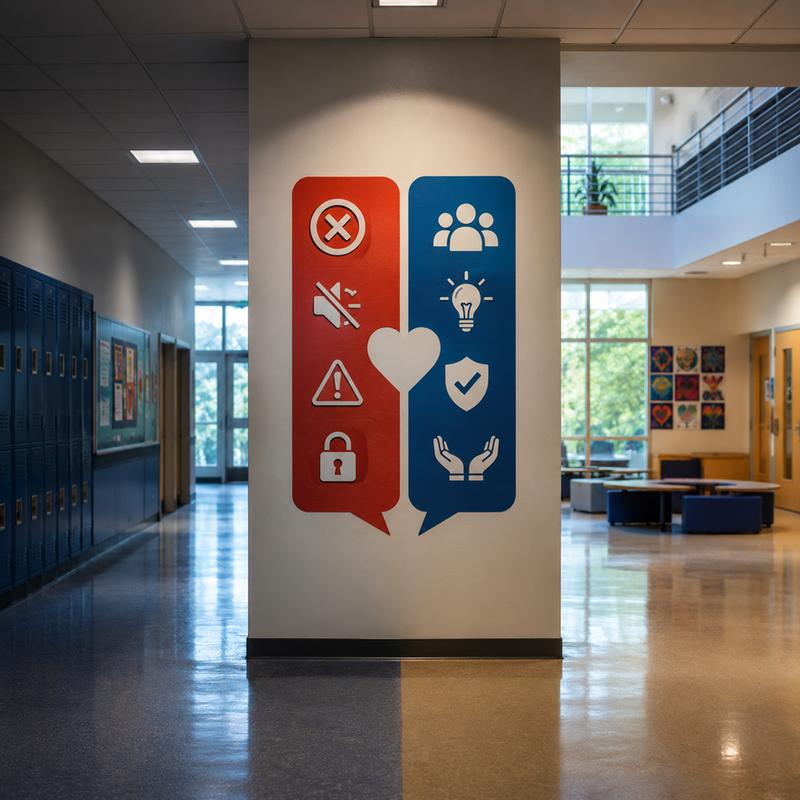
Why the Language We Use Matters
School safety is one of the most important responsibilities of any educational institution. Schools invest significant time and resources in emergency procedures, drills, and crisis response plans to ensure students and staff are prepared for unexpected situations. Yet one important aspect of safety planning can be overlooked: the language we use when communicating about safety.
While safety procedures are designed to protect students, language rooted in fear, compliance, or control can unintentionally create stress and anxiety. When students perceive a threat, their brains shift into a survival response, commonly known as "fight, flight, or freeze." In this state, logical thinking decreases, anxiety rises, and learning becomes significantly more difficult.
If our goal is to create safe schools, we must recognize that emotional safety is an essential part of physical safety.
Moving Beyond Compliance
Traditional safety messaging often focuses on obedience. Phrases such as "silence is mandatory" or "failure to follow procedures will result in consequences" are intended to promote order and compliance. However, these statements can reinforce fear rather than understanding. A more effective approach is to communicate through connection, purpose, and care. Instead of telling students what not to do, we can explain why certain actions are important.
Consider the differences:
Or:
The actions remain the same, but the messages shift from control to collective responsibility. Students are more likely to cooperate when they understand the purpose behind expectations and feel that adults are working with them rather than directing them. The goal of safety communication should not simply be compliance. The goal should be to create conditions in which students can respond effectively because they feel supported and informed.
Preparing Students Before the Drill
Many schools invest considerable effort in conducting drills but pay less attention to preparing students emotionally for the experience. Simple proactive communication can make a significant difference. Digital messaging, classroom announcements, and teacher reminders can normalize upcoming drills and reduce uncertainty.
For example, a message on the school TV screens: "Tomorrow we will practice a safety drill. We do this so our bodies know what to do, even if our minds feel a little nervous. You are helping us keep our community safe."
Messages such as these frame drills as opportunities for learning rather than events to fear. Students understand what is happening, why it is happening, and how they contribute to community wellbeing.
Supporting Students After the Drill
Just as important as preparation beforehand is the communication that follows a drill. Many schools move immediately back into the school day without acknowledging that some students may still be processing the experience. A simple follow-up message can help students regulate emotions and reinforce a sense of accomplishment.
For example: "Thank you for your cooperation today. Our community is stronger because we worked together and followed the plan."
This type of message shifts attention away from compliance and toward collective success, helping students see themselves as active contributors to school safety.
The Power of Teacher Language
Teachers play a critical role in shaping how students experience safety procedures. During drills or emergencies, students often look first to the adults around them for reassurance.
One practical strategy is a simple three-sentence framework:
For example:
This approach communicates honesty, empathy, and confidence without minimizing student feelings.
Conducting a Communication Audit
Many schools regularly audit facilities, emergency plans, and security systems. However, do they audit the language used in their safety communications?
Before sending any safety-related message, ask three simple questions:
These questions help ensure that safety communications support both preparedness and wellbeing.
Safety Through Belonging
The most effective school safety cultures are built on trust, connection, and belonging. Students are more likely to follow procedures when they understand their purpose and believe the adults around them care deeply about their wellbeing.
When schools move away from language rooted in fear and toward language grounded in care, they create environments where students feel secure, valued, and supported. Safety becomes more than a set of rules. It becomes part of a culture where every member of the community understands their role in protecting one another. Ultimately, lowering stress, which in turn allows everyone to respond more effectively.
The language we use matters. By communicating school safety with care, we help students feel not only protected but genuinely safe.
Audrey Parker is the media assistant at the International School Yangon. In her work, she prioritizes positive messaging and is especially passionate about storytelling as a way to share the school's values and celebrate student achievements.
Sandra Sheppard served as the Director of Advancement at the International School Yangon, where she still has the role as a consultant, supporting the advancement department of the school. Sandra is co-founder of VisionNext.consulting, a group of professionals dedicated to supporting school leadership. She is the author of the book Which Shoe Am I?
LinkedIn: https://www.linkedin.com/in/sandy-sheppard-837b6869/