
Walk into almost any “premium” international school tour today and you will likely hear a familiar pitch. A sleek marketing video showcases a gleaming "innovation hub." Students smile behind high-end laptops, and a drone shot captures a 3D printer whirring away. The message is clear: Look how innovative we are. Look at our tech budget.
But if you strip away the screens and look past the buzzwords, what is actually happening in the classroom? Far too often, the learning model itself hasn't changed since the 1990s. The teacher remains the absolute gatekeeper of knowledge, the curriculum is rigidly siloed, and students consume content on glass instead of paper. We have confused shiny gadgets with pedagogical transformation.
The EdTech Illusion
Let me be clear, I am a deep believer in educational technology. My humanities curriculum is heavily tech-integrated. I routinely embed coding, build systems-thinking models, and task students with solving complex global problems that would be impossible without the right hardware and software. But the how is everything. Technology is entirely neutral; its educational value relies on alignment with modern, innovative pedagogy. Without that structural anchor, devices don't launch students further; they add noise.
I have sat at the back of a classroom and watched a student spend 50 minutes copying chunks of text from a website, swapping out three verbs, pasting it into a shared slide deck, and calling it "independent inquiry." This is digital plagiarism. Because there was no pedagogical scaffold, there was no room for synthesis or original thought. This is classic substitution disguised as progress, an expensive paperweight doing the job of a photocopier.
The Gritty Reality of the VR Cupboard
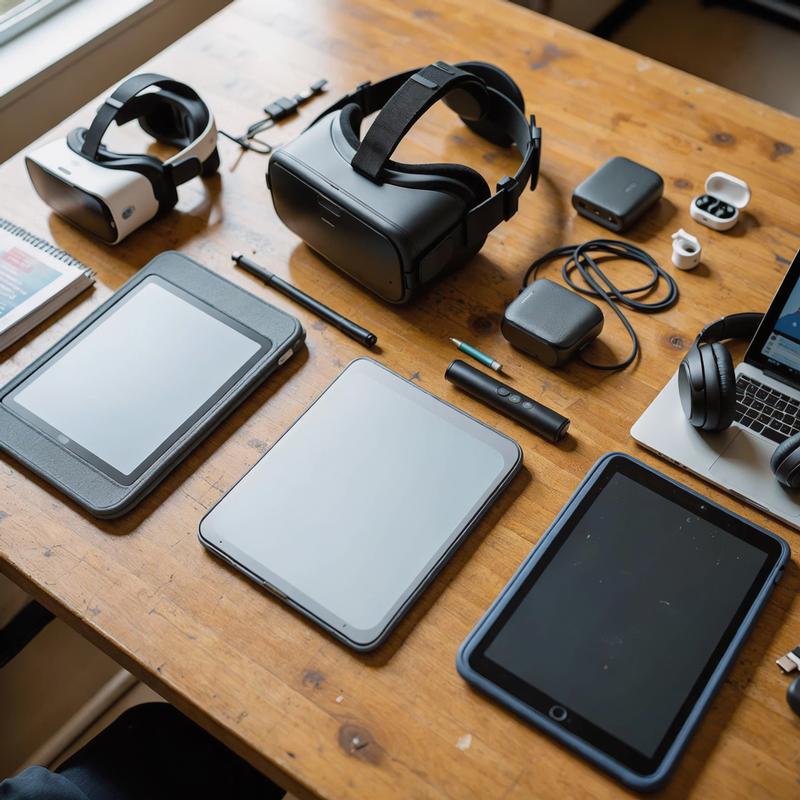
Take the current obsession with virtual reality (VR) headsets. On a school tour, they provide an undeniable wow factor for parents. In day-to-day reality, however, they are frequently a logistical and financial vortex, requiring high-cost software subscriptions and offering zero individual accountability the moment the goggles go on. True innovation only happens when we look past the hardware. A VR headset adds cognitive value only if treated as a short, sharp provocation within a highly structured environment—anchored heavily in metacognitive structures. The magic doesn't happen while the student stares into the screen; the breakthrough happens when they take the task entirely offline. The value is built in the subsequent debate and collaborative mapping that happens when the headsets are back in the box.
Shifting the Pedagogical Framework
To prepare young people to thrive in an unpredictable world, we do not need to replace teachers with algorithms; we need to change how we utilize resources to cultivate international-mindedness and future-ready skills. This demands deliberate pedagogical shifts grounded in student agency, cross-curricular application, and teacher autonomy.
Authentic innovation moves the student from passive consumer to active agent. Instead of regurgitating facts on a screen, students should leverage technology to solve unstructured, real-world problems—using devices to harvest environmental data or write code to analyze global trends. The modern world does not exist in isolated 45-minute blocks. Intellectual development happens when schools intentionally design units where students tackle complex challenges—sustainable urban design or ethical AI frameworks—applying math, ethics, language, and design thinking simultaneously. Sustainable transformation relies on teacher autonomy. True change happens when leadership empowers faculty to engage in collaborative curriculum mapping to uncover their school's specific friction points, rather than buying an off-the-shelf "innovation kit."
A Strategic Pause on Hardware
If we want to prepare students for a rapidly evolving, non-linear workforce, we must stop treating technology as the destination. Technology is an accelerator, but you cannot accelerate a pedagogy that is standing still.
Here is a radical challenge for international school Heads, directors, and instructional leaders: For the upcoming academic year, consider a strategic pause on non-essential student hardware upgrade cycles. Take those exact resources and reinvest them directly into expanding professional capacity. Fund internal supply cover, dedicated planning days, and long-term cognitive coaching for your staff. Let's stop asking what new devices we can buy next term, and start asking how we can fundamentally restructure our learning environments to foster genuine curiosity, critical inquiry, and student autonomy.
Only when we look past the screen will we find real innovation.
Liam Murphy is an international primary curriculum leader for humanities specializing in tech-integrated learning, systems thinking, and learning design at Kellett School, Hong Kong. He is dedicated to developing deep thinking frameworks for young learners, leveraging global issues and real-world problem solving to move students from passive content consumers to active agents of change. He is a firm believer that technology is an accelerator for—not a replacement of—good pedagogy.