
In the journey of becoming an artist, research is not a separate academic task, it is an essential part of artistic thinking. Many students often wonder why artist research is necessary. Is it simply a requirement for documentation, or is it something deeper? In reality, artist research is one of the most powerful ways artists develop ideas, challenge assumptions, and expand their creative language.
Why Do We Need Artist Research?
Throughout history, artists have learned from other artists. When we study the work of artists across cultures and time periods, we begin to enter a larger conversation that has been unfolding for centuries. Each artwork becomes a response to the world, to materials, to ideas, and often to other artists. Research allows students to see themselves not as isolated creators but as participants in this evolving network of visual thinking.
Studying artists helps students understand how artistic ideas are developed and transformed. When exploring the work of artists such as Yayoi Kusama, El Anatsui, Dali, Van Gogh, or Frida Kahlo, students quickly realize that art is rarely just about producing images. It is about exploring identity, history, politics, personal memory, culture, and the relationship between materials and meaning. Artists approach these themes through different lenses, and understanding these perspectives helps students broaden their own ways of seeing.
Artist research offers several key benefits for young artists. It introduces them to diverse visual languages and creative strategies. It reveals how artists experiment with materials and processes in unexpected ways. It also demonstrates how artists develop and communicate complex ideas visually. When students examine how artists respond to social issues, personal experiences, or cultural traditions, they begin to understand how art can function as a powerful form of inquiry.
However, an important distinction must be made between inspiration and imitation. Artist research is not about copying existing works. Copying halts creative thinking and prevents students from developing their own artistic voice. Inspiration, on the other hand, expands possibilities.
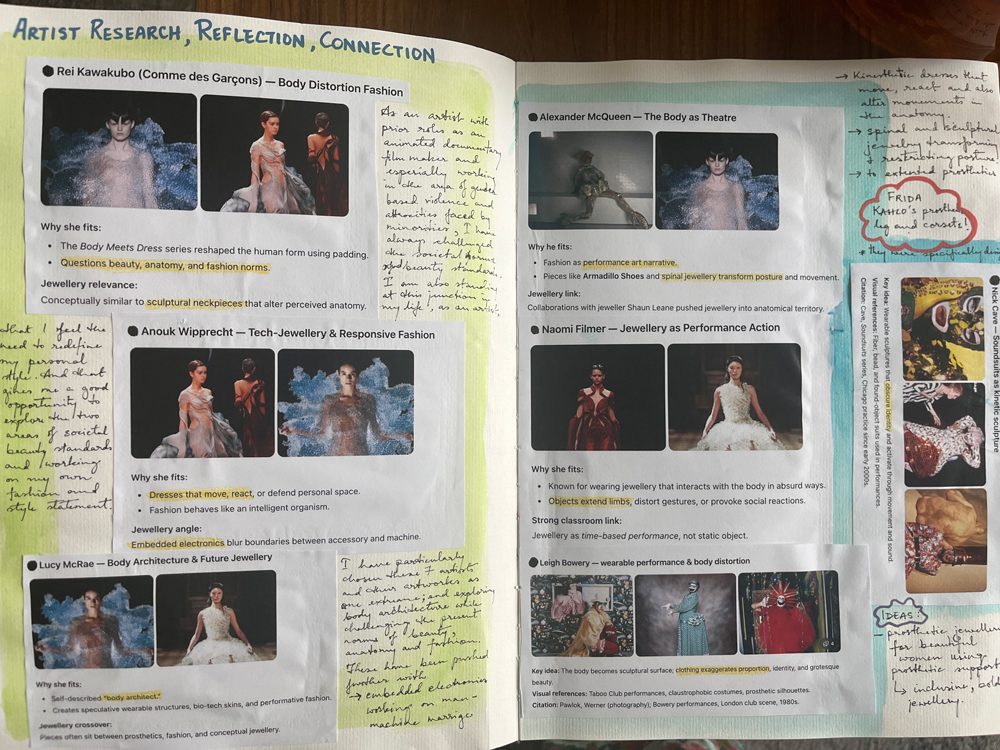
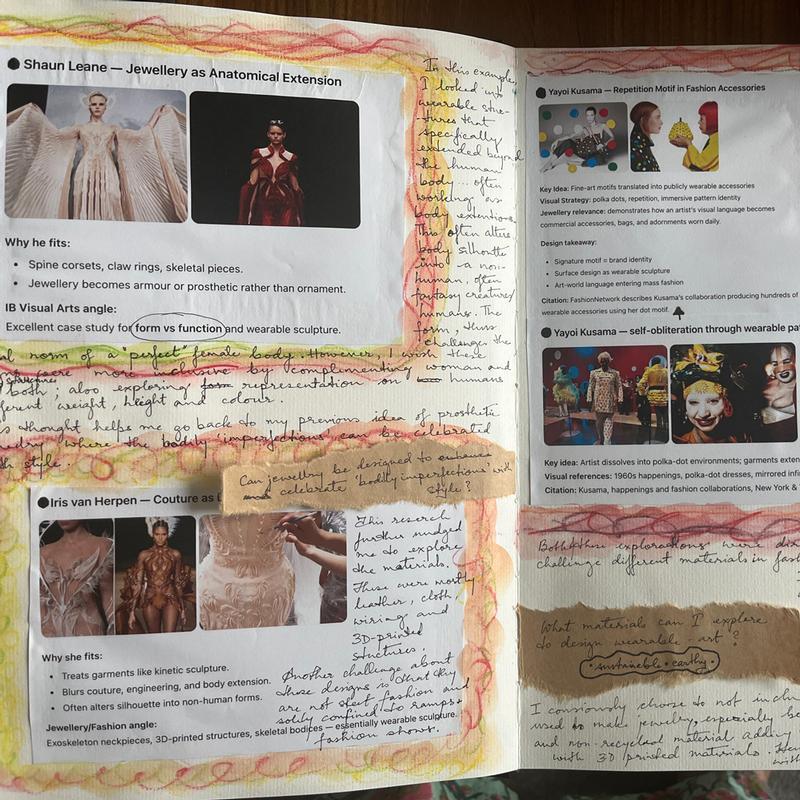
Excerpts from an art research journal. (Photo source: Dr. Debjani Mukherjee)
Artist Research: From Copying to Inspiration
Learning how to be inspired without copying requires a shift in how students observe artworks. Instead of asking how to recreate a particular artwork, students should ask deeper questions: What ideas is the artist exploring? What materials are being used, and why? What visual strategies are present—such as repetition, scale, symbolism, or fragmentation? What emotional or conceptual impact does the work create? By focusing on the thinking behind the artwork rather than its appearance, students can transform inspiration into original exploration.
Authentic artist research begins with reliable sources. Museums, galleries, artist foundations, and scholarly publications provide carefully curated and verified information about artists and their work. For example, institutions such as the Museum of Modern Art (MoMA) or Google Arts and Culture website offer extensive online archives, artist interviews, exhibition texts, and high-quality documentation of artworks. Gallery websites and museum collections often provide valuable insights into the context, materials, and intentions behind artworks.
How To Use Artificial Intelligence Ethically in the Process?
In recent years, artificial intelligence (AI) has also become a useful tool for supporting research. AI can assist students by summarizing complex texts, suggesting artists related to particular themes, or helping generate questions that deepen investigation. However, AI must be used thoughtfully and ethically. AI systems sometimes produce inaccurate or incomplete information, so students should treat them as starting points rather than final authorities. Any information gathered through AI should be verified through credible sources such as museum archives, artist statements, academic articles, or exhibition catalogs.
Ethical research also requires proper citation. When students use images, ideas, or quotations from external sources, they must credit the original creators and institutions. This includes identifying the artist, the title of the artwork, the year it was created, and the source where the information was found. Citation is not simply a formal requirement within academic work; it is an act of respect for intellectual and creative contributions.
Artist Research: Looking Deeper Into Building Connections
As students research multiple artists, they begin to notice connections between them. Artists from different cultural contexts may explore similar themes, while others may use entirely different materials to address related ideas. Recognizing these relationships is a critical part of artistic research. Rather than studying artists in isolation, students should look for patterns, contrasts, and dialogues between practices.
One effective way to explore these relationships is through visual mapping. Mind maps, concept webs, and network diagrams allow students to connect artists, themes, materials, and concepts. At the center of this network lies the student’s own inquiry question. From there, connections can branch outward to artists who explore similar ideas, to materials that support particular forms of expression, or to cultural contexts that shape artistic responses. Over time, this network of research begins to reveal patterns that guide creative exploration.
This is where artist research begins to influence the development of lines of inquiry. Research helps students refine the direction of their work by identifying key areas for experimentation. A line of inquiry might investigate how different materials communicate emotion, how scale changes the viewer’s experience of an artwork, or how artists from different cultures interpret a shared theme. These directions are often shaped by the artists students encounter during their research process.
In this way, artist research becomes a catalyst for artistic decision-making. It informs choices about materials, techniques, and conceptual frameworks. It helps students move from broad questions toward more focused explorations. Most importantly, it encourages students to develop a personal artistic voice grounded in thoughtful engagement with the wider world of art.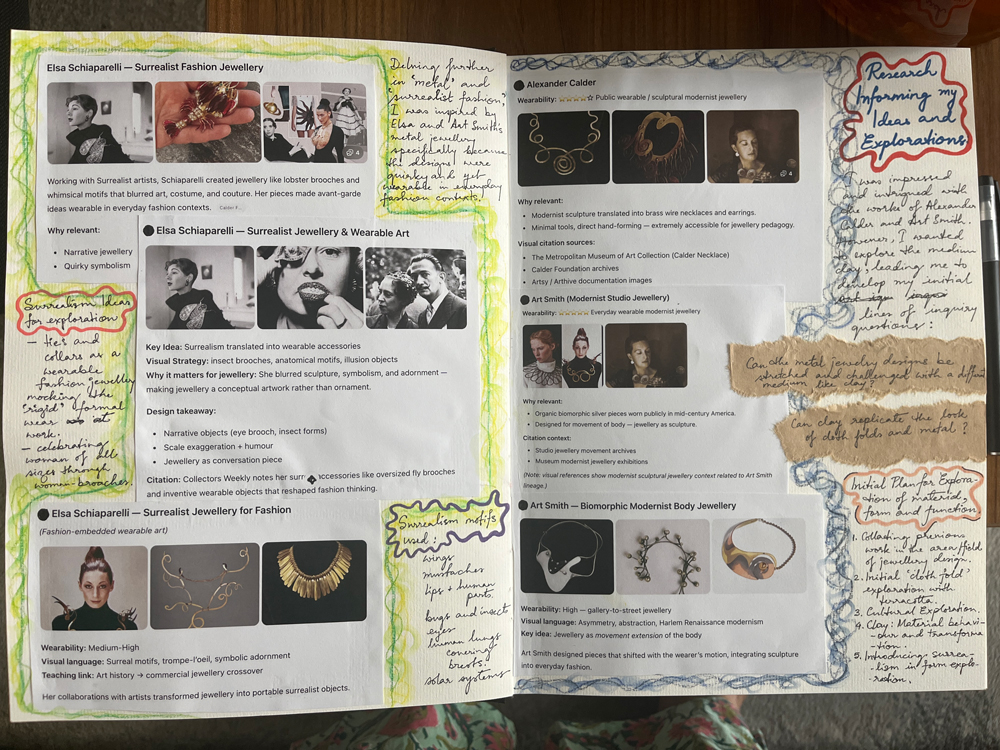
Excerpts from an art research journal. (Photo source: Dr. Debjani Mukherjee)
Ultimately, artist research is not a task to complete but a practice to cultivate. Through research, reflection, and connection, students learn to situate their own work within a larger artistic landscape. They begin to see art not simply as a product, but as an ongoing dialogue between ideas, materials, cultures, and generations of artists. When approached in this way, artist research becomes one of the most meaningful parts of the creative process. It allows young artists to draw inspiration from the past and present while continuing to ask new questions and imagine new possibilities.
Dr. Debjani Mukherjee is an International Baccalaureate Middle Years Programme and Diploma Program art and design teacher working at Gems World Academy, Dubai.
LinkedIn: https://www.linkedin.com/in/drdebjanimukherjee/