

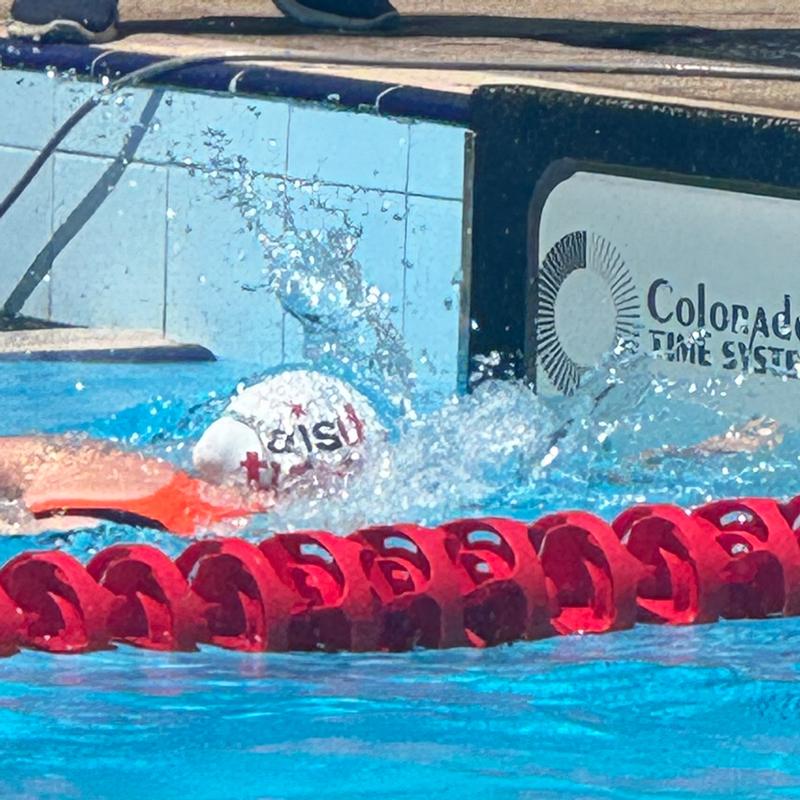
In Part 1, we explored how high-impact teaching strategies can transform a swim program, from gathering student voice to designing intentional practice sessions with clear objectives. Those foundational steps helped our swimmers understand their goals, track their growth, and engage more deeply in practice.
In this second installment, we take the next step: refining feedback, encouraging reflection, and strengthening communication with families. By connecting in-the-moment coaching with structured feedback loops and creating opportunities for swimmers to share and apply what they learned, we were able to boost individual performance, foster a stronger team culture, and deepen the sense of connection among athletes, coaches, and parents alike.
The Power of Feedback
Our next step was to reexamine how we delivered feedback to our swimmers. Anyone who works with, or lives with, teenagers knows that the most common answer to “What did you learn today?” is often a simple “nothing.” Feedback from our parent community suggested that our swimmers were giving similar answers at home, so we knew it was time to make some changes. One of the most influential studies on this topic is the 2007 meta-analysis by John Hattie and Helen Timperley, The Power of Feedback. This research synthesized findings from over 800 meta-analyses and concluded that feedback has a substantial positive impact on student achievement, showing a large average effect size. Hattie and Timperley proposed a model that breaks feedback into four key levels:
Their work provided a framework that helped guide how we thought about giving feedback to our swimmers, making it clearer, more actionable, and more connected to their personal growth.
We wanted to ensure that the feedback provided on the pool deck was not only meaningful in the moment, but also remembered, acted upon, and communicated clearly to parents. We set up an initial system to help our coaches provide the corrective feedback to our swimmers in the moment verbally following the guide of setting clear objectives, explaining the reason why a drill supports the stroke development, and giving swimmers a key area to focus on in their stroke in the moment. Then we had our coaches record the feedback given on a document.
While this sounded like it would be a lot of time consuming and tedious work for our coaches, keeping the focus on the guiding framework of clear objective, clear feedback on the performance of the swimmer, and a key improvement, helped our coaches to structure their feedback to students in a meaningful way and help them create written notes in the document in ways that could be expanded on later in written feedback.
This feedback was then logged into our roster spreadsheet under each individual swimmer for every practice with the idea of taking that feedback, expanding on it into sentence framework and structures and sharing that back to the swimmer and parents in written formats to help with transparent lines of communication. Our initial system of getting this feedback out to the swimming stakeholders was definitely a little more labor intensive and time consuming for that first week than we expected, but the results and clear communication that the message sent to our parents and swimmers helped to drive our team culture forward in positive ways we didn’t expect. We knew we were on to something that was both positive and impactful, so we decided to push further and try adding on a little more.
Turning Feedback Into Shared Learning
We had 30 swimmers on our team, ranging in age from 11 to 17, all at different stages of skill development. Each athlete needed different guidance and was receiving feedback from multiple coaches, so the question became: how could we be sure they were actually hearing and applying it?
To address this, we introduced a “feedback shout-out” loop at the end of every practice, where swimmers were invited to share what actionable feedback they had received during the session. We connected this feedback shout out to our objectives from the start of the practice session. We chose to end each practice five minutes early to verbally review the session’s focus, helping swimmers reflect more deeply on the stroke or skill they were working on and connect it to the real-time feedback provided by coaches on the pool deck.
The 2020 study The Power of Feedback Revisited: A Meta-Analysis of Educational Feedback Research built on Hattie’s work, highlighting that the effectiveness of feedback depends heavily on its content. Actionable feedback that provides high-value information, like corrective guidance about stroke form and technique that can help to develop skills, is far more impactful than simple praise (Wisniewski et al., 2020). Our corrective and specific feedback for our swimmers about arm and hand placement, kick rates and rhythm, foot placement, and where to look when diving, emphasized the importance of specific, actionable input that the kids could use immediately in the pool to improve their swimming technique. We were hoping that the actionable feedback they might share would also support growth and prove they were listening!
The first week, kids were hesitant; only four of 30 volunteered to share feedback. By the end of the week, 12 were participating, and by the second week, 22, showing that students were becoming more comfortable reflecting on and articulating guidance. This repetition helped them internalize what coaches were saying and put it into their own words, while also reinforcing team culture by demonstrating that everyone received feedback to improve. By the end of the season, 25–28 swimmers routinely shared something tied to the session objective, and in the final practices, every swimmer was able to share one meaningful takeaway—whether about feedback, support from a teammate, or simply enjoying time with teammates who had become trusted friends.
This end-of-session review, much like an exit ticket at the end of a lesson, helped swimmers connect the in-the-moment feedback from coaches with actionable steps for improvement. It also fostered a sense of shared learning, as swimmers realized their peers were hearing similar guidance. As a team, we discussed our roles as coaches and athletes, emphasizing that feedback was not about pointing out mistakes, but about clarifying ways to improve and grow. Our kids remembered what was said, could put it into their own words, and understood what actions they needed to take to support their own growth and development in the pool.
Extending the Feedback Loop to Families
Our next step was to make our feedback cycle more efficient and involve our swim team parents so they could actively support their child. Our coaches compiled their notes into a shared document and worked with Tyler Cerro, our technology coach, to develop a custom Gemini Bot. The bot was designed to generate detailed, personalized feedback by combining coaches’ notes with session objectives and stroke focus, transforming them into clear, structured paragraphs that could be easily shared with swimmers and their families.
Initially, sending weekly emails was time-consuming and daunting, but with the help of the activities office logistics manager, Omar Chowdhury, the process became much smoother. The system also included time trial results, giving swimmers a regular opportunity to review their progress and track personal goals. This constant communication fostered a greater sense of team and reinforced a culture of clarity and connection.
With the feedback cycle fully implemented, all members of our swim team community gained a clear understanding of team goals and individual growth. Our swimmers were often more receptive when they understood the purpose behind the feedback. Simply saying, “Streamline of the wall in your turn,” may not elicit a positive response, but explaining why it matters, “Keeping a tight streamline body position off your turn will help you to reduce drag and go further," helps connect the corrective feedback to a tangible outcome, making it more likely that the swimmer would internalize and apply the feedback. Helping them see the why behind the feedback made sense to our kids and made them more open to receiving and taking action on the feedback they received from coaches.
Giving students the opportunity to verbalize and share the feedback they received, not just for themselves, but with their parents as well, had an even greater impact on our swim team culture. This clear communication helped ease the stress and anxiety some parents felt about not fully understanding how their children were being coached to improve their swimming technique. It cut down emails of parent concerns to almost zero for the season, something our athletics and activities director was very happy with!
Measuring Impact and Results
While our coaches celebrated the positive shift in team culture, the true measure of the changes we made was seen in the growth of our swimmers at the SAISA swim meet. Across all age groups, students improved their personal bests, applied feedback from practices, and demonstrated increased confidence, connection, and collaboration. Beyond results in the pool, the season showed that structured objectives, actionable feedback, and clear communication with families can elevate both individual performance and team culture, reinforcing the lifelong mindset of athletes who prioritize personal growth.
While the changes introduced this year did not place us at the top of the podium, they sparked meaningful progress: elevating performance, strengthening team culture, and inspiring athletes to pursue new personal bests. End-of-season survey feedback made it clear that students valued these shifts and are eager to continue building on them, reflecting how structured objectives, actionable feedback, and clear communication with families can foster growth, confidence, and a lifelong mindset in athletes. Our activities and athletics director, Michael DeNeef, captured this sentiment in his message to the team recapping the end of season student athlete survey results:
“You told us that training, competing, and being together as a group was one of the best parts of your season. You felt supported, connected, and proud to represent AISD in the pool. You reported strong improvement in your technique, endurance, race strategy, and confidence. A big reason for this? You said the feedback you received — in writing, in practice, and after races — helped you understand exactly what to work on. You highlighted three things that made a big difference this year: Weekly written feedback gave you clear goals and specific next steps. RPE self-assessments helped you understand your effort and training load. Feedback shout-outs at the end of practice helped the whole team remember and apply coaching points. This was the only program in Season One using all three — and you noticed.”
Ultimately, this season reinforced a powerful truth: when we bring the same intentional, research-informed practices from the classroom into our athletic programs, we do more than improve performance, we transform experiences. By centering student voice, clarifying goals, and building meaningful feedback loops that include families, we shifted the focus from outcomes to growth, from uncertainty to clarity, and from individual effort to collective purpose.
The result was not just faster swimmers, but more reflective, confident, and connected learners. And that is the real win, one that extends far beyond the pool and speaks to the broader role we play as educators. If we truly believe in developing the whole child, then our classrooms, fields, and pools must all reflect the same commitment to clarity, connection, and growth.
Knight, Jim (2013). High-Impact Instruction: A Framework for Great Teaching. SAGE Publications. Kindle Edition.
Hattie, J., and Timperley, H. (2007). The power of feedback. Rev. Educ. Res. 77, 81–112. doi: 10.3102/003465430298487
Wisniewski, B., Zierer, K., & Hattie, J. (2020). The Power of Feedback Revisited: A Meta-Analysis of Educational Feedback Research. Frontiers in Psychology, 10, 3087. https://doi.org/10.3389/fpsyg.2019.03087
Dr. Christi Chase is head of student support services and an elementary learning specialist at the American International School Dhaka in Dhaka, Bangladesh, where she also serves as a swim coach and swim team manager. She previously taught and led programs at the American School of São Paulo in São Paulo, Brazil, and the Shanghai Community International School in Shanghai, China, coordinating student support services and chairing elementary science initiatives. Her work focuses on building inclusive student support systems, implementing tiered academic and behavioral interventions, and coaching educators to strengthen instructional practice. She is passionate about supporting diverse learners and fostering student growth both in and out of the classroom.