

“Psychological safety is a belief that one will not be punished or humiliated for speaking up with ideas, questions, concerns, or mistakes.” — Amy Edmondson
When Trying Feels Risky
“This is too hard.” “I can’t do this.” “I don’t know,”
These, along with many other commonplace and seemingly harmless — albeit discouraging — words, are often heard from our students when they are faced with a challenge. When did the stakes get so high that children, once envied for their carefree approach, have become so conscious of producing a less-than-perfect result?
Over the past few years, I’ve observed a growing trend among elementary-age students — a particular hesitation to try something new, especially when they cannot be absolutely certain of the “correct” results. The grey area of possibility and the discomfort that arises from it can seem so daunting that much of our effort in schools is focused on helping our learners navigate disappointment and ambiguity, and develop persistence and resilience.
Looking Beyond the Numbers
A pattern emerges when we connect the dots. As best practice dictates, data-driven decision-making is often the goal for many educational institutions. However, when it comes to human thinking and behavior, it is rarely as black-and-white as it may be in other subjects.
The concept of street data, which I learned about from Shane Safir and Jamila Dugan’s book of the same name, emphasizes the importance of considering staffroom conversations, parent meetings, classroom observations, and student conversations, along with survey/sheet data, when connecting the dots. This lens helped me better understand what I was seeing in our students. Keeping all of these data points in mind, there seems to be a growing need for us to provide intentional strategies at the tier 1 level to highlight the positive impact of mistakes, or as the Primary Years Programme calls it, being a risk-taker.
So, how do we go about bringing all this into our planning and delivery of teaching and learning?
Turning Uncertainty into Opportunity
At the tier 1 level, strategies to foster a growth mindset can take the form of different learning engagements. It could be, for example, through Morning Meeting prompts: “You win some, you learn some. Keeping this saying in mind, think of something hard you’ve done. How did it help you grow?” You could have students either write or draw their response to the prompt and build connection through share-outs or a gallery walk. It helps students see that it isn’t just them who are challenged by the hard stuff. This helps to normalize the mistakes and tacitly encourages them to keep trying.
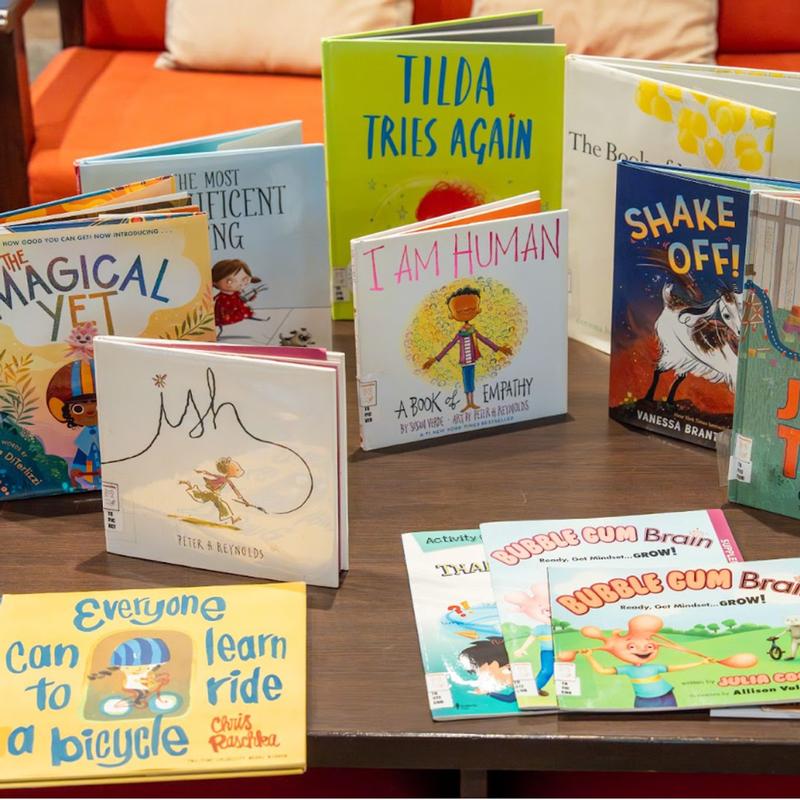
This can also be extended into the classroom or home through read-alouds. The Girl Who Never Made Mistakes, The Most Magnificent Thing, Jabari Tries, After the Fall, and numerous other books playfully illustrate the importance of trying, of “failing,” and of reimagining possibilities. Processing the stories through the guise of the characters allows students to connect without necessarily pushing them to be vulnerable.
Helping Students See Their Growth
No matter the subject area or how the reflection is done, the key to helping students cultivate an appetite for flexibility and growth in the face of challenge and discomfort is to help them see and feel their individual progress. It could be through reflection prompts like, “Right now, I can see that you can count to 20 by yourself. What is something you would like to be able to do by the end of the term?”
An art unit that may be about the human form, that uses students’ first attempts and makes their progress through the unit visible, can be a great motivator for them to believe in the power of yet. During social-emotional learning (SEL) lessons, I have used origami and a marshmallow tower challenge with much success. The key lies in the reflection. Approaching it from an asset-based lens rather than a deficit-based one is very important.
Experiential learning helps students to visualize what having a growth mindset looks like and sounds like. They feel encouraged to know that they already do it, even without realizing it. Students also learn how to recognize what they need to be successful.
Creating the Conditions for Confidence
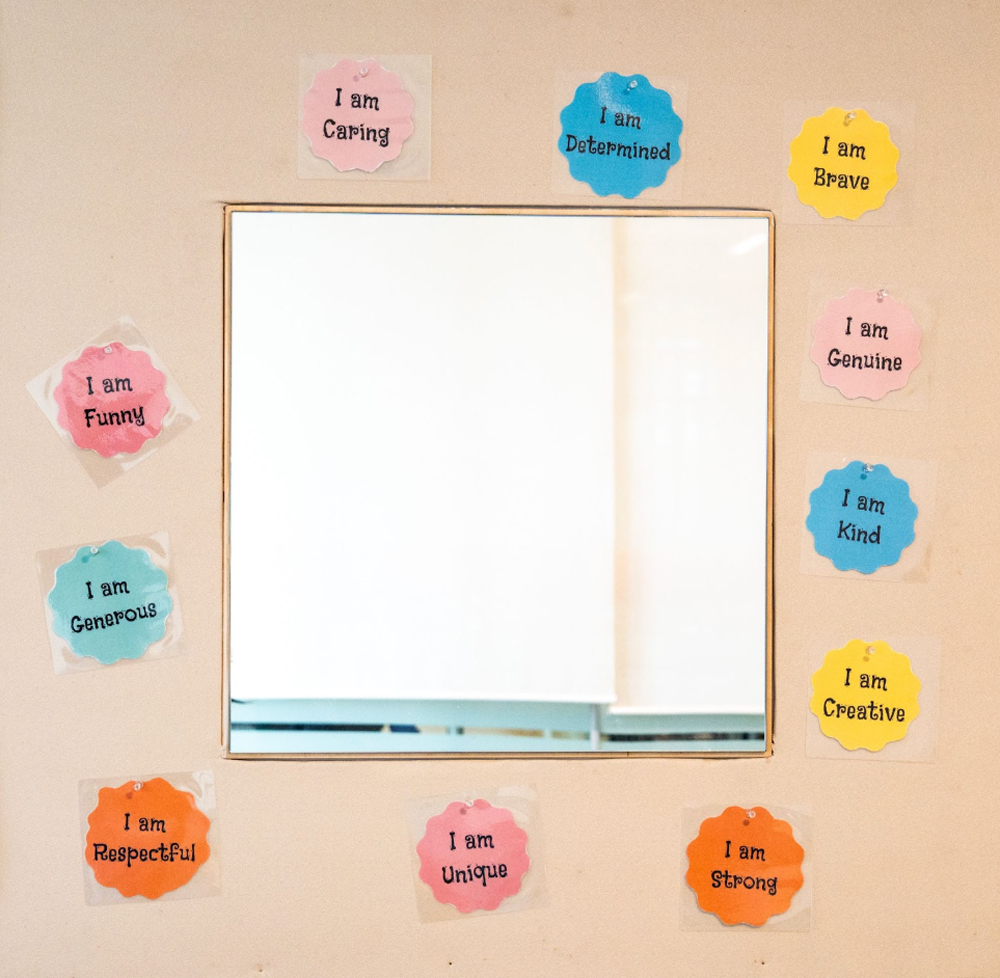
Parents, caregivers, and educators alike can help create opportunities for children to embrace challenges. A parent presentation I recently gave focused on helping parents learn how to support their children in reframing negative self-talk into positive, encouraging self-talk. Positive self-talk and affirmations are strategies I have found to be quite successful with our elementary students. I have an “Affirmation Station” in my counseling space and introduce students to it during one-on-one counseling sessions. While there is the initial awkwardness, students end up embracing it in a matter of weeks.
In the classroom, teachers co-create anchor charts to remind our students of ways they can motivate themselves. Our whole-school assembly read-alouds have been a big success, with books like The Magical Yet.
Intentionally designing learning experiences that help students see, hear, and truly feel what psychological safety looks like is the seed we must sow if our goal is to nurture a growth mindset. Cultivating that mindset means building resilience, persistence, and the courage to take risks. This growth can take root only when it rests on a strong foundation of psychological safety.
Children do not have it easy growing up in a world where subtle, implied messages are incessant and less than encouraging, which makes it all the more important for us to help children be gentler with themselves and reconnect with their inner carefree selves. It is only then that a child can look back on their learning journey as a story worth telling and celebrating.
Shyamalika Nagendra is an elementary school counselor at the American School of Bombay in Mumbai, India, with over a decade of experience supporting student wellbeing. She is a Counselor Training Center (CTC) graduate and is passionate about integrating social-emotional learning into everyday classroom practice and partnering with educators and families to create safe, inclusive environments where children can build resilience, confidence, and a sense of belonging.