

How does it work? By intentionally building teaching practices, environments, and mindsets that recognize and draw on students’ full linguistic repertoires.
Why does it matter? Because language sits at the heart of learning, identity, and belonging and our classrooms are increasingly shaped by linguistic diversity.
For primary school teachers today, multilingualism is no longer an exception; it is the norm. And yet, how we respond to this reality can either empower learners or unintentionally limit them.
My journey into multilingual education
I have been a language specialist for almost 20 years, and in that time, I have witnessed enormous changes in how multilingual learners are perceived in schools. When I first began my career, sheltered curricula and pull-out programs were considered best practice. Multilingual learners were often taught separately from their peers, “supported” outside the mainstream classroom. Even then, something about this approach never sat comfortably with me. While well-intentioned, it felt inherently segregating. Removing students from their classroom communities sent an unspoken message about difference, deficit, and othering.
As a linguist myself, speaking several languages, I have always had a deep appreciation of both the challenges and the incredible successes that come with learning a new language. I understand the cognitive load, the vulnerability, the pride when a new word finally sticks, and the joy of being understood. These lived experiences shaped not only my empathy for multilingual learners, but also my belief that language learning is a strength, not a problem to be fixed.
That understanding is what has driven my passion to get me to where I am today.
From deficit to asset: changing the narrative
One of the changes I strongly advocated for was a shift in terminology from English as Additional Language (EAL) students to Multilingual Language Learners (MLLs). Language matters. The label “EAL” often carries a deficit lens, defining students by what they lack in English. MLL, on the other hand, recognises what students bring: multiple languages, cultural knowledge, and rich ways of making meaning.
This shift reflects an assist-based approach rather than a remedial one. It reframes multilingualism as an asset not only for individual learners, but for the entire classroom community. More recently, another realization pushed me far beyond my comfort zone. I came to understand that segregated EAL departments were no longer the answer. With that, I stepped away from a role that I felt very comfortable in, and became a classroom teacher.
This was not a step backwards, it was a step into the future.
Language-friendly classrooms are everyone’s responsibility
Becoming a classroom teacher allowed me to have a broader and deeper impact. My passion for languages transcended individual students and flowed into year-level planning, curriculum design, and collaborative teaching practices. I began to see clearly that language-friendly classrooms are not just for MLLs; they benefit all learners.
But what does it actually mean to be language-friendly?
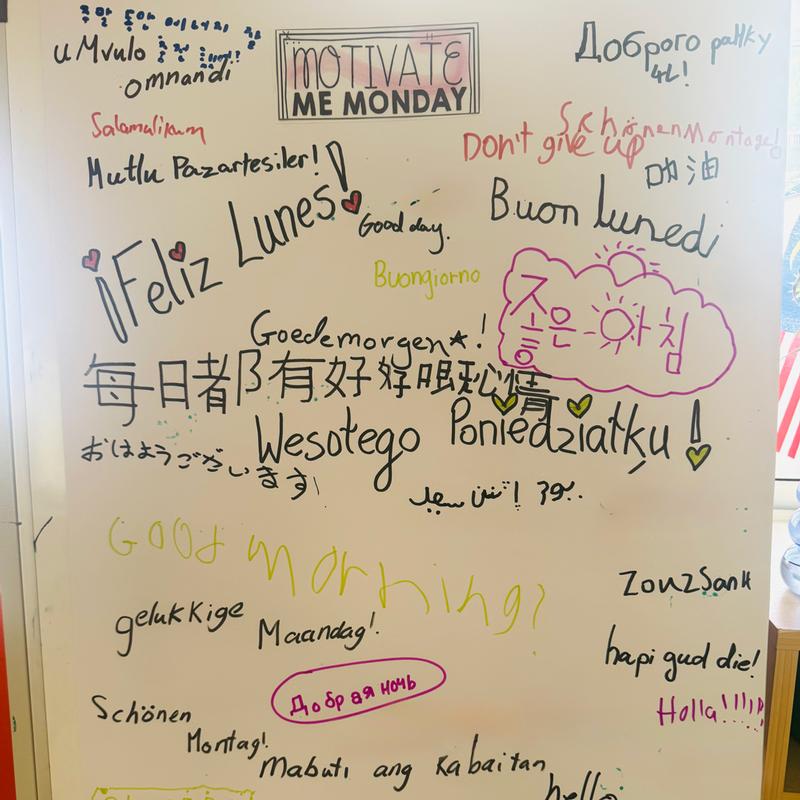
Cultivating a culture of appreciation for language is the foundation of a truly multilingual classroom. While multilingual welcome signs on classroom doors are an important starting point, they only scratch the surface of what it means to build an authentic multilingual classroom culture. This culture must be lived and embedded in daily classroom practice. Translanguaging, in particular, should be seen as the norm. Building in opportunities for students to draw on their full linguistic repertoire to think, process, and express ideas across languages builds confidence and deepens understanding. Translanguaging is not a strategy for “support;” it is a pedagogy for learning.
When we tap into students’ existing language knowledge, we help them make meaningful connections and, at the same time, model positive attitudes towards language learning for all students, fostering curiosity, empathy, and a genuine appreciation of communication in our global world. Crucially, school leaders must be part of this vision. They need to understand and value the role language plays in students’ lives and in the lives of their families. Language is identity. Language is connection. Language is power.
What you would see in my multilingual classroom
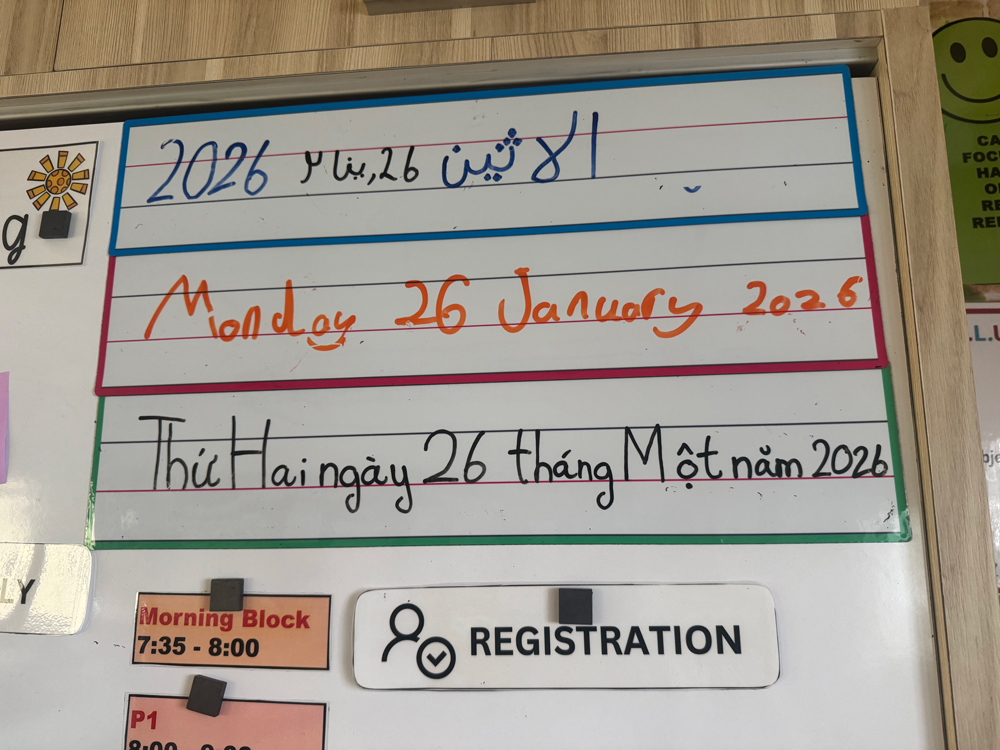
As soon as you enter the classroom, you would see languages represented visually and purposefully throughout the space. The date on the whiteboard is written by students in their home languages or in languages they are curious to learn. Multilingual vocabulary is displayed on chart paper and classroom walls, reflecting both curriculum learning and student voice. Books in Korean, Chinese, Japanese, and other languages, often brought in by students from their home libraries, are accessible on shelves for everyone, alongside carefully selected texts chosen for their relevance to learning rather than for display alone.
Most importantly, you would feel belonging.
Every language spoken in the room is recognized and valued. Students are encouraged to use their home languages whenever and wherever it feels natural across the school, not just in isolated moments. All students are given opportunities to learn words from one another, and Multilingual Language Learners are empowered to become the teachers, sharing vocabulary and meaning from their own languages.
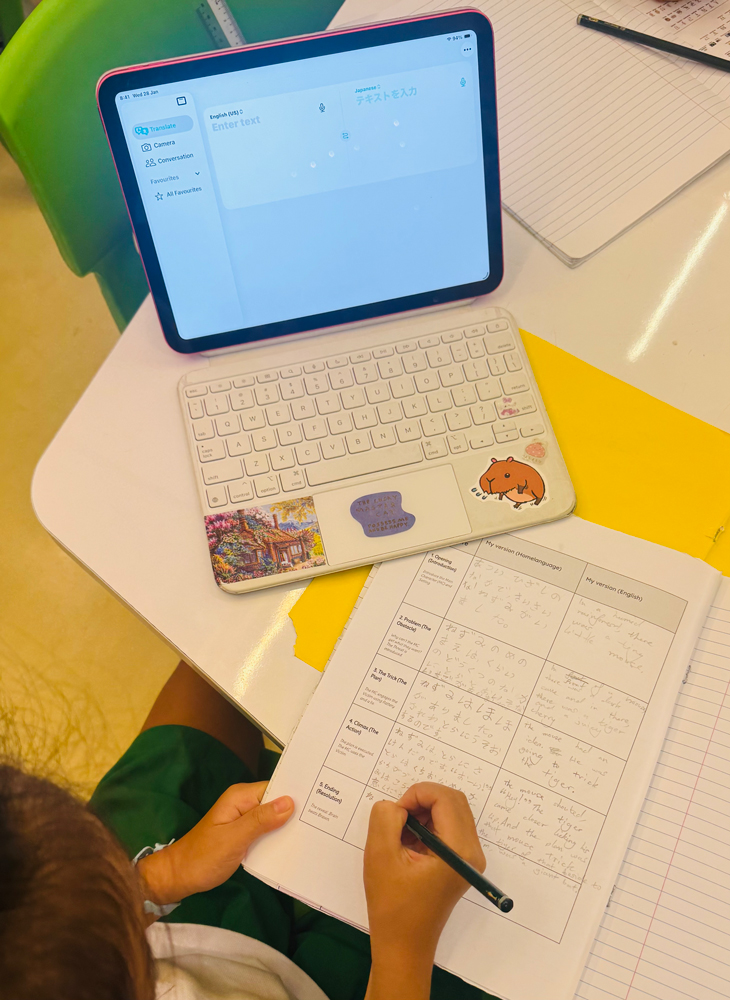
From day one, I ask students how to pronounce their names correctly and which name they prefer to use. I give them real time to think and process in their home languages, allowing translanguaging to happen naturally and effortlessly. I also explicitly encourage students to write in their home languages by offering translanguaging options on writing templates and lesson slides, inviting them to demonstrate their understanding using another language alongside English.
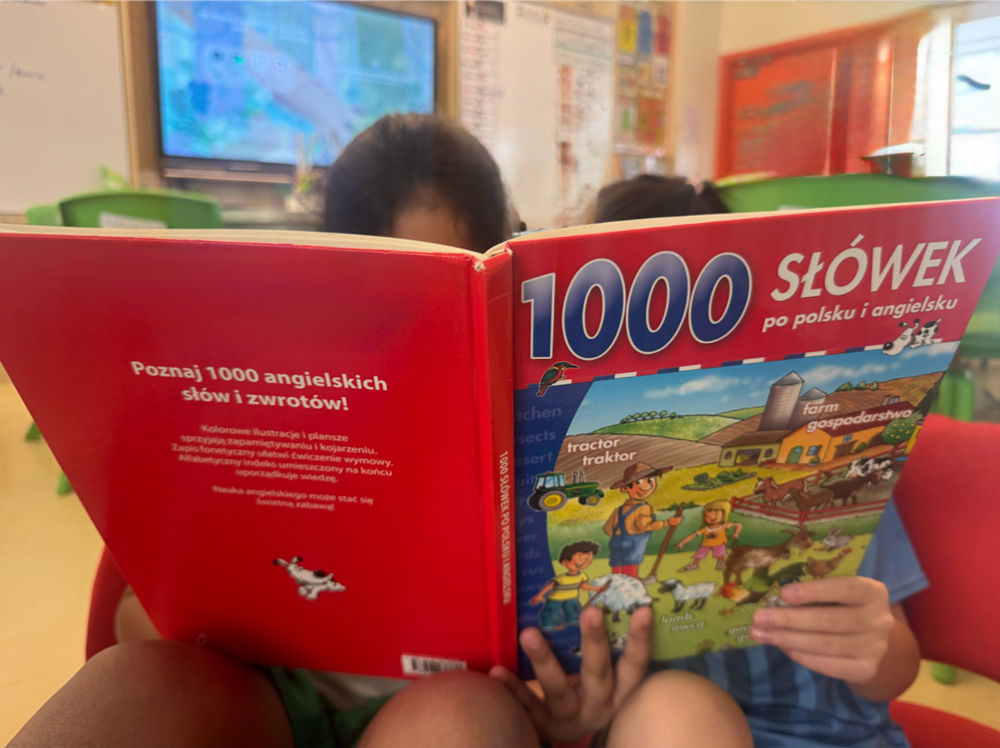
I model what I expect. I actively use the languages I speak, draw on the languages of my students, bring real examples of language in action (such as idioms), and step outside my own comfort zone by attempting to learn new languages alongside my students. I invite other adults in the classroom to do the same; my assistant teacher brings in her home language, Tamil, and my Special Educational Needs (SEN) support teacher greets everyone in Afrikaans as she enters the room. The most magical moments happen when students who see themselves as monolingual begin experimenting with other languages, influenced by their multilingual peers and showing genuine curiosity in language learning: non-Korean students writing kind messages to make their Korean peers smile, non-Polish students learning words from a Polish picture dictionary to use with their Polish-speaking friends, chosen for their relevance to learning rather than for display alone.
Together, we show that language learning can be challenging, yes, but also rewarding, meaningful, and fun.
Looking ahead
A multilingual classroom ecology is not a trend. It is tomorrow’s future.
When we move away from segregated departments and deficit thinking, when we design classrooms that honor language as a resource, and when we see multilingualism as central to learning rather than peripheral to it, we create environments where all students thrive.
Multilingualism is not a support for some students; it is pedagogy for all students.
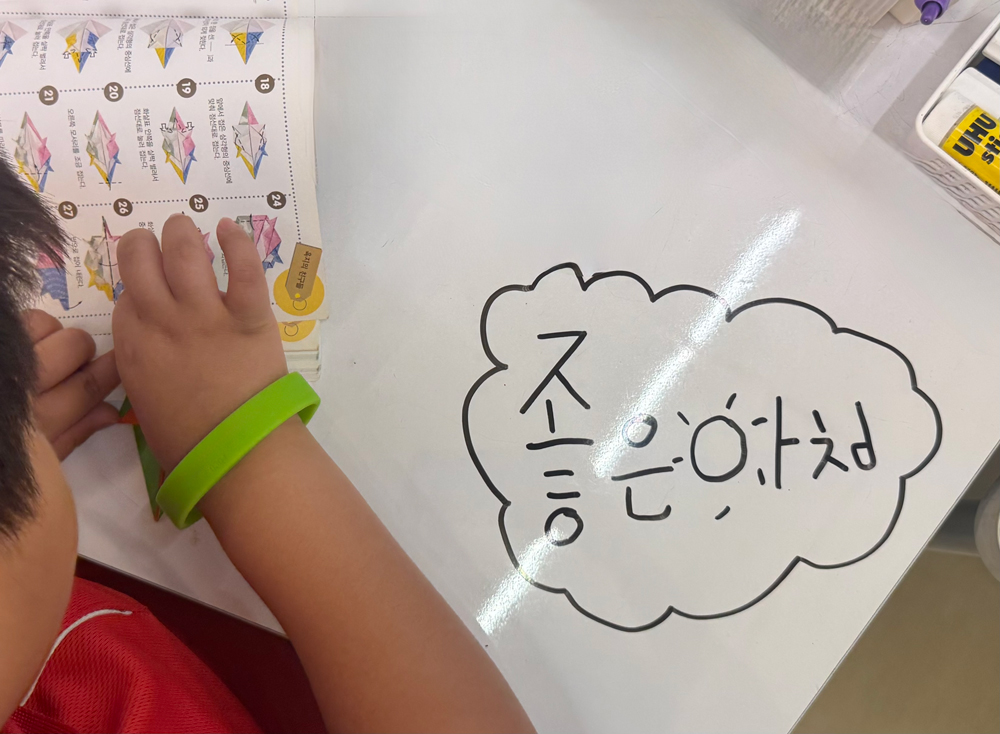
When we implicitly plan for language, not following a tokenistic agenda, but intentionally creating a culture where language use is valued and embedded across learning, that is when the real impact of a multilingual classroom comes alive.
And that future begins with us, right here, in our classrooms, today.
Natasha Viñales is a multilingual language specialist and international educator with a strong commitment to equity, inclusion, and empowering multilingual learners. She works as a class teacher and leads the Language Ambassador initiative at Garden International School Kuala Lumpur, championing student voice, belonging, and asset-based multilingual practices. As the English Language Learning Specialists in Asia (ELLSA) Malaysia chapter coordinator, she supports professional learning and community building for EAL educators across the region. As a linguist, Natasha works across multiple languages.