
Teaching science has always been about igniting curiosity, yet what happens when we reimagine the classroom as a space where students not only learn about the world, but also with it? Embracing "the more-than-human" offers an answer. This approach urges us to move beyond centering learning solely on humans, considering instead a network of relationships that includes plants, animals, land, and even classroom objects. In my ninth-grade general science classroom, two experiential projects, the Phenology Diaries and the Local Ecosystem Campaign, have opened new pathways for students to think, feel and act with the more-than-human world.
Why “More-Than-Human” in Science Class?
The idea of more-than-human is rooted in posthuman and ecological theories that question the primacy of human experience and knowledge. Teaching from this perspective deepens empathy, systems thinking, and environmental stewardship, qualities urgently needed in a time of climate crisis and ecological loss. As scholars like (Rennolds, 2022) and (Kimmerer, 2015) emphasize, placing students in relationship with local ecologies encourages ethical, reciprocal engagement and new ways of being in the world.
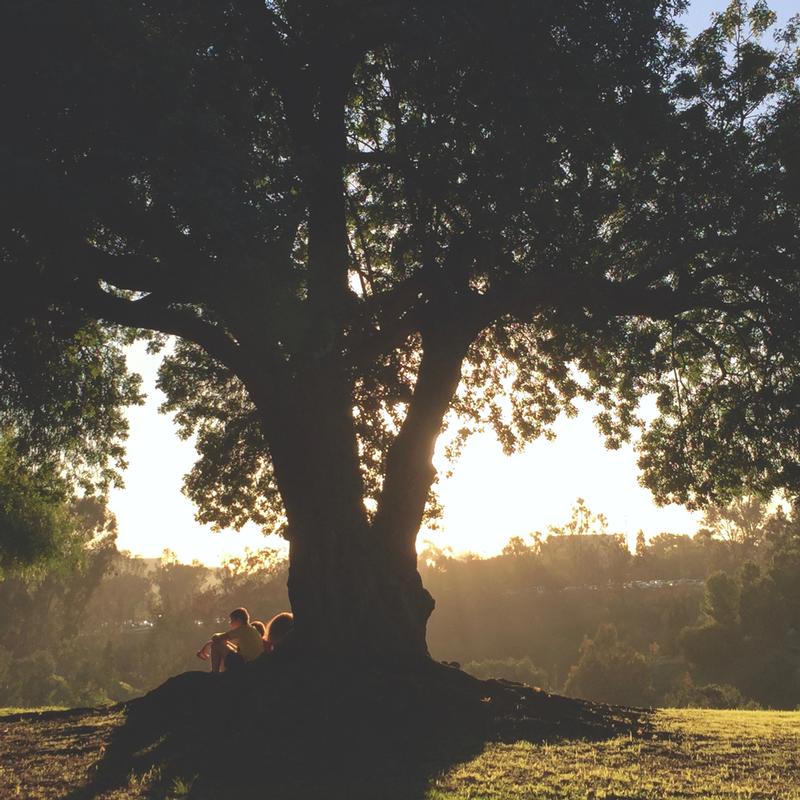
Below are two projects I use in my class to help bring the more-than-human into my classroom. Project 1 is a semester-long phenology project where students visit a neighborhood park twice a week for 20 minutes, record their observations, and formulate wondering statements or questions about what they hear, see, touch, smell, and feel. For example, “I wonder about the change in volume of people talking today,” or “I wonder if the turtle will return to the pond when it fills up again.” Following that, I will briefly discuss how a tree and animals impacted a student as well as how sound played a role. I next discuss a second project, Ecosystem Awareness Campaign, where students would conduct visits to an ecosystem found in Taiwan and combined with research, they would create an awareness campaign to preserve or continue to preserve that ecosystem. Through this project, the students explore how humans are part of ecosystems and how they impact how we experience the world. These projects aim to move students away from “What can we do?” toward the more profound “What does this place—or being—require from us?”
Project 1: Phenology Diaries
Our semester-long Phenology Project begins with an invitation: To choose a living being—tree, shrub, patch of grass, bird, or fungus—in the neighborhood park. We will visit twice a week. Observe, record, sketch, and wonder. This project draws inspiration and structure from environmental education programs and nature center displays I have managed. Before the first visit, we discuss environmental changes throughout the year, how these might be recorded, and connect them to citizen science and its applications in different real-world contexts. After this, I introduce the project with a mini activity that allows them to explore the park and practice observation skills. Throughout the observation, I posed a few reflective questions for the students to write about in their journals. Then, after the last visit, I have a final reflective exercise for us to do together. There are many potential outcomes from this project, including scientific record-keeping, science communication, and local biology and ecology knowledge. However, my main aim is to have the students explore the relational exchange they have with nature, even in the city.
Sound as More-Than-Human Presence
Sound plays a unique role in connecting learners with the more-than-human world. The presence and quality of sound—whether birdsong, wind in leaves, distant traffic, or the hum of insects—offers a sensory doorway into the living landscape. What counts as noise versus music or background shifts depending on who is listening, where they are, and even what time of day they visit a site.
The above examples demonstrate how the “more-than-human” can impact a student's learning. We saw that trees and animals became almost viewed as companions. They were waiting to see each class, creating an anticipation for the experience. Another student showed us how sounds can be as integral to an experience and their learning as any other sense. That sound can almost become a material component to them.
One other thing this project highlights is how bringing the “more-than-human” into their learning enriched their science class experience and moved learning beyond the curriculum. I have run this project for six semesters, making slight adjustments each time based on student feedback, and every semester it is listed as their most impactful and memorable experience for that class. While many reasons are given, the most universal one is that it was a calming and energizing 20 minutes that allowed them to focus and bring that mindset into the rest of the school day. The “more-than-human” taught them to slow down and focus in a city and world that demands their attention and constant movement at a rapid pace.
Project 2: Local Ecosystem Campaign
In this project, students select and research a local ecosystem within Taiwan—such as a forest, wetland, or grassland—to understand its unique biodiversity, ecosystem services, and the impacts humans have on its health. Their projects are evaluated using criteria such as comprehensive knowledge, analysis of ecosystem services, the importance of preservation, actionable solutions, overall impact, and the effectiveness of their presentation, as outlined in the project rubric. Students conduct fieldwork (virtually or in-person), investigate environmental threats, and develop campaigns to raise awareness and advocate for positive change. These campaigns might include posters, presentations, interviews with experts, and proposals for concrete actions the school or community could take to support ecosystem stewardship.
Crucially, the group began to interrogate reciprocity. If the zoo offers us opportunities for learning, wonder, and ecological responsibility, what might these places require from us in return? Beyond financial support or volunteering, what modes of respectful engagement and advocacy might foster truly reciprocal relationships with these more-than-human spaces? These students didn’t get answers to these wonderings during class, but the experience initiated their thinking and sparked their wonder, which is one of the big ideas for the curriculum.
This experience powerfully demonstrated how more-than-human pedagogy invites students to see that stewardship and relational responsibility apply not only to “pristine” nature, but to managed, created, or restored spaces as well. It also foregrounded the idea that our connections to ecosystems—wild or curated—are made through relationships, obligations, and shared histories that evolve.
Most students make some movement in this direction, but many struggle to fully inhabit this perspective within the constraints of project time and scaffolding, and by their own admission, wish they had more opportunity to develop it further. The group that explored the zoo as an ecosystem stands out as an exception. Their work pushed the boundaries of “ecosystem” to include place and human-shaped environments, prompting rich reflections on reciprocity and restoration.
Despite the difficulty of achieving a complete understanding of relationality in one project, many students report that this campaign is a transformational experience. It challenges their worldview enough to leave a lasting impact without overwhelming them, a balance crucial to fostering ecological awareness and a more-than-human ethic in the classroom.
Pedagogical Strategies and Challenges
Transforming learning in this way requires both imagination and intentional design. Here are several strategies and lessons learned:
Conclusion: The Invitation of More-Than-Human Learning
Centering the more-than-human in science education profoundly expands both the imagination and ethical responsibilities of young people. It invites students not merely to learn about ecosystems, but to enter into ongoing, reciprocal relationships with the living places around them—recognizing that these more-than-human communities are active participants in their own right, with needs, stories, and voices that challenge us to listen deeply and respond thoughtfully (Sidebottom, 2021).
For educators, adopting this relational approach requires humility and curiosity, embracing the classroom as a vibrant node within a much larger web of life. It means modeling openness to wonder, fostering multiplicity in perspectives, and patiently scaffolding learners beyond the familiar “What can we do?” toward the more profound “What does this place—or being—require from us?” This shift from control to stewardship is difficult but essential, and even partial successes in this journey can be deeply transformative for students, as their worldviews are unsettled, expanded, and enriched.
I encourage fellow educators to share their classroom experiments, stories, and reflections. By collectively weaving relational and ecological pedagogy into diverse educational settings, we can cultivate new generations who are not only scientifically literate but also deeply attuned to their intertwined futures with the more-than-human world. Together, we can nurture classrooms that are living ecosystems—places of restoration, connection, and mutual care.
References
Kimmerer, R. W. (2015, August 11). Braiding Sweetgrass | Milkweed Editions. https://milkweed.org/book/braiding-sweetgrass
Rennolds, N. (2022). Doing Relationships in a More-than- Human Learning Environment: A Posthumanist Inquiry.
Sidebottom, K. (2021). Education for a More-Than-Human World. https://www.europenowjournal.org/2021/11/07/education-for-a-more-than-human-world/
Dr. Ethan Lewis has been in education since 2005 and is currently a Grade 12 project-based learning capstone, Grade 9 Introduction to Natural Science instructor, and the academic advisor at VIS Experimental Education Institute in Taiwan. He is passionate about ecological and relational education. His science classroom seeks to bridge scientific rigor with care for the living planet, inviting students to see themselves as participants in a thriving more-than-human world and discover our interrelationships.