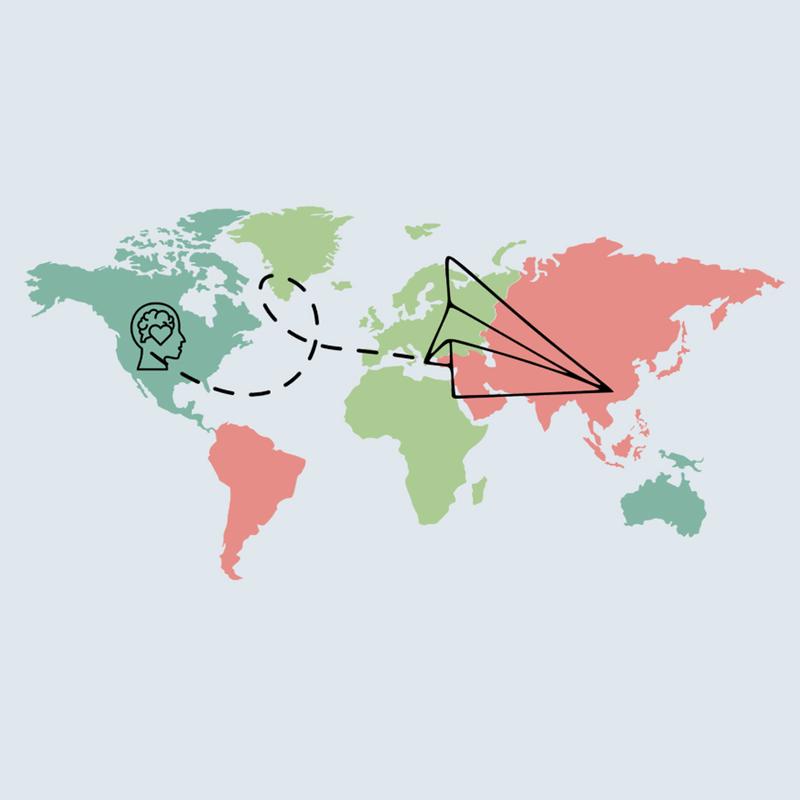
In international schools, social and emotional learning (SEL) has become a global priority. Programs are often imported from the United States or Europe, carrying carefully designed frameworks meant to help young people build self-awareness, manage emotions, and foster relationships. Yet when these programs arrive in East Asian classrooms, they don’t always land the way curriculum developers intended.
The teacher voices shared here come from my doctoral research with international school educators across East Asia. Their reflections point to a consistent tension: many SEL frameworks carry cultural assumptions that feel more Western than international.
One teacher put it bluntly, “Changing the names is just changing the names… it doesn’t change the examples, it doesn’t change the concepts that are being pushed across.” Others noted that lessons often emphasize individual self-expression in ways that can feel at odds with classroom norms of group harmony and modesty.
The message is not that SEL lacks value; teachers overwhelmingly believe it matters. Rather, the way it’s packaged sometimes doesn’t fit. The good news is that schools can make practical shifts to bridge this cultural gap.
Look Beyond Surface Localization
Too often, “localization” means swapping American names for local ones. Teachers were quick to point out how shallow that feels. Instead, embed cultural values, shared practices, and lived experiences into SEL lessons. For instance, rather than changing “John” to “Jin” in a conflict-resolution role play, reframe scenarios around values like harmony, relational interdependence, and respect for elders. This not only makes lessons more relatable; it signals respect for how conflict is understood and resolved in local contexts. Students begin to see SEL as connected to their own lives, not as abstract ideas imported from elsewhere.
Empower Teachers as Cultural Translators
Teachers are the day-to-day translators of culture, but many feel constrained by scripted programs. Schools can support them by granting structured flexibility, giving time and trust to adapt lessons while staying true to SEL goals.
As one teacher reflected, “I do worry sometimes about some of the SEL things where we’re kind of empowering kids to use their voice, you know, in a respectful way. None of it’s about being disrespectful. If you’re in a culture where you need to be filial and the parents have an expectation of respect, and, you know, perhaps questioning or saying no could be possibly disrespectful.”
Leadership can create this flexibility by encouraging teachers to collaborate in professional learning communities (PLCs), share adaptations, and co-design prompts that honor local norms while still building agency and voice.
Redefine Belonging Through SEL
At its best, SEL fosters belonging, but belonging doesn’t look the same everywhere. In many East Asian contexts, group harmony and collective identity are central. Schools can lean into this by framing SEL around community wellbeing, not just individual growth.
Another teacher described how she localizes materials through timely, culturally situated examples, “I do try to see if I can find some local news to see if there's local teenagers who have gone through similar type things, like online fraud… I try to look up news like that, something more local, so that I can let them be more engaged with it.” Anchoring SEL in familiar realities deepens relevance and engagement.
Practical Moves for Leaders• Audit for fit, not just fidelity: Ask where examples, norms, or language may assume Western individualism.
• Co-create a local SEL glossary: Define key terms such as “voice,” “respect,” and “self-management” with culturally resonant language.
• Build a living bank of local scenarios: Invite teachers, students, and families to contribute cases that reflect real dilemmas.
• Coach for adaptation: In walkthroughs and PLCs, celebrate principled modifications aligned to outcomes.
• Measure what matters locally: Pair standard indicators with community-defined markers of belonging and harmony.
Moving Forward
International schools are uniquely positioned to prepare globally minded students. That work begins with examining the cultural lenses in our curricula. As one teacher summarized, “It’s not that SEL isn’t valuable. It’s that the way it’s packaged sometimes doesn’t fit. Our job is to make it fit.” By moving beyond surface edits, empowering teachers as cultural translators, and reimagining belonging through local values, schools can help SEL truly resonate. When SEL translates, it does more than teach skills; it builds bridges.
Dr. Jennifer Sylvester is the Director of Teaching and Learning at Bahrain Bayan School. She has served in international schools across Taiwan, China, and Bahrain in leadership roles focused on curriculum, instruction, and teacher development. Her research and practice explore how culturally relevant approaches can strengthen social and emotional learning in diverse contexts. She recently earned her EdD in Educational Leadership and Management