


International school leadership is often presented as a question of strategy, systems, and decision-making. Leaders are expected to set direction, strengthen outcomes, and build organizational coherence across increasingly complex school environments. Yet in practice, one of the most difficult dimensions of leadership is not making decisions; it is understanding how those decisions will be interpreted.
A policy introduced to improve consistency may be experienced by one group of teachers as professionally clarifying and supportive. Another group may read the same policy as restrictive or managerial. A wellbeing initiative designed to reduce student pressure may reassure some parents while alarming others who fear academic standards are being quietly diluted. A leader who increases visibility may be seen as engaged and approachable within one cultural context, but intrusive or mistrustful within another.
In many international schools, leadership operates increasingly within this space of interpretation, and it is a space that existing leadership frameworks rarely address.
The Limits of Clarity
As British international schools continue to expand across culturally diverse contexts, this challenge is becoming more significant. Schools may share curricula, inspection frameworks, assessment structures, and institutional branding, but the communities within them often hold very different assumptions about education, authority, professionalism, success, and student wellbeing. The result is that leadership decisions rarely carry a single meaning.
International school leaders are often advised to "communicate more clearly." But clarity alone does not eliminate differing interpretations. Individuals interpret leadership decisions through their own experiences, expectations, and assumptions about what effective schooling should look like. A leader may explain a decision with complete transparency and still encounter tension — not because the explanation was inadequate, and not because stakeholders are not disagreeing with the explanation. They are interpreting the purpose and implications of the decision differently.
This is not a communication failure. It is a structural feature of leading in culturally diverse environments.
Where Interpretation Becomes Visible
This interpretive challenge is most visible in areas connected to teaching, learning, and assessment. Many British international schools now attempt to balance high academic expectations with genuine attention to student wellbeing. On paper, this appears both reasonable and necessary. In practice, different stakeholder groups often interpret this balance in fundamentally different ways.
Some families experience reduced homework loads or broader assessment approaches as evidence of progressive, student-centered practice. Others interpret the same changes as evidence of lowered expectations or reduced academic rigor. Approaches to feedback, classroom participation, teacher autonomy, and behavior systems may similarly carry different meanings across cultures. What one group experiences as empowering, another perceives as lacking in structure. What one teacher reads as collaborative leadership, another interprets as insufficient direction.
This is not a problem unique to any single school. It is a condition of leading communities who do not always begin from the same assumptions about what education is fundamentally for.
Trust, Legitimacy, and the Interpretive Leader
This does not mean leaders should attempt to satisfy every interpretation equally. That is neither realistic nor desirable. But it does require a recognition that organizational coherence cannot be achieved through policy design alone. Coherence depends upon whether communities understand not only what a school is doing, but why — and whether they trust that leadership is navigating complexity with professional honesty and cultural awareness.
In highly diverse school communities, trust is often built less through consensus and more through perceived legitimacy. Stakeholders are more likely to support difficult decisions when they believe leaders genuinely understand the community they serve, can explain decisions with intellectual honesty, and are making visible attempts to navigate complexity fairly. When that legitimacy is absent, even well-designed policies can generate resistance, mistrust, or disengagement.
This points toward what might be called interpretive leadership — a dimension of practice that sits alongside, but is distinct from, traditional implementation-focused leadership models.
Interpretive leadership involves recognizing that policies and strategic decisions do not enter culturally neutral environments. Leaders must continuously consider how decisions will land across different groups within the school community, and how competing interpretations may affect trust, morale, coherence, and institutional legitimacy. At times, this requires leaders to act as translators between different educational expectations. At others, it involves helping communities tolerate complexity and ambiguity rather than seeking simplistic resolution to inherently complicated tensions.
An Invisible Dimension of Leadership
This work is rarely acknowledged formally within leadership standards or school improvement frameworks. Yet it increasingly shapes whether improvement efforts succeed or fail. Within British international schools particularly, where institutional identity itself can carry competing meanings — where terms such as "British education," "academic rigor," or "student-centered learning" are assumed to have shared definitions but frequently do not — leaders spend significant amounts of time on interpretive work that goes largely unrecognized.
My own doctoral research at the University of Bath, which explores leadership practice in British-branded international schools in China, has led me to develop a framework called Culturally Mediated Leadership (CML). One of its central arguments is that effective leadership in international contexts requires cultural reflexivity and adaptive capacity — not simply stronger systems or sharper accountability, but the interpretive intelligence to build coherence across communities who do not share the same educational starting points.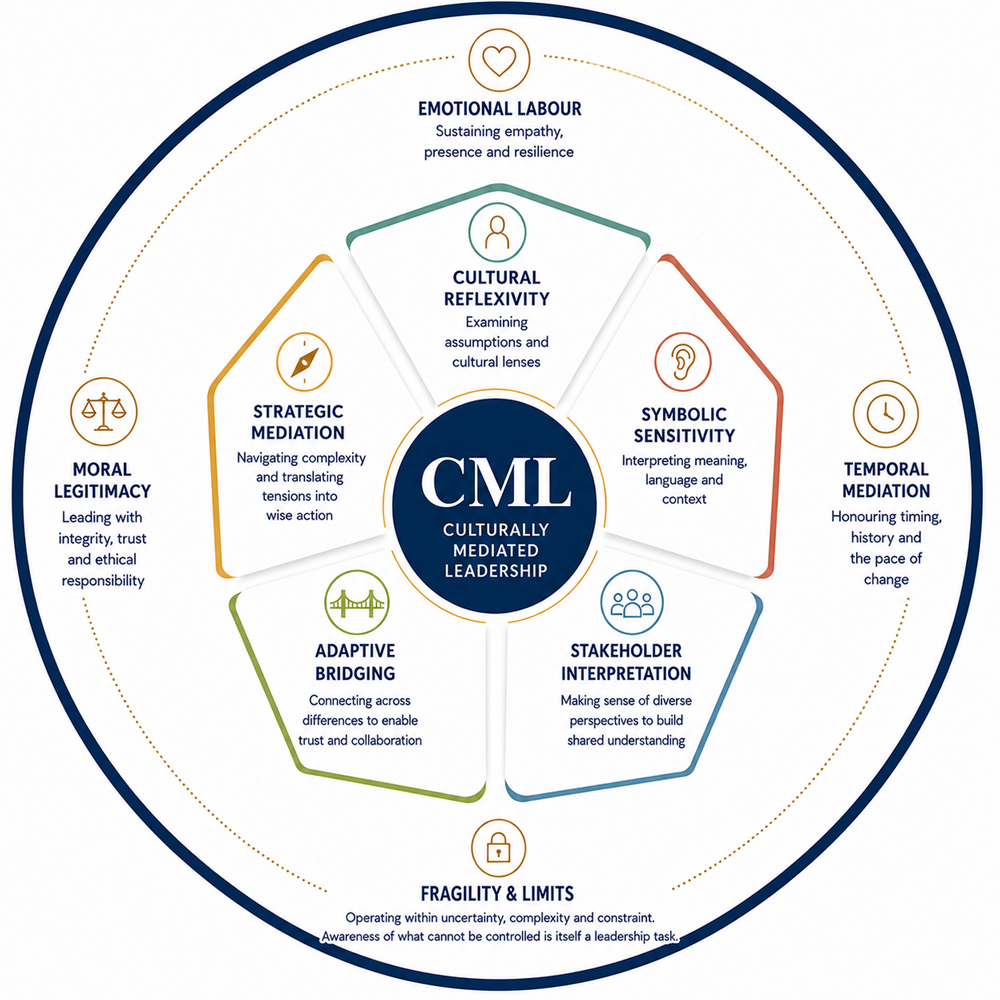
As international schools continue to grow globally, this may be one of the most important and least discussed dimensions of school leadership. The challenge is no longer simply deciding what is educationally right; it is understanding how different communities will experience, interpret, and respond to those decisions, and leading with the insight and integrity that this understanding demands.
Joshua Darryl Sussex is Deputy Head of Secondary and Head of whole-school learning at Sri KDU International School Penang, Malaysia. His work focuses on teaching and learning, instructional coherence, leadership across culturally diverse contexts, and evidence-informed school improvement within British international schools. He is currently completing a Doctor of Education at the University of Bath exploring Culturally Mediated Leadership (CML) and how leadership is interpreted and enacted across international school environments. Joshua has worked across the United Kingdomo, Egypt, Vietnam, China, and Malaysia, and regularly contributes to professional dialogue surrounding international school leadership, organizational culture, and educational strategy.
LinkedIn: https://www.linkedin.com/in/joshuadarrylsussex/