

Everyone already knows who you are in New Zealand (even if you are technically from somewhere else). Something about New Zealand makes you feel like you automatically belong here without having to put any effort into fitting in. You’re the kid who kicks a football around in the backyard every afternoon, the kid who assists your mother in carrying the groceries from the car, the kid who attends the local pitch on the weekends with that old ball you’ve had since Hong Kong. Attending public school in a rural area provides you with a built-in way of fitting in. You never have to prove anything. That provides a certain comfort. Childhood feels slower and more drawn out, as if it is taking its sweet time. You are not thinking about your future, at least not yet. You are thinking about the next walk, the next dirty football match, the next meal, the next day, that’s it.
If someone asked you what adventure meant, you would have looked to the hills. Nature, freedom, long grass brushing against your legs. You considered adventure to be roaming about, finding ways to occupy yourself, and never feeling isolated. Your outline for your life was already created in your head; It included graduating from that small high school in rural New Zealand, where all directions were filled with sheep farms and football practice, which ended at exactly the right moment so that you could sit and watch the sunset while it was still warm.
But of course, that is not what happened.
Your father sits you down, and the sky outside is already fading into that orange-pink hue, and tells you that plans are changing. You are no longer going to remain in New Zealand. And before you could even ask where, instead, he tells you that you are going to Japan. Just like that. Japan. No question. No Choice. Just a location designated without your permission. He continues to talk, stating something about schools and opportunity and better roads to success in the future, but everything that follows that single word sounds like white noise.
You do not tell him that you already imagined exactly how life would evolve in New Zealand. You do not tell him that you remember every crack in the sidewalk on the path leading to your house or that you know how the entire neighborhood smelled just before the rain came. You nod and attempt to look older than eleven; however, the truth is that your stomach does flip in that sickening way and suddenly the air feels heavy. You are supposed to feel excited. Foreign country = adventure, correct? However, something inside your chest tightens up like a knot that cannot be undone.
As you once again pack up your life, the world outside feels eerily silent. You kick a ball one last time at the edge of your lawn and try not to view it as a farewell ceremony. You attempt not to think about everything you are leaving behind, but it clings to you like those pesky grass stains you always forget to wash off properly. Childhood is filled with things that nobody teaches you how to do, and you simply hope that it will all work itself out, but you know that something is ending.
The next thing you know, you are in Japan. Tokyo. A place that seems to be the exact antithesis of everything you believed you wanted. Instead of blue skies and open spaces, there are tall buildings and endless train tracks and a type of rhythm that moves too fast for you to follow. Your father speaks of safety and education and how this will eventually make sense. You attempt to believe him, but all you see are unfamiliar faces and strange streets and a language that appears to be impossible to pronounce using your mouth.
And then there is the first day of school. A one-hour bus ride that feels as if someone hit the fast forward button on your life. You stare out the window at a city that whizzes by in unrecognizable signs and too many people rushing to places you cannot possibly imagine. It seems that the school itself is gargantuan in size with hallways that appear too bright, too clean and sanitized, so much so it looks like an entire piece of humanity was wiped from the surface when someone decided to polish it to perfection. As you pass by groups of kids who already have a group or club they've joined together, they're all talking to each other in sync as if they ran a rehearsal on what to say to one another. None of them seem to notice you, none of them seem to even glance at you.
Lunch also doesn't make things better. You move your tray around the cafeteria while trying to catch someone's eye, yet still you aren't bold enough to actually lock eyes with anybody. Every table is full although there might be empty space somewhere. In the end, you slide into the corner and scroll through your phone pretending to be busy; pretending you are not alone.
That is when the loneliness begins to sink in. You think perhaps the hardest part was leaving Hong Kong. Or leaving New Zealand. However, the hard part is being somewhere that nobody knows you and you do not know how to introduce yourself anymore. Months of social distancing took away the confidence you once had, and now you are left trying to relearn how to be a person.
It is not as if you told people how much Hong Kong still felt like home, despite its chaos. The cramped apartments with views of skyscrapers were imperfect, but they contained your life in a way you miss now. The sticky humidity clinging to your skin, the crowded streets, the arguments with your sister regarding something as insignificant as who got the shower first, it was all messy, but it was yours. You did not realize that the last afternoon you spent with your friend, kicking a flat soccer ball around his living room, would be the last happy moment for a long time. If you had, you might have lingered a bit longer, maybe spoken words of substance, or you would have probably done the same thing because at eleven years old, you rarely think about things being “the last” until after they are gone.
However, the past has the annoying trait of seeping into the present. All of a sudden, you are staring at your uneaten lunch in Tokyo, and you miss the ease of simply sitting down beside someone and knowing they would clear the space for you. Now every encounter feels as if it is some sort of audition you did not know you needed to prepare for, and you already know you would blow it regardless.
Occasionally, you enter a third-person mode of operation simply to make it through the day. You envision yourself walking the halls like a character in a movie, a kid holding onto his backpack straps like they are handles that are keeping him from disintegrating. He does not know where to go. He just wishes someone would notice him, without him having to speak first. However, nobody notices. And somehow you learn to continue moving forward, even though you are unsure how.
Then came the drums.
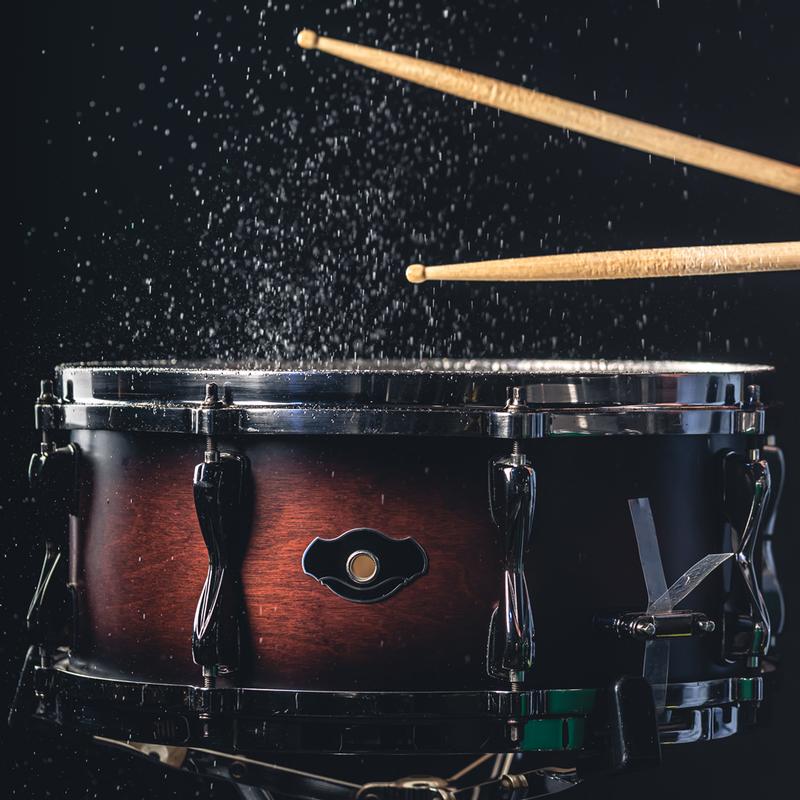
It didn’t happen by accident. The start is simply curiosity and an excuse to do something between classes. You are wandering into the music room one afternoon and sitting behind a drum set, almost as if you are trying on someone else’s life. Your left hand is stupid, your right foot is too slow, the cymbals are too loud, too many and confusing. It’s all sounding like something you’re doing poorly. However, there is something to the clumsiness; it feels honest, as if it doesn't resemble the mistakes you make in the rest of your world.
The beat you will be able to play is not impressive, a basic rock pattern, slow and repetitive. But something about the repetition feels safe. There is something nice about hitting the snare, the hi-hat, the kick pedal, and hearing the same thing over and over again. When you make that noise, you are the only one controlling it. No one is judging, not the students, not the teachers, only you and the rhythm that has started to fit itself into your body.
You envision a version of yourself, probably a year from now, and you are playing something a lot more difficult than what you currently play. Maybe some ghost notes you haven’t mastered yet. You look calm, you look confident, maybe everything wasn’t so overwhelming. I am unsure if he is real, but thinking of him makes me feel better than thinking I’m fine.
Some days learning feels dull, slow, repetitive, and sometimes just plain painful. But I suppose moving to another country is similar. Not exciting, but just showing up every day until something works.
As the school day ends, you sit in the middle of the bus and watch children laughing and pushing each other around like you used to. You are not angry. You just wonder if you will ever find that again, or if childhood is disappearing from your hands faster than you can hold onto it
There is this brief moment when a student from your science class walks past the music room and hears you practicing. He stops, listens, and asks if you play. You panic a little, say “kind of,” because you are worried about sounding foolish. He nods as if it is no big deal and continues on his way. This seemingly insignificant moment is much harder to shake off than it seems. Not because you became fast friends, but because someone recognized you existed.
That is still far from the height of your success. Not even close. But it’s something. The beginnings of untying the knots inside your chest. For a few seconds, you think maybe Tokyo won’t always seem like a maze.
Years go by much quicker than you would have expected, and soon you are a senior walking through the same building that once seemed enormous. As you walk through the halls, you see the faces of people you know, students who know your name, teachers who wave at you as you pass by. Somewhere down the line, you had formed friendships. Not immediately, but slowly, one conversation at a time. You had been involved in clubs, were invited to events, and had begun to learn how to speak again. And you continue to learn, sincerely. Learning social skills takes time.
Sometimes you think about the eleven-year-old version of yourself, the one who believed Tokyo was going to consume him. If you were to write a letter to him, perhaps you’d say something like:
You have no clue, but Senior you is truly grateful. I am so glad you were able to find friends that you cannot imagine living without. I am also happy you found people who actually see you. They see you when you are silent, they see you when you are hurting. One day, you will be laughing in the hallway again, and you will be comfortable taking up space without feeling the need to apologize. At some point in time, life will not feel as heavy a burden. Not all of the time. Eventually, you will realize Japan did not take something from you; it gave you something you could not understand at the time.
You have found a rhythm. A rhythm not only through the use of drums, but through people. Each beat, every awkward conversation, and every lonely afternoon were a part of a tempo that is now starting to make sense.
If you happen to be reading this, you need to know that it is completely normal to feel lost. All of us feel this way at times. Eventually, though, everything will start to fall into place.
One Last Thing...
Now, when you leave the music room and the drumsticks are in your bag, people see them. People call out your name. People ask about what you are doing next project-wise. You do not have to hide them anymore, not because you want to show them off, but because you do not have to.
From New Zealand to Japan, from being invisible to being visible, you have discovered the beat of your life. It finally feels like your life.
Reflection
We read within class. Specifically, the braided essays that shifted between different time frames without providing an explanation for each transition inspired me to try using a braided structure for my essay, as I moved from learning to play the drums. Although I originally did not intend to twist the truth slightly (I actually started playing the drums in my senior year) and to utilize a braided format, after working on a draft of my essay with peer feedback, I discovered that the section on learning to play the drums really illustrated both literal and figurative growth of rhythm. Therefore, the structure of my essay consisted of three distinct formats: factual (the actual move); emotional (loneliness/identity); and rhythmic (learning to play the drums). I would never have arrived at this conclusion if I had not seen examples of braided essays in class.
One of the most difficult aspects for me to determine was how personal I should allow myself to become and what voice I should write in. Initially, I wrote in the first person; however, I found that it felt too direct, which was odd. Therefore, I utilized second person to create the distance I needed from my younger self. A moment that altered my perspective was when Ms. Anjali encouraged me to show the reader a portion of my life prior to my move to Japan. I had not previously considered providing the reader with background information, as I prefer the mystery and the curiosity that it entails. Including New Zealand in the essay had a large impact because it demonstrated what I believed my life was supposed to resemble.
Ultimately, I am pleased that the essay does not merely describe how I felt; rather, it allows the reader to experience those same feelings. In retrospect, I may wish to include another moment in the essay; however, I believe that I have ultimately developed an understanding of how reflections truly function in nonfiction.
Ayrton Green is a high school senior at the American School in Japan.