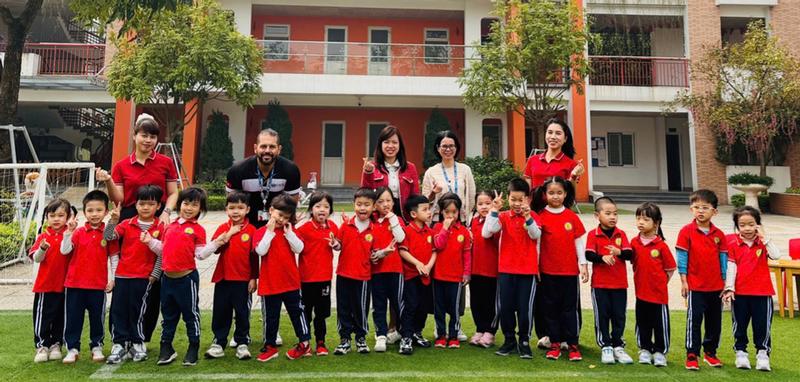
The Question that Changed Everything
“The Ministry tells us what to teach and how to teach it,” a local public school teacher whispered during one of our Early Childhood Education Renovation Program (ECERP) sessions in Hanoi. “But I want to give my classes my own professional touch. How do I do that, Mr. Andres?”
In a moment, the gap between the resources of an international school and a local public school vanished. We weren’t “international” and “local” teachers anymore; we were simply educators seeking agency.
A Structural Commitment to Change
The ECERP initiative at UNIS is not a series of one-off workshops; it is a long-term commitment to the local educational ecosystem. We partner with each school for a period of one to two years, ensuring we provide sustained support rather than temporary inspiration.
The process is systemic. We begin at the leadership level, holding strategic meetings with rectors, Principals, and coordinators to evaluate the program’s evolution and align our goals with the school’s vision. This high-level collaboration ensures that the pedagogical shifts we discuss in the gym have the institutional backing they need to survive and thrive.
The Toolkit: Methodology in Action
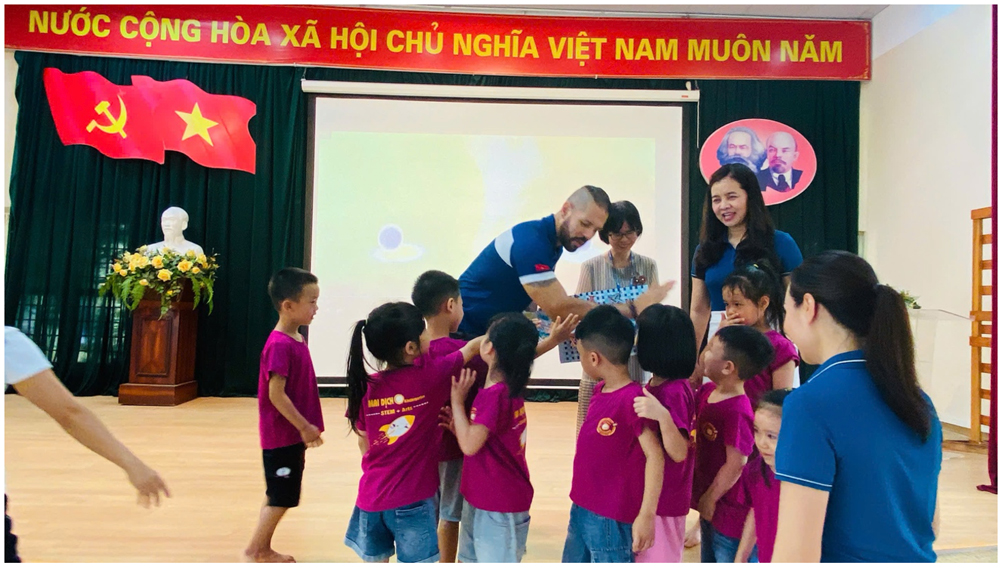
When our colleagues from the local public system visit UNIS, the experience is immersive. They don’t just observe; they participate. Supported by professional translators, we dive deep into the “why” behind our practices. We review curricula together, clarifying complex concepts and adapting international frameworks to fit their specific contexts.
Through the ECERP initiative at UNIS Hanoi, I’ve had the privilege of working with three dedicated professionals from Hanoi’s public school system. And during my presentation of “The Toolkit”, 10 Pieces of Advice for Lasting Change, more than 15 other professionals. My goal wasn’t to “export” the high-tech environment of UNIS, but to share a pedagogical toolkit that works regardless of the facility. We focused on three pillars:
Conclusion: Bursting the Bubble
International schools are often seen as bubbles. But projects like ECERP prove that when we engage in genuine, multi-year, peer-to-peer mentorship, the entire educational landscape of both school communities grows stronger.
Giving a class a “professional touch” isn’t about the equipment you have; it’s about the leadership you show, the system you build, and the heart you put into the “human” side of teaching. By working hand-in-hand with local leaders and teachers, we aren’t just sharing lessons; we are co-creating the future of education in Vietnam.
Andres Rodriguez Perdomo is a physical education specialist at UNIS Hanoi, an international school in Vietnam, with 12 years of experience in international education. He holds a Specialist in Education degree and a Master of Education. A passionate advocate for student agency, transdisciplinary learning, and systemic educational impact, Andres balances innovative classroom practice with a strong commitment to community outreach. Recently, he has focused on bridging pedagogical gaps within the local educational ecosystem through sustainable, peer-to-peer mentorship initiatives and collaborative professional development. Having lived and worked in Colombia, Egypt, Ukraine, and Vietnam, he brings a deeply global perspective to early childhood physical pedagogy and cross-institutional educational alignment.