Background
The traditional secondary school system compartmentalizes academics into individual courses that occur at specific times during the school day, thus creating artificial barriers in student learning based on subjects. In a world where transferable skills are becoming increasingly important, this serves as an impediment to preparing students for postsecondary success. In January of 2022, Colegio Nueva Granada (CNG) in Bogota, Colombia developed an interdisciplinary Project Based Learning (PBL) event focused on developing the collaborative skills of our 120 ninth graders. This event, known as Colegio Nueva Zombie, broke students into small groups during their advisory period with each group representing a specific Latin American Nation. Their mission? Protect their populations from an international outbreak of the undead.
Over the course of the following five weeks, students worked in groups and across nations to design policies intended to best protect their citizenry while teachers observed, using PBLWorks’ Collaboration Success Skill Rubric to assess each individual student’s displayed level of collaboration (PBLWorks, n.d.). At the culminating ceremony students worked to define a shared set of policies that all nations could adopt, eventually voting upon the three that would become international law. Presentations were made, expansive Socratic seminars occurred, and the students eventually voted to form an international Socialist regime. Students then reflected upon this experience and assessed its impact on their collaborative abilities and interest in engaging in a similar project in the future.
Based on the scoring upon collaboration rubrics, average student collaboration improved from a 2.6 to a 3.4 over the five-week unit. Based upon student feedback, 75% of respondents agreed or strongly agreed that the PBL “helped them improve their collaboration skills.” Finally, based upon teacher feedback, 90% of respondents agreed that the PBL “helped students improve their collaboration skills.” However, only 55% of students said they wished to engage in such a PBL in the future, with the majority of students stating that they were unaccustomed to engaging in academic work during their advisory periods. Thus, we begin looking for a new context for this project.
Introduction
The compartmentalization of coursework does not only separate student learning into distinct categories and times, it also reinforces the disconnect between students and the natural environment or "Nature Deficit Disorder" (Louv 2005). Based upon this fact and the lack of student interest in advisory-based PBL, CNG began working to overcome this disconnect by tying this PBL directly to the Classroom Without Walls program (CWW). Moving from zombies to social impact, students in the revised PBL transform the ecosystems they experience on CWW into living laboratories, integrating the Biology Next Generation Science Standards (NGSS) with the development of leadership skills and social responsibility.
Thus, "Operation Blue Horizon" was developed with ninth-grade biology students. In this initiative, built upon a one-week kayak expedition through the San Bernardo mangroves in the Colombian Caribbean, students grew from passive recipients of information in a classroom to engineering solutions for ecosystem restoration by collecting real data (pH, turbidity, temperature), culminating in the creation of viable biotechnological prototypes. After the first year of implementation, 80% of students stated that they wished to participate in a PBL-based CWW such as this in future years.
Beyond the Standards
In addition to connecting the classroom to the world, research shows that systematic exposure to natural environments improves emotional well-being. Longitudinal studies show that nature-based immersive educational programs strengthen pro-environmental attitudes and sustainable behaviors by positioning ecosystems as authentic contexts for experiential learning (Barrable & Booth, 2020; Chawla, 2020). In parallel, research using physiological measurements suggests that these environments reduce stress and promote emotional regulation, optimizing conditions for learning and decreasing cognitive load (Dettweiler et al., 2021; Scott et al., 2021).
In this context, the development of social-emotional skills (SEL) is significantly enhanced, especially in dimensions such as self-awareness, self-regulation, and empathy (Bratman et al., 2021). Finally, evidence indicates that nature-based education can act as an intervention against emerging problems such as eco-anxiety, promoting a sense of agency and environmental commitment in students (Hickman et al., 2021).
The CWW
This research was integrated into the CNG’s CWW for ninth grade, which linked the ecology unit in biology with real environmental challenges through expeditionary learning. Prior to the field trip, the students underwent a phase of technical training in biodiversity and water quality monitoring protocols, transforming abstract concepts of ecosystem dynamics into applied research skills.
The main setting was the San Bernardo Archipelago in the Colombian Caribbean, a living laboratory of mangroves and reefs. A central component of the expedition was collaboration with the Afro-Caribbean community AFROVISMAR in the Ciénaga de Punta Seca. This three-year partnership allows students to participate directly in the restoration of degraded mangroves, confronting ecosystem services with the historical human impact of overexploitation.
Field Research
The expedition used the kayak not only as a sustainable means of transport, but also as a tool for sensory immersion, collaborative work, and scientific research. The fieldwork was divided into two comparative sampling stations:
Prototyping in the Classrooom
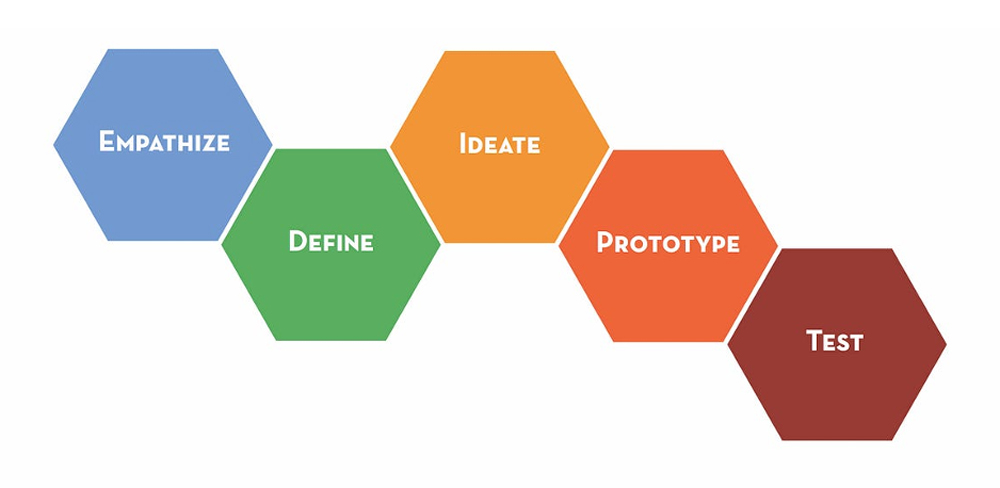
After returning from the field, the experience moved into a two-week technical and scientific design phase. Using the Stanford Design Thinking methodology (Plattner, Meinel, & Leifer (2012), the students transformed their field notes into tangible solutions:
Phase 1: Empathizing
The groups analyzed the average pH, turbidity, and other results obtained. They used ecosystem models to explain how abiotic factors (such as high sedimentation) directly impact the trophic relationships of the ecosystem.
Phase 2 and 3: Definition and Ideation
Under the format "How might we...?" The students defined specific problems, such as protecting propagules from waves or sediment filtration, investigating root causes using academic sources.
Phase 4: Prototyping
Physical models (such as innovative nursery cages or biodegradable sediment traps) were built with one critical constraint: deployability.
Phase 5: Preparing the Test
The project's conclusion involved the creation of a Field Manual for prototype testing. This document is essential for the continuation of the research, as it contains the technical instructions for next year's students to test the prototype's effectiveness during the next CWW expedition.
Impact Beyond the Standards
To measure the impact of the experience of CWW on the socio-emotional development of the students, assessments were carried out before and after the expedition. These assessments allowed for the analysis of changes in interpersonal relationships, emotional wellbeing, and motivation of the participants.
To assess the impact of the program on socio-emotional skills, a questionnaire structured around five categories of social and emotional competencies was administered (see Table 1). This instrument included questions that allowed for measuring changes and progress in socio-emotional learning skills of the students.
Table 1 presents the main categories of socio-emotional competencies considered in this research, which allowed for the evaluation of dimensions related to self-awareness, self-regulation, social awareness, interpersonal skills, and responsible decision-making. These competencies constitute a widely used framework for assessing socio-emotional development in educational contexts (CASEL, 2020).
Table 1: Socio-emotional skills and questions from the pre- and post-expedition questionnaires.
| Category | Competence |
| 1 | Self-awareness (questions Q1 and Q2) |
| 2 | Self-management and self-regulation (questions Q3 and Q4) |
| 3 | Social awareness (questions Q5 and Q6) |
| 4 | Teamwork and relationship skills (questions Q7 and Q8) |
| 5 | Responsibility and decision making (questions Q9 and Q10) |
(Photo source: CASEL, 2020)
To assess the emotional and cognitive impact of the expedition, the following instruments were used, which are presented in Table 2.
Table 2.Data collection instruments
| Instrument | Variable evaluated | Dimensions / Indicators |
| PANAS scale | Affective state | Positive affect (PA); Negative affect (NA) |
| Socio-emotional skills questionnaire | Socio-emotional development | Self-awareness; Self-management; Social awareness; Relationship skills; Decision-making |
| Studio design | Methodological approach to the research | Pre-post expedition design |
|
| ||
Results
The results obtained using the PANAS scale reveal a significant transformation in the students' emotional state after the expedition. An increase in Positive Affect (PA) was observed, rising from an initial average of 36.8 to 41.28 points (+4.48).
Figure 1. Positive and negative feelings before and after an expeditionary experience.
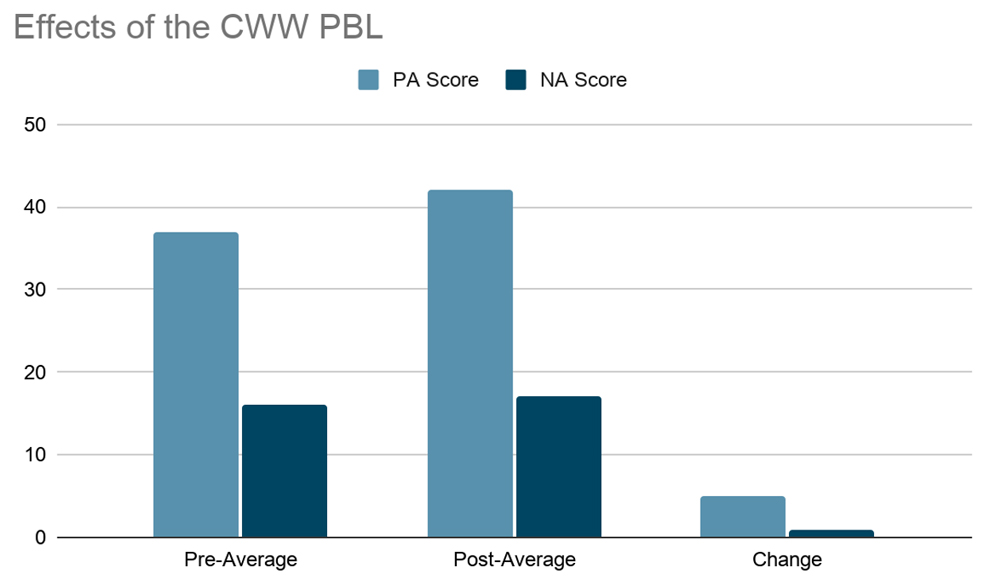
This increase suggests that exposure to the challenges of the CWW program activated states of enthusiasm, alertness, and pride. On the other hand, Negative Affect (NA) remained stable (from 15.94 to 16.48), indicating that, despite the physical difficulties of the environment, the students did not experience dysfunctional stress levels, but rather "positive stress."
Figure 2 shows that the analysis of the 10 measured socio-emotional skills reveals a consistent upward trend.
Figure 2: Socio-emotional skills before and after the expedition.
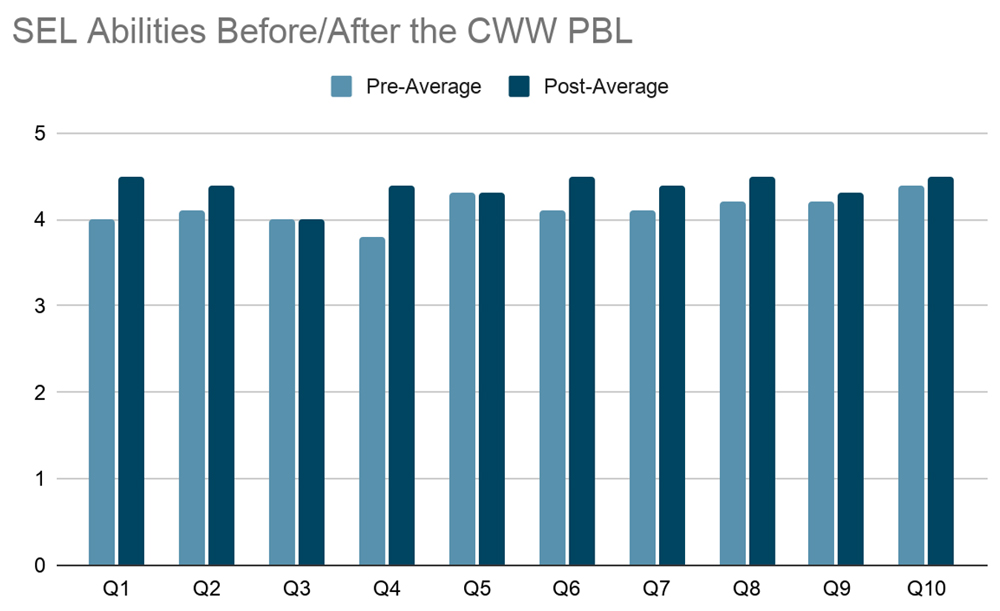
The fact that positive deltas were recorded in all dimensions demonstrates that this approach to expeditionary education has the capacity to strengthen even students with previously developed SEL skills, refining their resilience and social awareness in field contexts.
The synergy between increased Positive Affect and effectiveness in the "Operation Blue Horizon" project is evident. Students who reported greater enthusiasm and connection (High PA) showed a superior ability to:
Conclusion
The results show that the CWW expedition significantly fostered the development of applied scientific skills. Collecting and analyzing data in real-world contexts (such as comparing degraded and healthy ecosystems) allowed students to build knowledge from evidence, strengthening critical thinking, and informed decision-making. Furthermore, integrating methodologies like Design Thinking facilitated the transfer of learning to the generation of viable solutions, demonstrating that experiential learning enhances a deep understanding of ecological concepts and their practical application.
The findings also show a significant increase in positive affect (PA: +4.48), along with the stability of negative affect (NA), suggesting the presence of adaptive or positive stress. This emotional shift is complemented by consistent improvements in social-emotional skills (SEL), even under ceiling effect conditions, with a particularly notable increase in perseverance. These results indicate that expeditionary experiences not only strengthen emotional wellbeing but also enhance key skills such as resilience, self-regulation, and social awareness, which are fundamental for meaningful learning and environmental engagement.
Taken together, the results suggest a synergistic relationship between emotional wellbeing and scientific learning. Increased positive affect is associated with greater cognitive openness, facilitating processes such as rigorous data analysis, the generation of innovative ideas, and the development of functional solutions. In this sense, the expeditionary experience acts as a catalyst, articulating cognitive and socio-emotional dimensions and consolidating an educational model in which emotion is not an accessory, but a central component in the construction of knowledge and the formation of environmentally responsible citizens.
Finally, these findings support the importance of integrating authentic and emotionally meaningful experiences into the curriculum, demonstrating that learning in real-world contexts not only improves scientific understanding but also strengthens students' connection with their environment, promoting an active and engaged environmental awareness.
References
Barrable, A., & Booth, D. (2020). Increasing nature connection in children: A mini review. Frontiers in Psychology, 11, 492.
Bratman, G. N., Anderson, C. B., Berman, M. G., et al. (2021). Nature and mental health: An ecosystem service perspective. Science Advances, 7(12), eabc4912.
Chawla, L. (2020). Childhood nature connection and constructive hope. People and Nature, 2(3), 619–642.
Classroom Without Walls. (s.f.). Colegio Nueva Granada. https://www.cng.edu/activities/classroom-without-walls
Collaborative for Academic, Social, and Emotional Learning (CASEL). (2020). SEL competencies. https://casel.org/
Dettweiler, U., Becker, C., Auestad, B. H., Simon, P., & Kirsch, P. (2021). The effects of contact with nature during outdoor environmental education on students’ wellbeing, connectedness to nature and pro-sociality. Frontiers in Psychology, 12, 648458. https://doi.org/10.3389/fpsyg.2021.648458
Hickman, C., Marks, E., Pihkala, P., Clayton, S., Lewandowski, R. E., Mayall, E. E., Wray, B., Mellor, C., & van Susteren, L. (2021). Climate anxiety in children and young people and their beliefs about government responses to climate change: A global survey. The Lancet Planetary Health, 5(12), e863–e873. https://doi.org/10.1016/S2542-5196(21)00278-3
Louv, R. (2005).Last child in the woods: Saving our children from nature-deficit disorder. Algonquin Books.
PBLWorks. (n.d.). Research: Success skills rubrics. https://www.pblworks.org/research/success-skills-rubrics
Plattner, H., Meinel, C., & Leifer, L. J. (2012). Design thinking research : measuring performance in context. Springer. https://link.springer.com/10.1007/978-3-642-31991-4
Scott, E. E., McDonnell, A. S., LoTemplio, S. B., Uchino, B. N., & Strayer, D. L. (2021). Toward a unified model of stress recovery and cognitive restoration in nature. Parks Stewardship Forum, 37(3), 362–376.
Dr. Gregory Hessee leads innovation and advanced academics at Colegio Nueva Granada. Previously, he spent two years teaching in Peace Corps Poland and 11 years in urban classrooms throughout the United States before running a nonprofit program in Colorado focused on dramatically increasing the number and diversity of students graduating college-ready. As a classroom instructor, Greg has taught research, philosophy, humanities, computer science, and a wide range of language arts courses, including International Baccalaureate and Advanced Placement. As an educational leader, he has served as an instructional coach, English department chair, Stanford D school trainer, PBL trainer, school designer, and Fulbright Scholar exploring the religions of India. After working for decades to redesign large school systems, Greg is overjoyed to be joining a school focused on innovation and the mastery of meaningful skills. Greg is a huge outdoor enthusiast who recognizes that the world is filled to the brim with wonder and works to ensure his students feel the same awe in the face of life’s grandeur as he does. Oh, and he is pumped to finally live by the sea!
LinkedIn: www.linkedin.com/in/dr-hessee
Ximena Daza Mendizábal currently serves as the scientific coordinator for experiential-based learning and Grade 9 teacher coordinator at Colegio Nueva Granada. An experienced educator, biologist, and researcher, she has built her career around experiential learning, environmental science, and curriculum innovation. Fluent in both Spanish and English, she is dedicated to integrating hands-on, real-world learning experiences into science education. Ximena is currently a doctoral candidate in education at Universidad Americana de Europa and holds a master’s degree in innovative education from Universidad Internacional de La Rioja. She also earned a Master of Science in natural resources, specializing in wildlife management, from Universidad Experimental de Los Llanos Occidentales Ezequiel Zamora and a Bachelor of Science in biology from Universidad Mayor de San Simón. Her work focuses on integrating experiential learning methodologies, fostering environmental stewardship, and guiding students through real-world scientific research and conservation initiatives. Passionate about outdoor education, Ximena has led multiple Classroom Without Walls programs and Beyond the Walls “Kids Love Nature” summer camps, engaging students in hands-on ecological and community-based projects. She has taught in the United States, Bolivia, Costa Rica, and Colombia, bringing a global perspective to teaching and curriculum development. Her expertise includes curriculum design, teacher training, international education, and sustainability-focused science instruction.