
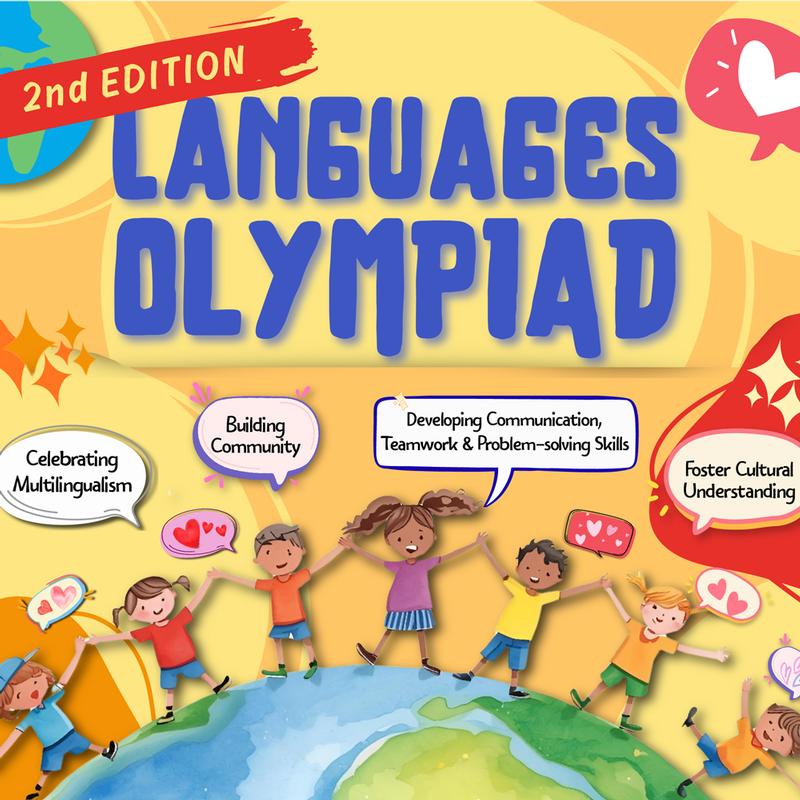
The Languages Olympiad wasn't even a seed when we first met. In fact, our first meeting was pretty open, getting to know each other, our respective schools, and our language programs. But with the Paris Olympics happening, we got inspired. We realized that while international schools have robust networks for sports, we lacked a similar "arena" for linguists. For students learning Spanish, French, Mandarin, and—for our second edition—Japanese, the opportunities to connect with peers are often slim. We decided to change that.
Again, this could have stayed an idea, but thanks to some determined leaders and the trust and empowerment of their leadership, our next meetings became planning meetings. I want to emphasize the importance of leadership here. For a teacher to offer their school as a meeting space, to host the event itself, or even simply to allow teachers to attend, there must be a strong foundation of trust and support between teachers and school leadership. It requires leaders who see the value of teacher agency and are willing to create the space for something to be built from the ground up.
After running it for the second year, I would say that our biggest challenge was navigating the "contingencies" and different cultures of each participating school. We had to constantly return to our "North Star:" the students and our shared purpose. Instead of the traditional school-vs-school model, we broke the mold:
Mixed Teams: Students from different schools and different year groups (Y5–Y8) are placed on the same team.
Skill Equity: Because our international context involves students at vastly different levels—from a Y8 beginner to a Y5 who previously lived in a country where this language was spoken—winning relies on collaboration over seniority or language proficiency. To ensure this remained inclusive, we asked participating schools to select their students not based on their grades or proficiency, but on their motivation and collaborative mindset.
The Four Stations: Students rotate through four different stations, each with a focus on sport, art, culture, and vocabulary. We always want it to be a friendly competition where students have fun and learn new skills.
This structure shifts the focus from "winning for your school" to succeeding with your language, collaborating, and learning.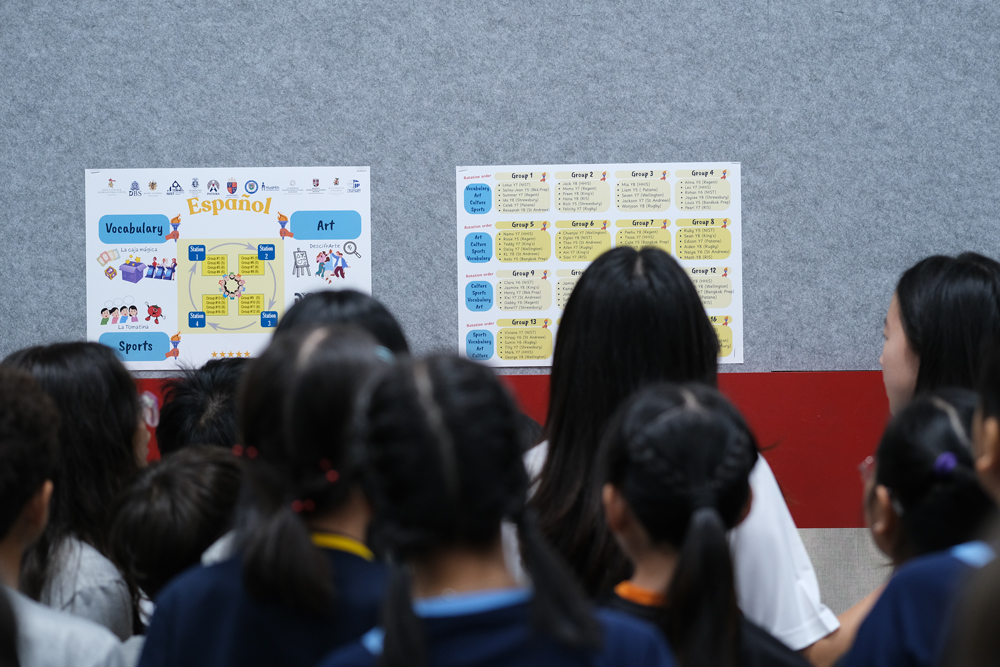
(Photo source: Event photographer)
The Community of Teachers
An event of this scale—complete with opening ceremonies, medals, and complex scheduling—doesn't happen without a specific ecosystem of educators. We learned that a successful collaboration requires a diverse "team of types:"
The Doers: To step in when the need arises and take the lead to make sure things get done.
The Organizers: To manage the Herculean logistics (especially for our host school for the past two years, Bangkok Patana) and know how to use the talents of the wider community.
The Creatives: To design the immersive stations.
The Inquirers: To constantly ask how we can improve.
As we often say, it could not work without the commitment of teachers who are willing to invest their time beyond the curriculum.
The Blue Print
If you would like to replicate this model, the journey should begin five to six months in advance with a foundational meeting to define a shared timeline and clear agreements. For us, this meant capping participation at two students per year level, per language, and assigning specific responsibilities to each "Language Delegate.” To keep 13 schools synchronized, we utilized a shared master folder containing checkpoints for everything from the opening and closing ceremony scripts to medal procurement, posters, and certificate templates. At NIST, we invited students to submit motivation letters, and final participants were drawn. Once schools finalized their lists, we organized 16 mixed teams per language to facilitate smooth rotations and scoring.
Teachers collaborated within their language groups to design four 30-minute activities (plus "fillers") across our core categories: Sport, Language, Culture, and Art. While our first year kept these categories distinct—featuring pétanque for sport and Petit Bac for language—our second edition saw them blend creatively, particularly within the French group. For instance, we transformed Sport into a high-energy Recipe Relay and Art into a Francophone Playdough Challenge where teams raced to accurately recreate cultural artifacts. By utilizing a simple scoring system (20, 15, 10, and 5 points) and a paper score sheet that doubled as a "map" for their rotations, we kept the stakes friendly but focused. This ensured the logistics supported our ultimate goal: a day where students were too busy collaborating to realize how much they were learning. At the end, winners left with a medal and a certificate adorned with a gold, silver, or bronze sticker, while every student went home with a certificate of attendance and lasting memories.
Why It’s Worth the Effort
We often do not remember what we learned, but we remember what we did. As language teachers, we know the many benefits of learning a language, but for many, languages are still seen as an afterthought or a prerequisite that makes learning feel like a chore to pass an exam. The geographical context doesn’t always make it easy for our students to see the benefits, so it’s up to us to highlight them, be it taking the kids to a movie, a cultural center, or organizing an event of this scale.
Putting languages back on the stage makes it all worth it: seeing the kids speaking the language, exchanging contact details with kids at other schools, the big smiles on the bus, and the parent emails highlighting how this gave their "non-sporty" child a chance to shine for the first time.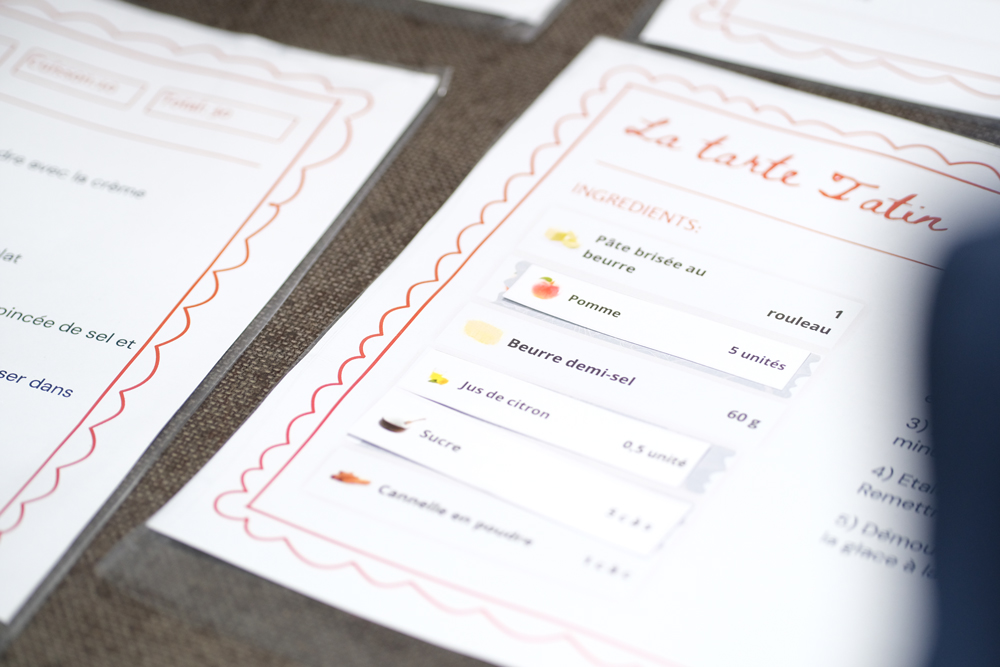
(Photo source: Event photographer)
A Call to Action
To Language Teachers: Don't delete that email. Reach out to your colleagues in neighboring schools. You don't need a massive budget to start; you just need a shared "North Star" and a commitment to your students.
To School Administrators: Trust your teachers. When they come to you with a wild idea, give them the agency and the resources to try. The community and school spirit built through these events are the heart of what makes international education special.
“It was fun to see how different schools do different things and different ways of learning. On our team we used each other's strengths to have more success in the different stations which helped us get 3rd place out of all French teams. I made a new friend from Saint Andrews and we helped each other and communicated. We used a can-do mindset to remain confident together as a team. It was exciting to practice our languages in a different way and a more engaging way to be more cooperative. My favourite part about this was the art station because we learned different things in different French speaking countries and made them out of playdough. Before the Languages Olympiad, I thought learning a language was just about speaking different ways, but now I see it is a way to connect with others.” - Emma, Year 7 student
Originally from France, Oceane Jullien began her teaching career in the United Kingdom before finding a long-term home in Bangkok, where she has taught for 13 of her 15 years in international education. Currently the whole school French teacher and elementary team leader for language acquisition at NIST International School, Oceane views language as a playful cognitive system that fosters global empathy. She constantly aspires to move beyond the traditional classroom by integrating children’s literature and authentic, real-world experiences to bridge the geographical gap for her students. When not teaching, she embraces her own "beginner’s mindset" through new sports and creative projects.