Ever wondered what the most positive aftereffects of the COVID-19 pandemic were for international schools? Flexibility to adapt to online learning? Environmental improvements? Behavioral and lifestyle changes? In my opinion, it was all of these, and something less visible but arguably more enduring. The pandemic fundamentally changed how educators think about professional learning. In international education, one of the most significant outcomes of that shift has been the rapid rise of microcredentials as a form of flexible, just-in-time professional learning for teachers and school leaders.
Even though micro-credentials, pre-COVID, were not a new idea, online learning ushered in a new revolution for organizations and institutions to recognize the gap between skills and knowledge and help educators develop the skills they needed, from digital pedagogy to wellbeing and inclusion. Education systems moved away from the perception that static, one-time education was sufficient for success and instead emphasized continuous adaptation and skill acquisition in order to advance career, employability, and personal growth leading to lifelong learning amongst educators. Some really prominent political initiatives like the European Skills Agenda and similar statements issued by UNESCO formed a consensus that it was necessary to advance skills and knowledge in small chunks to promote learning globally.
What Are Microcredentials?
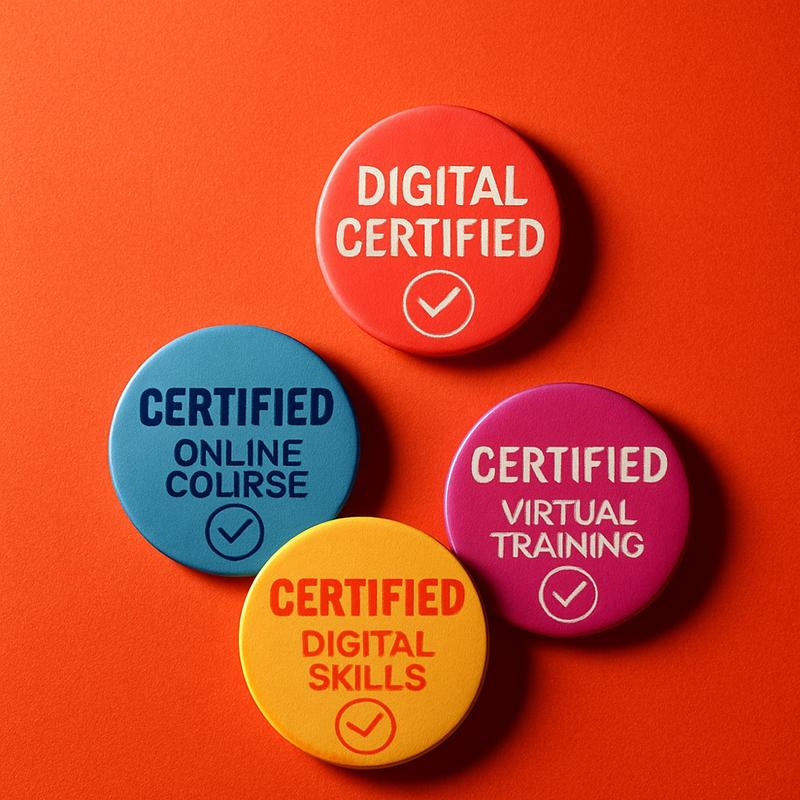
Microcredentials refer to targeted certifications that a learner can achieve in a specific, often narrow, area of knowledge or skill. For example, LinkedIn Learning or Udemy provide specific courses to individuals in fields of science, technology, engineering, art, and mathematics (STEAM) to dive deeper into 3D FDM Printing. Furthermore, this might mean a short online course on multilingual assessment, English as an Additional Language strategies, International BaccalaureateB/International General Certificate of Secondary Education subject pedagogy, inquiry-based learning, child protection, or artificial intelligence in the classroom. Unlike traditional degrees, which require aspiring teachers to undertake years of study and cover a broad range of subjects, microcredentials are earned through short, focused educational experiences. They are normally offered in the form of specialized modules, digital badges, or certificates, and often completed via online platforms.
Some of their main features like flexibility, modularity, and accessibility make microcredentials particularly suited to international teachers, teaching assistants, and leaders balancing full timetables, co-curricular responsibilities, and often the added complexity of living and working in a host culture outside their home country.? For many international school educators, this format enables meaningful professional learning without needing to pause their careers or relocate for further study.
Advantages of Microcredentials
Targeted Skill Development: Microcredentials can focus on emerging needs in schools such as artificial intelligence literacy, digital assessment, inclusion and Special Educational Needs, sustainability, or intercultural competency allowing staff to respond quickly to shifts in curricula, technology, and student needs.
Affordability: There are many microcredential programs/certificates that have low costs or are sometimes offered free. This has helped to democratize learning opportunities and support equal access, particularly in less well-resourced schools or regions throughout the world.
Stackable Pathways: Universities around the globe are increasingly allowing educators to stack multiple microcredentials toward postgraduate certificates, specialist endorsements, or leadership qualifications providing clearer career pathways for teachers who wish to move into roles such as coordinator, coach, or school leadership positions.
Industry Alignment: When microcredentials are developed they are often created with consultation and input from schools and education experts, ensuring they are immediately relevant to the skills aligned with classroom practice and school improvement priorities, rather than remaining generic or purely theoretical.
Despite clear benefits, there are some challenges that organizations that offer microcredentials need to tackle:
Quality Assurance: One of the biggest concerns is having consistent quality standards that need to be revised, analysed, and implemented. Organizations like The European Commission and similar bodies are developing frameworks to ensure transparency, reliability, and comparability between the offered microcredentials.
Recognition: Another challenge is that microcredentials need to be widely accepted by employers, educational institutions, and governments to reach their full potential. In international education, this raises questions about how school groups, accreditation agencies, and recruitment platforms evaluate and recognize such learning alongside degrees and traditional certificates.
Integration: Building scaffolded microcredentials would help connect to school-based professional growth systems: appraisal processes, leadership pipelines, and whole-school development plans. The clarity of pathways from classroom practice to middle leadership to senior leadership is currently missing which limits coherent learning journeys.
The Future of Microcredentials and Lifelong Learning
As modern careers evolve and require continuous lifelong learning, it is safe to say that the role of microcredentials is rapidly expanding. Be it employers, governments, or educators, there is a consensus that these credentials foster social fairness and fair competition amongst candidates amid economic and technological change. In the international school sector, they can also help teachers and leaders stay current across diverse curricular frameworks, regulatory expectations, and student profiles.?
European Skills Agenda and UNESCO’s recommendations reiterate making microcredentials part of mainstream education and workforce development. Microcredentials are not just knowledge or skills based courses that offer digital badges, modular courses, or competency-based assessments, they are the drivers of how people are learning, working, and growing in this current age. With shorter attention time spans in younger and older generations, microcredentials provide proof of proficiency and updated skills that can be readily shared with employers.
Microcredentials not only help to promote equity and inclusion but also lifelong learning. These courses are not just something an individual would pursue to have as an add-on on their resumes or CVs while searching for jobs but practical tools to navigate shifting expectations, technologies, and student needs across borders. As microcredentials continue to grow as part of mainstream education and workforce development globally, international schools have an opportunity to use them thoughtfully—to support coherent professional pathways, strengthen school culture, and keep teaching and learning responsive to a rapidly changing world.
For those of us working in international education, the key question may not be which badge to earn next, but how we design and curate microcredential experiences so that they genuinely deepen professional practice, foster collaboration, and sustain a culture of lifelong learning in our schools.?
References
https://www.aacsb.edu/insights/articles/2024/10/how-microcredentials-are-changing-higher-education
https://www.openlms.net/blog/education/microcredentials-2025-future-flexible-career-ready-learning/
https://education.ec.europa.eu/education-levels/higher-education/micro-credentials
http://oecd.org/content/dam/oecd/en/publications/reports/2021/09/micro-credential-innovations-in-higher-education_c323077b/f14ef041-en.pdf
Uma Shankar Singh is a secondary design technology teacher at Yew Chung International School of Shanghai, China. He likes to read about human psychology, troubleshoot computers and other electronics, create projects with 3D printers, and fly drones.