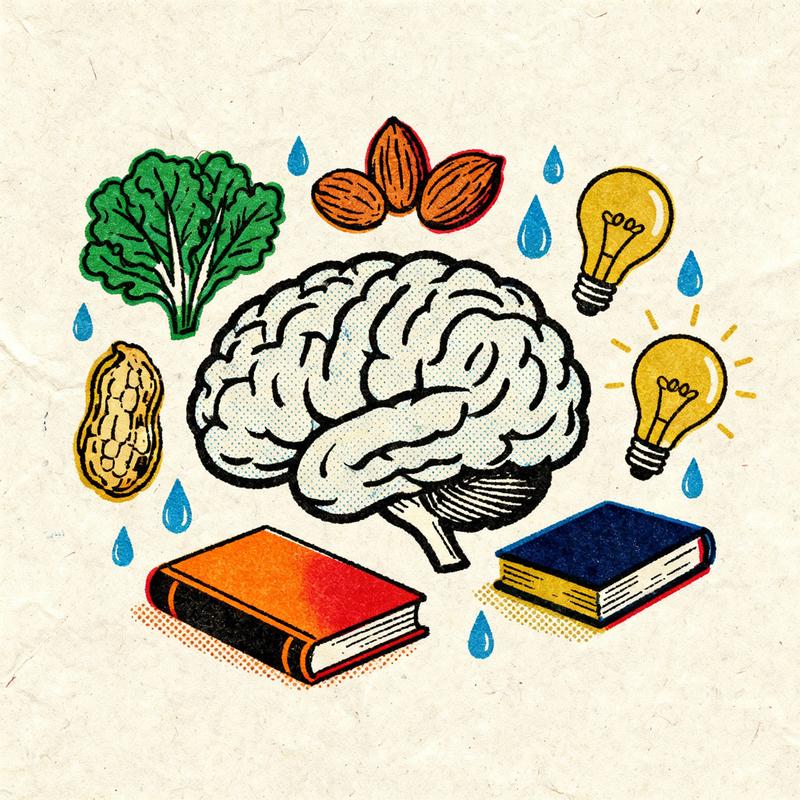
Advances in technology and neuroscience continue to bring new findings about how the brain functions and how our day-to-day habits and choices affect it. Many myths exist, and online searches often produce outdated, confusing, and conflicting information. Knowing the truth is empowering. Some of my favorite facts, taken from Kimberly Wilson’s book How to Build a Healthy Brain (2022) include:
As educators, what are the implications of these truths? How do school environments, curriculums, schedules, and pedagogy reflect a foundation for supporting mental health and wellbeing? Arming people with the truth around the sciences of learning and positive mental health is a proactive approach. Simply knowing can create motivation to take action, but it’s not enough to build and sustain lifelong habits (Clear, 2018). Schools need to become places where brain-friendly habits are learned about, supported, modeled, and promoted.
How are we supporting families to build healthy habits in the home? Lifestyle choices that support positive mental health and strong cognitive functioning are the foundation. A child who comes to school tired, hungry, or upset cannot be expected to learn well. As educators, we need to partner with families to help support healthy choices.
Beyond lifelong learning, we also want for them a long life. Science-aligned guidance on healthy habits may significantly help prevent early brain aging, dementia, and Alzheimer’s disease (Wilson, 2023). Back in 1995, in considering what it means to be an educated person, Boyer wrote, “Too many young women and young men pass through our process of education without learning about their own bodies. Out of ignorance, they suffer poor nutrition, addiction, and violence” (p.16). This continues to hold true.
Today, the world is facing a global mental health crisis (WHO, 2025). Increased social media use and passive screen time mean that we are spending more time alone on devices and less time engaging in activities that protect our wellbeing, such as being outside or spending time with friends and family. Increased processed and sugary foods, changing dynamics of family-life., and pressures of school and work are adding to the problem. As educators and parents, we urgently need to equip the youth for resilience, and a fit and healthy life.
At the International School of Uganda, we:
There has never been a more important time to strengthen our knowledge and understanding of the brain, and our body as a whole: how it functions, and our daily choices that cause impact. Because, after all, if we’re supporting the brain, we’re supporting learning.
References
Boyer, E. (1995). The Educated Person. ASCD Yearbook.
Clear, J. (2018). Atomic Habits. An easy and proven way to build good habits and break bad ones. Avery.
Wilson, K. (2022). How to Grow a Healthy Brain: Reduce stress, anxiety and depression and future-proof your brain. Yellow Kite.
Wilson, K. (2023). Unprocessed: How the food we eat is fuelling our mental health crisis. WH Allen.
World Health Organisation (WHO). (2025). Over a billion people living with mental health conditions – services require urgent scale-up. WHO.Sarah Ssengendo is the Assistant Principal and program coordinator at the International School of Uganda. Sarah has had the privilege of teaching for over 20 years in early-years to Grade 5 classrooms in the United Kingdom, Tanzania, Romania, and Uganda. In her current role, she spends her days learning alongside and collaborating with teams of educators to design learning that is connected, relevant, rigorous and meaningful.