

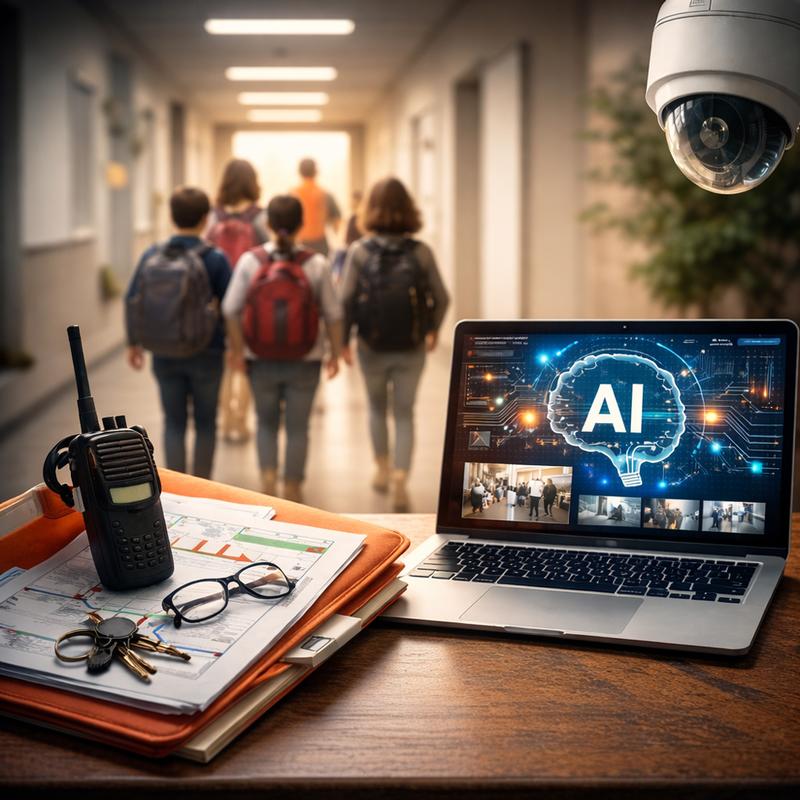
Schools need to be ready for emergencies. To do this, schools usually conduct regular drills, establish communication trees, and create emergency folders, among other steps. In addition, artificial intelligence (AI) is now giving us new tools that can make planning more effective, help learning continue, and assist teams to respond more calmly and clearly. When we use AI in a smart and ethical way, it can help us get ready for the unexpected.
Supporting Learning Continuity During Disruption
One of the biggest concerns for international schools during a crisis is ensuring students continue learning. AI can give you tools that will help you stay on track when your routines go wrong. AI tutoring platforms can help teachers and students learn when they can't meet in person by giving them explanations, examples, and practice tasks. Teachers can also use AI to quickly develop new lesson plans when technology breaks down, schedules change, or classes have to move online with little notice, ensuring they are proactively prepared.
Examples:
Rapid Lesson Planning When Learning Is Disrupted
If a sudden transport disruption forced a school to move learning online at short notice, teachers often have very little time to redesign lessons. In this situation, AI can support planning without replacing professional judgment. A teacher begins with the learning goal for the class and uses AI to draft a simple lesson structure, such as a short live check-in, an independent task, and a brief reflection. The teacher then reviews and adapts the draft, adjusting language, activities, and support for individual learners.
The AI is not used as a finished product. It serves as a starting point that reduces planning time and allows teachers to focus on student connection and continuity of learning.
Interrupted Face-to-Face Instruction
During extended disruptions, whether caused by health closures, weather events, or local instability, students often struggle when direct access to teachers is limited. Questions build up. Small gaps turn into frustration. AI tutoring tools can provide interim academic support when teachers are not immediately available.
In practice, these tools are used for explanation, practice, and reinforcement. A student revisiting a concept can ask for a step-by-step explanation, work through guided examples, or attempt practice questions with feedback. This support is available outside scheduled lesson times, which is particularly important when families are managing disruptions at home. Teachers remain responsible for instruction, assessment, and feedback. AI tutoring does not replace that role. Instead, it acts as a stabilizing layer that helps students stay engaged and reduces anxiety when help is not instantly available.
For teachers, this support can also reduce pressure. Rather than responding individually to the same procedural questions during a crisis, teachers can focus on monitoring well-being, adjusting instruction, and reconnecting with students when synchronous time is possible.
The boundary is clear. AI supports learning continuity. Teachers remain the relationship, the judgment, and the authority.
Strengthening Communication in Multilingual Communities
One of the hardest things for school leaders to do is communicate during a crisis, especially in international schools where many languages are spoken. Delays in communication during an emergency can cause fear or confusion. AI can help schools communicate more clearly and quickly. AI can not only write consistent messages for staff, parents, and students, but it can also translate updates into several languages right away. For schools with a diverse student body, this can help ensure that everyone can access the information they need during stressful times.
During school closures, international schools have adopted AI-supported translation tools to improve communication with multilingual families. Schools using platforms such as LanguageLine and integrated learning management translation systems were able to send official updates in multiple home languages simultaneously, ensuring that families received clear guidance on health protocols, remote learning, and campus access. School leaders have reported that translated messages significantly reduced parent confusion, increased trust in school decision-making, and improved engagement during periods of uncertainty. Other tools, such as handheld AI translators that can understand multiple languages, are also being used. Some schools have taken this method a step further by using AI chatbots. A chatbot could send timely updates, answer common questions, and help stop the spread of false information during a typhoon, lockdown, or political unrest. These systems are becoming part of long-term crisis and emergency communication planning. They help keep communication calm and steady, allowing staff to focus on handling the emergency.
Enhancing Crisis Planning and Scenario Training
Schools have always had to think about "what if" scenarios when making crisis plans. At The International School Yangon (ISY), this has become a big part of getting everyone on campus ready. Tabletop scenarios are used when explaining the school crisis manual to teachers, and virtual learning practices ensure that the students are prepared should the need to go virtual occur. These opportunities are easier to put into place thanks to artificial intelligence. AI tools can make up situations that let teachers and students practice how to deal with a lot of different problems. These could be things like an earthquake during a transition, a power outage during an exam, or a political event that makes it hard for people to get around the city. Leaders can test their decision-making, find holes in protocols, and build confidence before an emergency happens by going through these "what if" scenarios.
Improving Logistics and Real-Time Responses
Logistics can have a significant effect on how well a response works during a crisis. It's often just as important to know where students are, how resources will hold up, and which areas need help as it is to deal with the emergency itself. This is where AI can provide support in real time. Schools with attendance systems that use AI to quickly find missing students during evacuations or lockdowns can help cut down on mistakes made by people and let you know when someone is missing. These systems quickly find out when someone is missing every day, and in an emergency, they let families talk to each other and act quickly.
Best Practices for Responsible AI Use
As schools start using AI to plan for emergencies, it's important to do it carefully.
Training is very important. Staff should practice using AI tools in drills and tabletop exercises long before they need to.
Human control must always be at the center. AI can write messages or come up with scenarios, but people need to check the information for accuracy, tone, and cultural relevance.
There is no room for negotiation when it comes to data privacy. Any AI platform that deals with student or security data must follow strict rules for protecting that data.
AI should help with the crisis plan, not take its place. Crisis plans should make it clear how AI is used, who initiates its functions, and what happens when systems fail.
A New Chapter in International School Safety
AI is being used in international schools in ways that were not possible just a few years ago. AI can help leaders stay one step ahead by making sure that every student is accounted for, simulating scenarios, or translating messages into many languages.
Families want to know that schools are ready for anything in a world where crises cross borders, and information moves at an incredible speed. International schools can meet that expectation and make sure that learning goes on, even when things go wrong, by combining good planning, leadership, and responsible use of AI. When used with care, AI becomes part of the invisible infrastructure that helps schools respond calmly, consistently, and with care.
Dr. Gregory Hedger is the Director of the International School Yangon.