
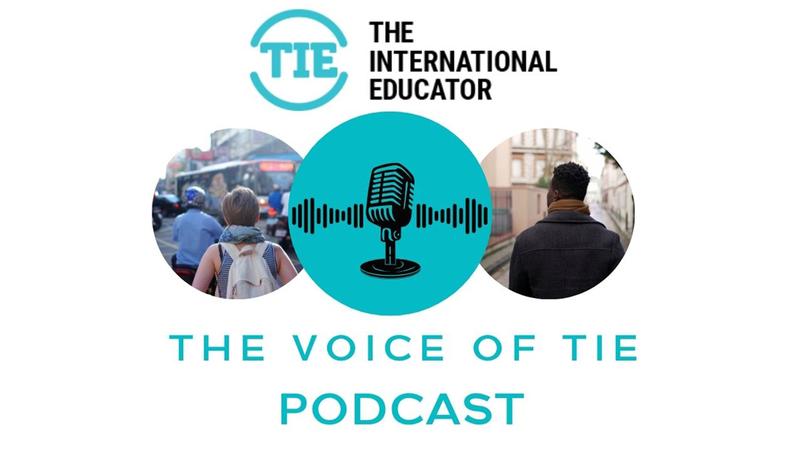
Listen now to the Voice of TIE Podcast where host, Stacy Stephens, chats with Kim Cofino, founder of the Association for the Advancement of Instructional Coaching in International Schools (AAICIS), delving deeper into the topic of instructional coaching.
LISTEN NOW ON SPOTIFY
LISTEN NOW ON YOUTUBE
After working primarily with instructional coaches to support their growth and professional development for over a decade, I realized that, despite the amazing work coaches were doing, for coaching to be sustainable, leaders had to be part of the conversation too. When speaking at a leadership event, and hearing the questions leaders were asking, I realized that coaches and leaders needed to work together, intentionally and systematically, for coaching to have real impact. That realization was the seed of what would eventually grow into the Association for the Advancement of Instructional Coaching in International Schools (AAICIS).
Why International Schools Needed Something Different
Most of the coaching models international schools reference come from United States public-school contexts. Those resources are valuable, but they don’t always reflect the realities of international schools—our transient populations, varied curricular expectations, cross-cultural communities, and unique staffing structures. I knew we needed something designed with and for international educators, grounded in our shared context.
So, during that school year, I quietly began reaching out to colleagues, people who not only believed in coaching but had lived it, wrestled with it, and seen its challenges firsthand. We met informally at first, talking about what international schools need, and what we would be able to support. That small group eventually expanded, drawing in educators across regions, including others who were, unbeknownst to us, building similar networks in Europe and Africa. It felt like a moment of global synergy: isolated coaches and leaders, each doing the work on their own, ready to come together.
What We Learned From Leaders
At the same time, I began asking Heads of School about their needs in order to support a thriving coaching culture. As coaches ourselves, we had all experienced programs that were initiated with excitement but abandoned within a few years. Not because the coaches weren’t capable, but because systems weren’t in place to support them. Leaders often hired excellent people without the structures, clarity, and shared understanding needed to make coaching last.
These conversations helped shape the questions behind our initial landscape study of instructional coaching in international schools, the services we provide for schools and individual members, as well as the first four core resources we created:
Coaching as a Schoolwide Practice
One of the most important conversations we had as a group was redefining coaching beyond the formal position. Not all schools will have the budget to hire multiple instructional coaches, or any at all. Yet many educators want to learn coaching strategies, and many leaders want to build coaching-informed approaches into their culture.
From the beginning, we were intentional about ensuring this work was accessible to:
The goal was never to replicate a single coaching model, but to support the development of coaching practices, flexible enough to adapt to different school environments but grounded in shared purpose.
Why Coaching Matters for International School Culture
International schools face unique challenges: high turnover, cultural shifts, changing enrollment patterns, and the constant pressure to adapt. Amid this, coaching offers more than just instructional support. Done well, coaching fosters:
These elements are not abstract, they shape the culture and sustainability of a school. Coaching, in this sense, becomes not merely a professional-development tool but a cultural anchor.
Looking Ahead
AAICIS is still growing, now in its second year of operations, but the conversations happening across time zones, the growing interest from leaders, and the collective effort to document the impact of coaching in international schools all point to a field gaining momentum. As we continue this work, our goals include strengthening research, building case studies from international schools around the world, and finding better ways to connect educators despite the inevitable challenge of time zones. Eventually, we hope to bring people together face-to-face to deepen these conversations. What began as a simple realization, that coaching cannot flourish without leadership, has grown into a collaborative effort across continents. And at the heart of it is a belief shared by so many educators: that coaching, done thoughtfully and systemically, can transform not only teaching and learning, but the very culture of our international schools.
Kim Cofino has been an educator in international schools since August 2000. Having lived and worked in Germany, Malaysia, Thailand, and Japan, Kim has had a variety of roles in international schools, including (her favorite) instructional coach. Now based in Bangkok, Thailand, Kim is the founder and CEO of Eduro Learning, Executive Director and founder of the Association for the Advancement of Instructional Coaching in International Schools (AAICIS), author of Finding Your Path as a Woman in School Leadership (Routledge), host of the #coachbetter podcast.
Find out more about Kim and Eduro at: https://www.edurolearning.com.
LinkedIn: https://www.linkedin.com/in/kimcofino/