
As an international educator, I have always believed that teaching Humanities means exploring the world through stories, cultures, and connections. But over the years, I’ve realized that true Humanities doesn’t begin with the textbook. It begins when students look around their own communities and decide to act.
When I first started guiding students through community and service projects in Vietnam and Bangladesh, I saw them as academic extensions of the International Baccalaureate (IB) framework. I understood the structure: inquiry, action, reflection. What I didn’t understand — not yet — was how deeply this work would transform me.
From Classroom Lessons to Life Lessons
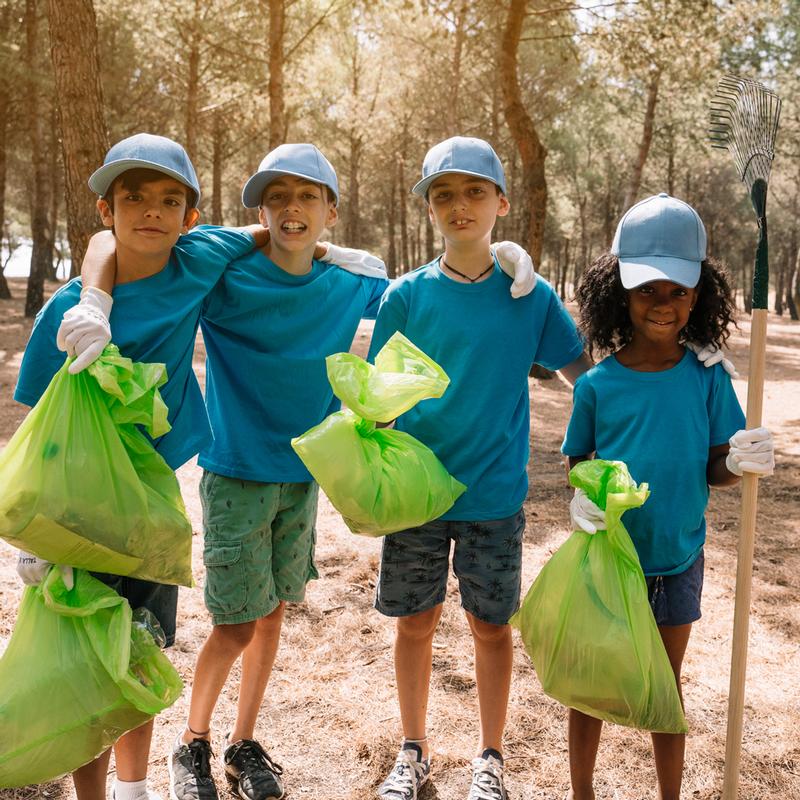
My students have done everything from cleaning beaches to creating digital awareness campaigns for water conservation. Every year, we visit places where people live below the poverty line. They interview war veterans and read stories aloud to the elderly in nursing homes. They collect used toys and clothing for orphanages and create online videos on environmental awareness, videos that earn just enough views to fund another act of kindness.
I remember one project in particular: a group of Year 9 students asked if they could volunteer to create an awareness campaign about saving freshwater for future generations. Their initiative came not from a requirement, but from compassion. I saw in their faces a quiet urgency, as if they already understood what many adults forget, that we are running out of time to repair what’s broken.
At that moment, I felt something shift. These weren’t just assignments; they were awakenings. My students were teaching me what I had missed, that education is only justified when it leads to empathy, action, and accountability.
The Coordinator’s Journey: From Organizer to Witness
As an IB coordinator, my role has always been to guide, plan, and facilitate. But in these projects, I became something else, a witness. I watched students sit under the sun for six hours, refusing to disturb a patch of grass because “small creatures might be living there.” I saw them nurture trees near our school park — watering them, bringing humus, even naming them. I saw creativity turn into compassion when students hand-crafted toys for underprivileged children.
Each project reminded me that teaching Humanities is not about the past, it’s about the present moment of human choice.
Why Student-Led Campaigns Matter More Than Exams
In Vietnam, one group of students organized a community clean-up along the river, collecting plastics while documenting their journey. They reflected later that they had never realized how much waste humans leave behind, or how easily people overlook it. Another group in Bangladesh initiated an online awareness campaign interviewing local students about sustainability, asking only for a “like” or “subscribe” to raise funds for new videos. Those moments were worth more than any exam score. They were the living curriculum of responsibility.
In IB’s framework, we often talk about learner profiles — being caring, reflective, and open-minded. But what these students demonstrated went beyond the language of attributes. They embodied them. They showed me that education succeeds when compassion becomes instinct, not instruction.
Humanities Through Human Action
As a Humanities teacher, I used to focus on helping students understand history, geography, and culture. But now, my lessons have become questions:
· “How do we respond to injustice?”
· “What does sustainability mean when you see it in your own backyard?”
· “What does kindness look like when no one is watching?”
My students’ projects gave those questions answers, not in essays but in actions. One group created short documentaries on workers living in informal settlements, another conducted interviews about generational poverty and migration. These stories brought to life what textbooks could never capture, the human side of society.
I realized that teaching Humanities through human action is liberation for both teacher and student. It frees us from the boundaries of the classroom and places learning back where it belongs, in the world.
The Invisible Partners: Parents and Community
None of this could have happened without the support of our parent community. They stood by their children, helping them plant trees, buying supplies, and donating time and resources. Some parents told me, “We’ve never seen our child this passionate about helping others.” That was when I understood the power of collective transformation. The classroom expands when families become part of the journey. It’s no longer just education; it’s social change.
Gratitude to the IB Philosophy
If I could thank one philosophy that has changed me, it would be the IB approach to holistic education. The IB framework gave me the tools to turn student curiosity into real-world impact. It helped me see that teaching is not about control; it’s about facilitation, empathy, and trust. Through the Community Project and Service as Action, my students became architects of their own learning. They discovered that they could make a difference, that their ideas matter. And in guiding them, I rediscovered what it means to care deeply, think critically, and act courageously. I often say, I thought I was teaching Humanities. But really, Humanities was teaching me — through my students.
A Final Reflection
In today’s world — war-driven, chaotic, and sometimes indifferent — the simplest acts of humanity still matter the most: a student handing a toy to a child; another watering a tree; a group sitting quietly to protect tiny creatures in the grass. These moments remind me that hope is not an abstract concept, it’s a practice. As educators, we may not change the whole world, but we change the small worlds around our students. And sometimes, that is enough. When students tell me, “I have a lot to do for the people and the environment. Where do I start?” I smile. Because that question itself is the answer. When education grows empathy, humanity takes root.
Mushfiqua Zabeen leads curriculum development at Peninsula International School Australia, where she fosters inquiry-based learning and actively supports English language learners. She is an educator with over 20 years of experience in international schools, specializing in Middle Years Programme (MYP) Individuals and Societies, humanities, English as an Additional Language, and Diploma Programme Environmental System and Societies. She holds double master's degrees in English Language Teaching and geography, along with a City and Guilds diploma in Teaching and Learning and an Applied Scholastics Teaching license. Recently, Mushfiqua completed certifications in leadership and coordination for MYP, Service as Action (SA), Community Projects (CP), International Baccalaureate Lead and Managing Team. Having taught in diverse countries such as Vietnam, Brazil, and Qatar, she is passionate about enhancing student engagement through innovative curriculum design. Her commitment to global mindedness is reflected in her extensive professional development and community initiatives, including her work with underprivileged students in Bangladesh. In her free time, she enjoys exploring new educational practices and sharing insights through her blog.